A single drop of blood staining the pristine white snow. That’s an image that sticks, isn’t it? But before that iconic scene in Kill Bill, another stoic, sword-wielding figure haunted the fringes of the anime boom, leaving a trail of visceral dread. I’m talking about Saya, the eternally youthful, perpetually weary hunter at the heart of Hiroyuki Kitakubo's Blood: The Last Vampire. Released in 2000, it felt like a transmission from a darker, colder future of animation, arriving just as the VHS era was giving way to the sleek promise of DVD, yet carrying the atmospheric weight perfect for a late-night viewing that leaves you checking the locks.
Beneath the Uniform
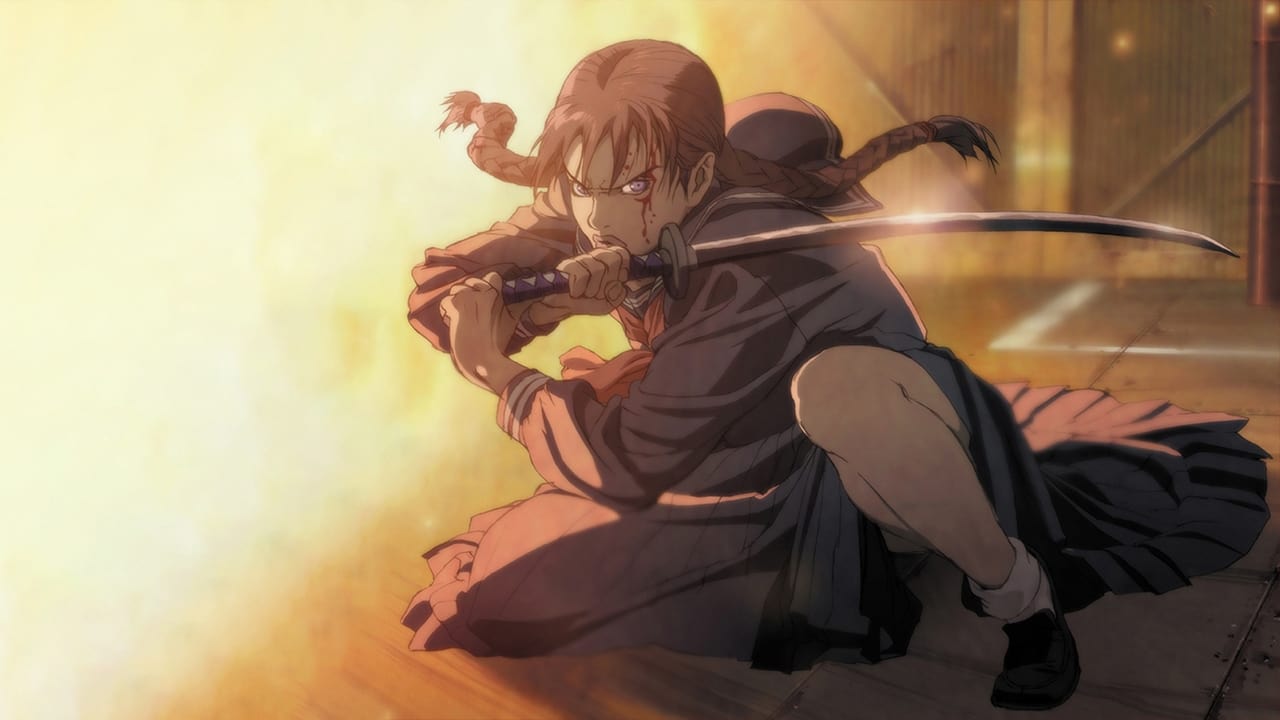
The film wastes no time plunging us into its oppressive world: Yokota Air Base, Japan, 1966. The Cold War simmers, Vietnam looms, and rain seems to perpetually lash the sterile, Americanized environment. Into this isolated pressure cooker walks Saya, clad in a simple schoolgirl uniform that does little to mask the ancient coldness in her eyes. She’s working with clandestine government forces, tasked with hunting creatures known only as Chiropterans – shapeshifting monstrosities that prey on humans. There’s an immediate, chilling disconnect between her appearance and her brutal efficiency. Watching her stalk the dimly lit corridors and rain-slicked streets, you feel less like you're watching a hero and more like observing a predator perfectly adapted to its grim ecosystem.
A Symphony of Shadows and Steel
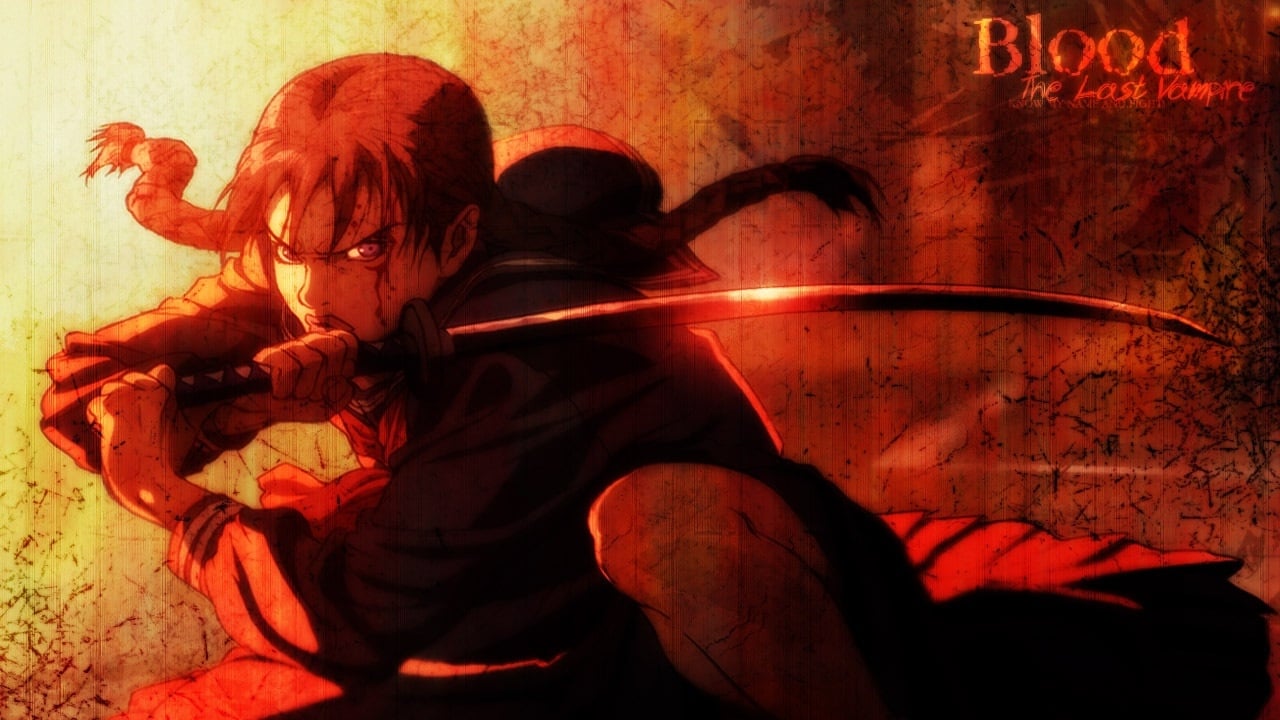
What truly sets Blood apart, especially for its time, is its relentless commitment to atmosphere. Director Hiroyuki Kitakubo, who cut his teeth on landmark projects like Akira (1988) and the original Ghost in the Shell (1995), crafts a world steeped in shadow and paranoia. The score by Yoshihiro Ike is less melody, more unnerving thrum, amplifying the tension to an almost unbearable degree. The setting itself, a U.S. military base on foreign soil on the cusp of major conflict, adds a layer of inherent unease – a place disconnected, isolated, and vulnerable. It’s a masterclass in environmental dread, where every shadow seems poised to reveal something monstrous.
The animation itself was quite revolutionary. Produced by the now-legendary Production I.G, Blood was a pioneering effort in blending traditional cel animation with digital compositing and colouring. This resulted in a uniquely sharp, clean aesthetic – character outlines are razor precise, colours deep and saturated, movements sometimes possessing an almost unnerving smoothness. While it occasionally lacks the organic fluidity of purely hand-drawn classics, the style perfectly complements the film's cold, detached tone and the sudden, shocking bursts of violence. When Saya’s katana flashes, the digital techniques render the ensuing carnage with a stark, brutal clarity that felt genuinely boundary-pushing back then. Remember seeing that level of visceral impact in animation? It hit differently.
Whispers from the Production Booth
Blood wasn't just a standalone short; it was conceived from the start as the vanguard of a larger media franchise. Its incredibly lean 48-minute runtime, often a point of frustration for viewers wanting more, makes sense in this context – it’s essentially a hyper-stylized, atmospheric proof-of-concept. Writer Kenji Kamiyama, who would later helm the acclaimed Ghost in the Shell: Stand Alone Complex series, penned a script that’s sparse on exposition but heavy on mood, leaving much about Saya and the Chiropterans tantalizingly unexplained. This deliberate ambiguity works wonders for the atmosphere but can feel narratively thin. The English dub, while featuring professional voice work (Joe Romersa pulling double duty as David), often has that slightly stiff, disconnected quality common to many dubs of the era, which paradoxically almost adds to the film's unsettling, alien feel for some viewers. Funnily enough, the Japanese voice for Saya, Youki Kudoh, was chosen partly for her ability to deliver the character's minimal English lines convincingly.
More Atmosphere Than Answers
The film's greatest strength is also, arguably, its main weakness. It's all mood, all style, all chilling potential. We get glimpses of a deeper mythology, hints of Saya's tragic past, but the narrative barely scratches the surface. The human characters, like the bewildered school nurse Makiho (Saemi Nakamura), serve mostly as exposition conduits or potential victims rather than fully fleshed-out individuals. The climax arrives abruptly, resolving the immediate conflict but leaving the wider world and Saya’s eternal struggle shrouded in mystery. It feels like the stunning opening act of a much larger, unseen opera. Did that abrupt ending leave you wanting more, or just feeling slightly cheated?
It’s a testament to the power of its core concept and execution, however, that Blood resonated so strongly. Its influence is undeniable, spawning the much more expansive (and narratively complete) TV series Blood+ in 2005, along with manga, games, and even a live-action adaptation. The image of Saya, the lonely hunter in the schoolgirl uniform, became instantly iconic within the anime community.
***
VHS Heaven Rating: 7/10
Justification: Blood: The Last Vampire earns a solid 7 for its masterful atmosphere, groundbreaking animation style (for its time), and genuinely unsettling tone. The chilling design of the Chiropterans and the enigmatic presence of Saya are unforgettable. However, its extremely short runtime and underdeveloped narrative prevent it from reaching higher echelons. It’s a stunning, brutal mood piece – more of a visceral experience than a complete story.
Final Cut: A fascinating, influential, and beautifully bleak slice of turn-of-the-millennium anime horror. It’s a film that proves sometimes less is more, even if that 'less' leaves you starved for the story it only begins to tell. Its power lies in the lingering chill, the questions it refuses to answer, and the dark beauty of its rain-soaked violence – a true cult gem that paved the way for much that followed.