Alright fellow tapeheads, let's talk about a film that didn't just capture the late-90s zeitgeist, it mainline-injected the soul-crushing reality of cubicle life directly onto the screen, leaving us laughing until we cried... or maybe just cried. I'm talking about Mike Judge's Office Space (1999), a movie that famously face-planted at the box office only to become a monumental cult classic, whispered about in break rooms and passed around on worn-out VHS tapes like sacred texts. Finding this gem felt less like renting a movie and more like discovering a fellow survivor's manual for the modern workplace.
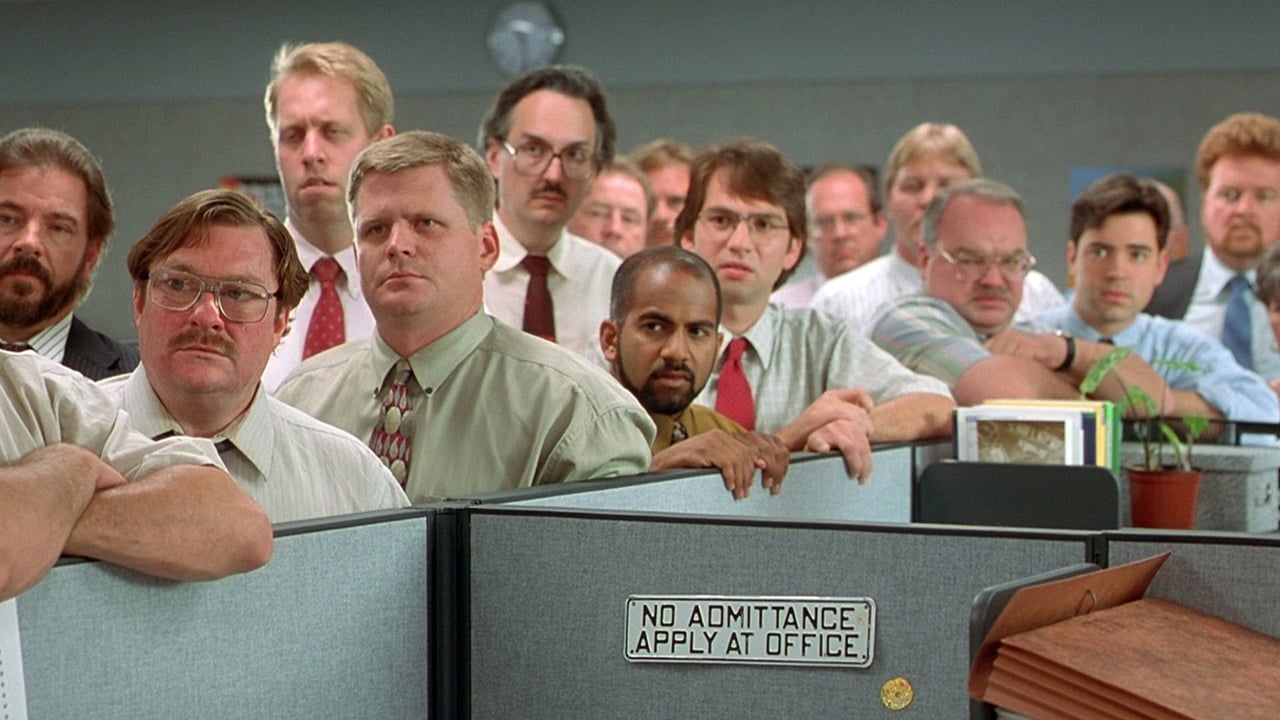
Cubicle Hell, Rendered Perfectly
From the opening gridlock commute, soundtracked by soul-deadening muzak that transitions seamlessly into the office hum, Office Space immediately establishes its oppressive atmosphere. We meet Peter Gibbons (Ron Livingston), whose thousand-yard stare perfectly encapsulates the existential dread of filling out TPS reports under the passive-aggressive tyranny of Bill Lumbergh (Gary Cole, delivering an all-time smarmy performance). Mike Judge, already a household name thanks to Beavis and Butt-Head, proved he had an uncanny knack for observing the absurd minutiae of everyday misery, translating his animated sensibilities into painfully relatable live-action. You didn't just watch Peter's plight; if you'd ever worked under fluorescent lights, you felt it in your bones. Remember realizing Judge based the unforgettable Milton character on his own animated shorts? It suddenly made so much sense.
The Sweet Release of Not Caring
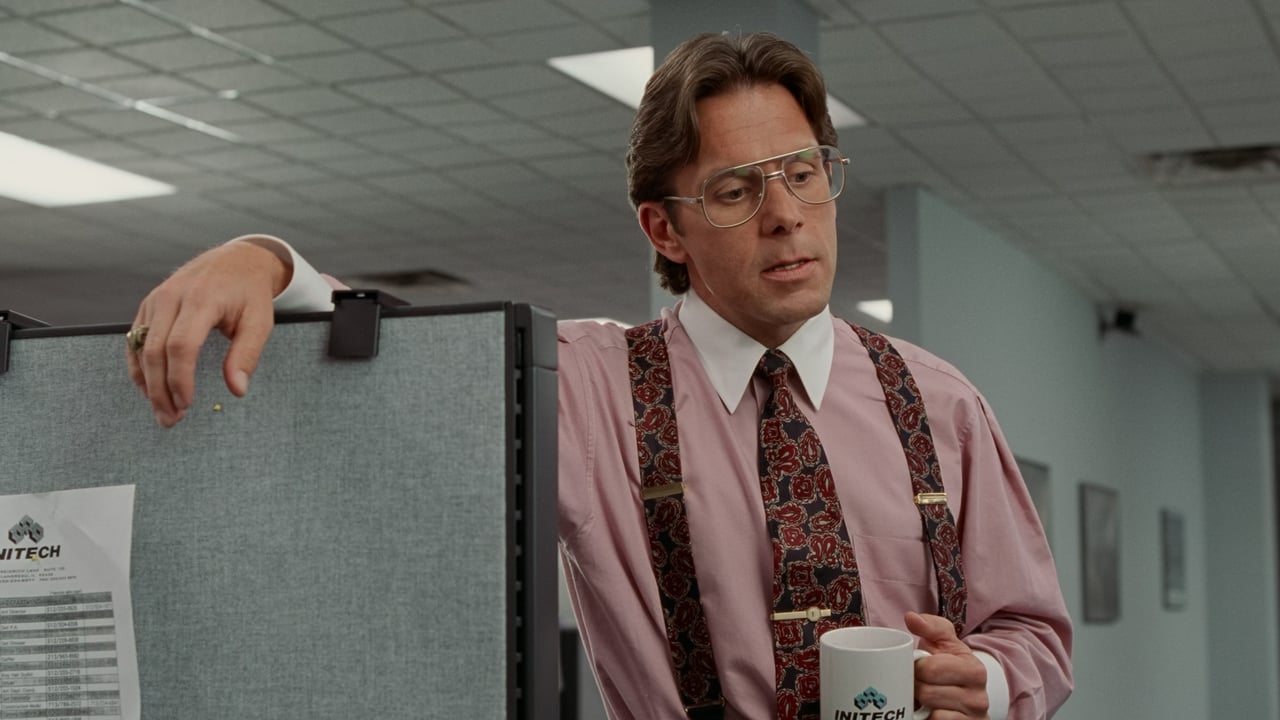
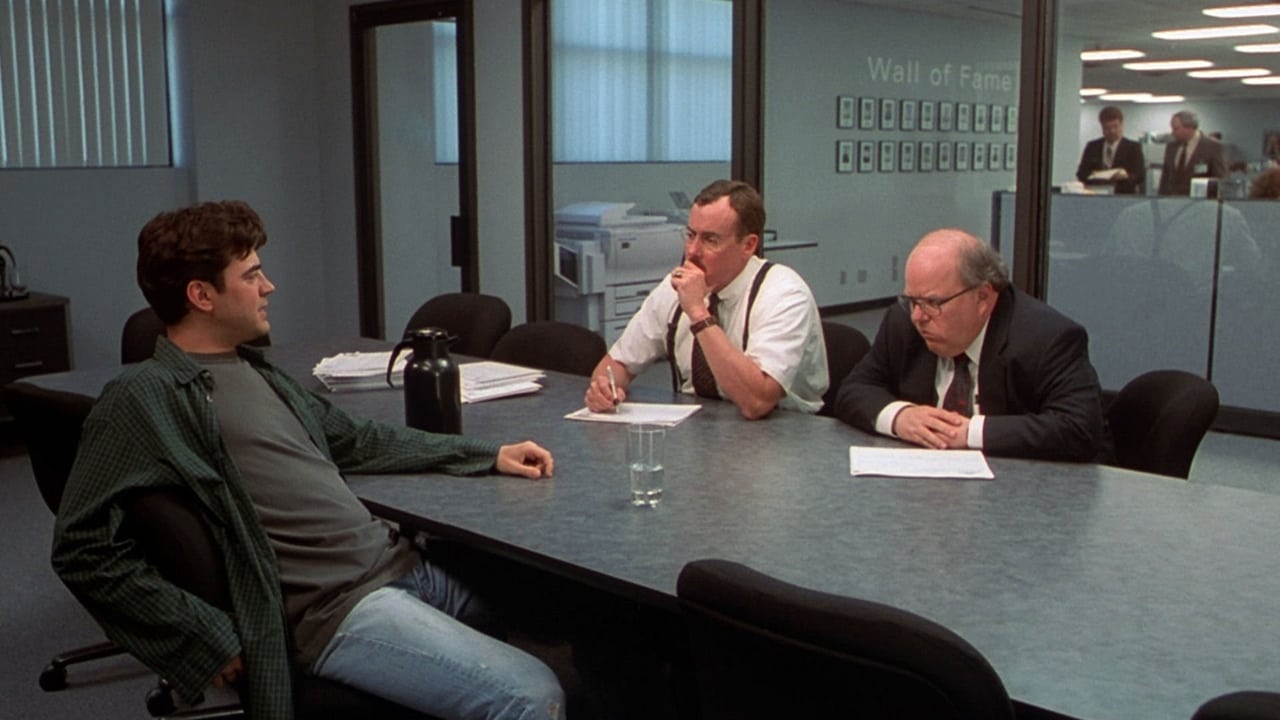
The plot kicks into high gear after a hypnotherapy session gone wrong leaves Peter in a state of blissful apathy. Ron Livingston absolutely nails this transition, shifting from simmering resentment to a hilarious, Zen-like detachment. He stops going to work, speaks his mind with brutal honesty, and somehow… starts failing upwards. It’s the ultimate workplace fantasy, played out with deadpan perfection. The interactions with the two "Bobs" – efficiency consultants brought in to downsize – are comedic gold, highlighting the sheer cluelessness that often dictates corporate fate. We can't forget Peter's equally miserable friends, Samir Nagheenanajar (Ajay Naidu) and Michael Bolton (David Herman), whose shared frustrations fuel some of the film's most quotable lines. And amidst the grey despair, Jennifer Aniston, taking a break from Central Perk during her Friends reign, provides a welcome dose of normalcy and charm as Joanna, a waitress equally fed up with customer service indignities ("the flair").
Birth of a Legend: That Printer Scene
Okay, let's talk about the moment that cemented Office Space in the annals of cult cinema: the brutal, slow-motion execution of a perpetually malfunctioning office printer. Set to the hardcore beats of the Geto Boys' "Still," this scene is pure, unadulterated catharsis. Forget CGI explosions; this was the real deal. Watching Peter, Samir, and Michael take bats and boots to that machine in a sun-drenched field felt primal. It was the physical manifestation of every suppressed office frustration, every muttered curse under breath. In an era before digital trickery became commonplace, the sheer physicality of the destruction – the shattering plastic, the flying components – had a visceral impact that still resonates. It tapped into the same raw energy we loved in 80s action flicks where you knew that was a real car crashing, a real stuntman taking a fall. Here, the enemy wasn't a terrorist, but a beige box spitting out "PC LOAD LETTER" errors (a genuinely infuriating message on old HP printers, by the way!). That scene alone was worth the rental price back in the day.

From the Ashes: Milton and the Red Stapler
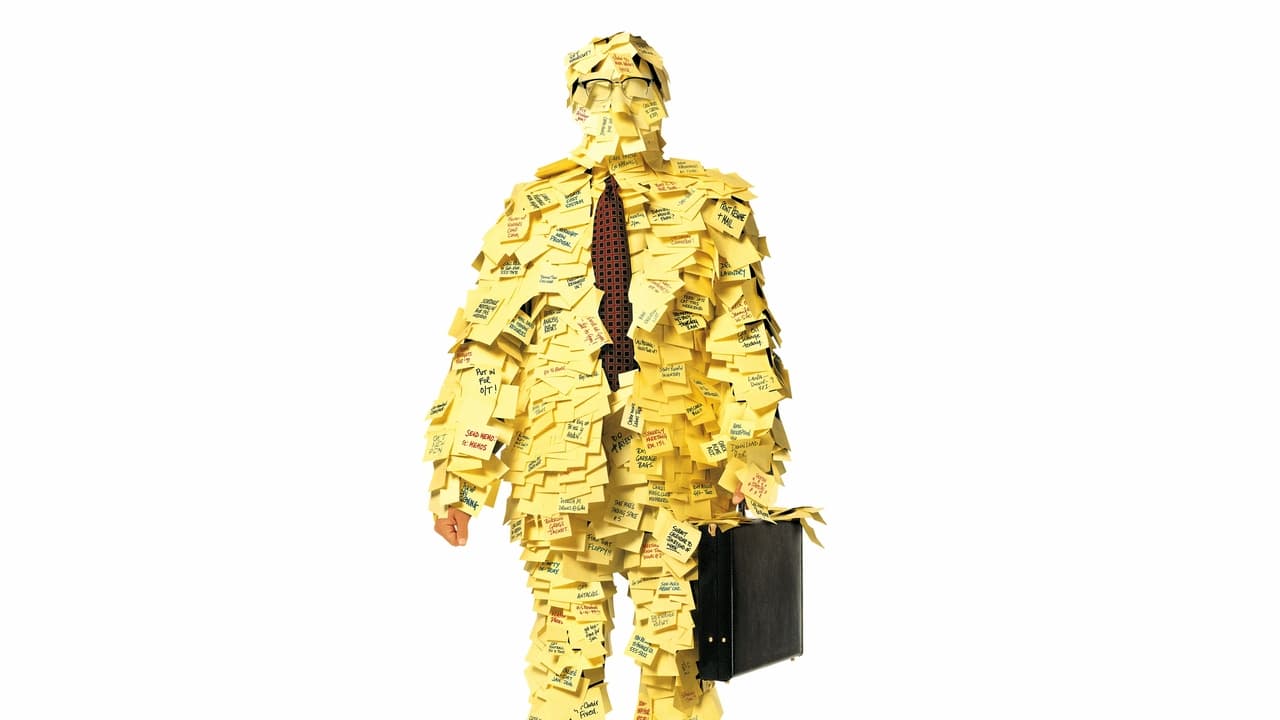
And then there's Milton. Oh, Milton Waddams. Stephen Root created an icon of quiet desperation, shuffling through the office landscape, perpetually unheard, guarding his beloved red stapler. His mumbled threats and escalating paranoia are both hilarious and deeply unsettling. Retro Fun Fact: That iconic red stapler? Swingline didn't actually manufacture one in that colour until the movie's cult following created massive demand. Fans literally willed it into existence! It’s a testament to how deeply Milton's plight, and his one treasured possession, connected with audiences. His eventual fiery revenge feels less like a plot twist and more like inevitable karmic justice. Another fun tidbit: the film was shot primarily in Austin, Texas, giving it that specific, sun-baked suburban sprawl feel that contrasts so well with the sterile office interiors.
The Little Movie That Could (On Video)
It’s almost unbelievable now, but Office Space barely made a ripple in theaters. With a budget around $10 million, its initial $12 million gross was considered a disappointment. But then came VHS and DVD. Word-of-mouth spread like wildfire. Suddenly, everyone was quoting Lumbergh, talking about "TPS reports," and sympathizing with Milton. It found its audience huddled around flickering CRT TVs, recognizing their own lives in its frames. It became the movie you had to show your coworkers, a shared language for the disenfranchised office drone. Its legacy isn't just in its quotability, but in how perfectly it skewered a specific type of late-90s corporate culture that, terrifyingly, hasn't entirely disappeared.
Rating: 9/10
This score is earned through its pitch-perfect satirical observation, endlessly quotable dialogue, career-defining performances (especially from Cole and Root), and that one legendary scene of technological vengeance. It faltered slightly at the box office, but its resurrection on home video proves its profound connection with anyone who's ever felt like a cog in a machine. Office Space isn't just funny; it's therapeutic.
Final Thought: Decades later, long after the last VHS copy has been rewound, Office Space remains the ultimate reminder that sometimes, the most satisfying explosions don't involve dynamite, but a baseball bat and a really, really annoying printer. It's aged like fine, slightly disgruntled wine.