The humidity practically drips off the screen. Sweat beads on mutated flesh under a relentless jungle sun, mirroring the feverish intensity boiling behind the scenes of this infamous 1996 production. The Island of Dr. Moreau isn’t just a film; it’s a celluloid testament to chaos, a bizarre spectacle born from conflict, ego, and studio desperation, somehow clawing its way onto VHS shelves to haunt our late-night viewings. Watching it again feels less like revisiting a movie and more like excavating a beautifully grotesque artifact from a cursed dig site.
House of Pain, House of Production Hell
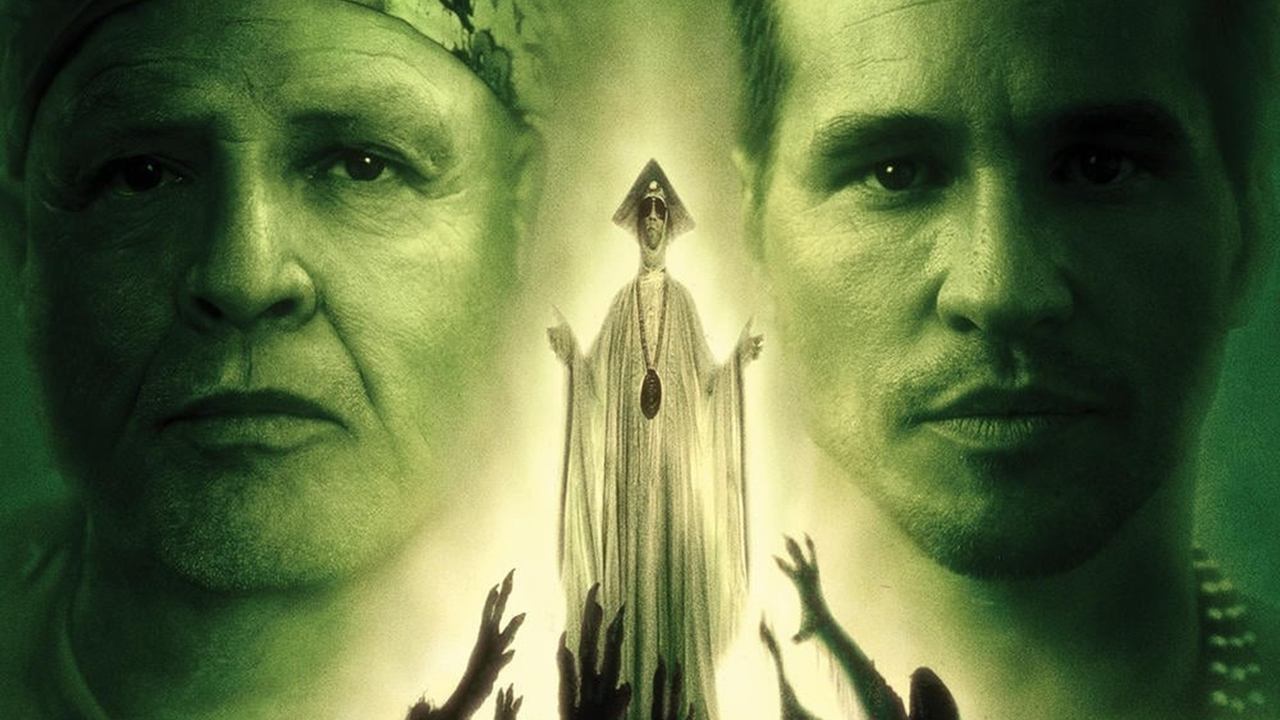
Let's be blunt: the story behind this film often overshadows the story within it. Originally helmed by visionary director Richard Stanley (of Hardware fame), his ambitious adaptation of H.G. Wells' cautionary tale quickly descended into legendary turmoil. Stanley, fired mere days into shooting, reportedly vanished into the Australian rainforest, only to sneak back onto set disguised as one of the dog-men extras – a detail so surreal it perfectly encapsulates the film's troubled genesis. Enter veteran director John Frankenheimer (The Manchurian Candidate, Ronin), tasked with salvaging a production already plagued by rewrites, clashing egos, and, notoriously, the increasingly erratic behaviour of its two megastars.
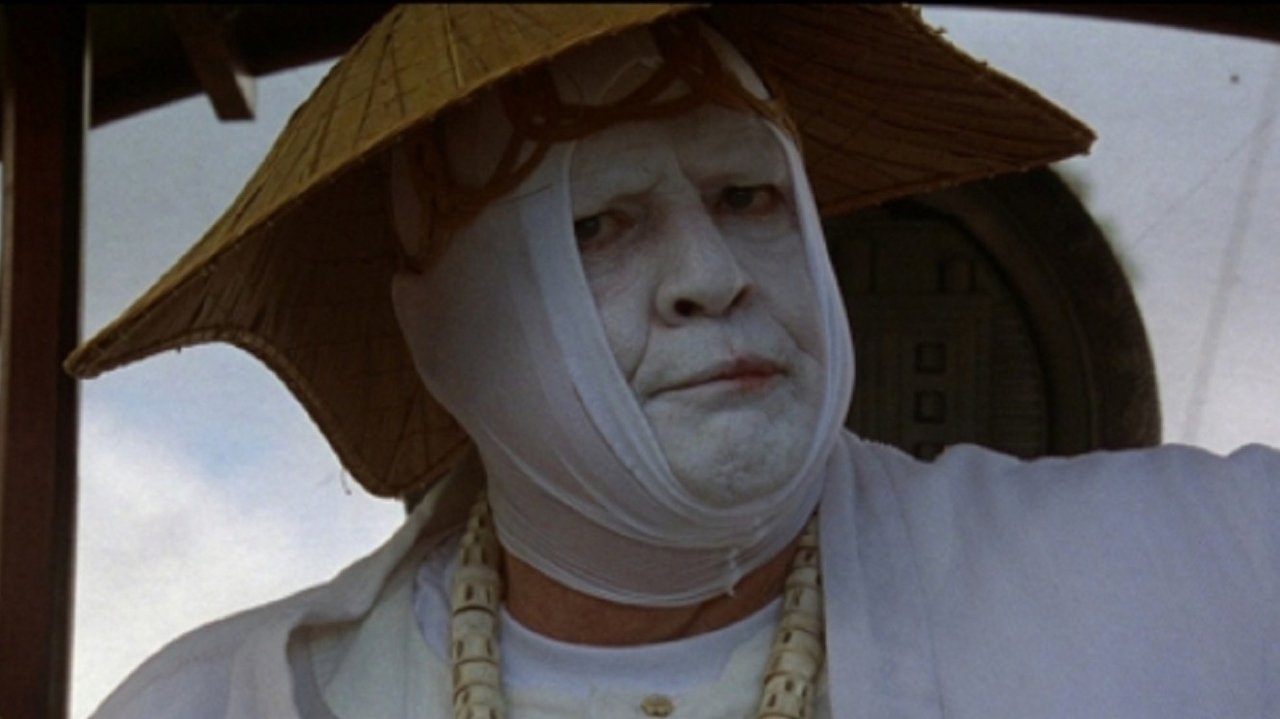
The atmosphere of dread you feel watching isn't just Moreau's island; it's the palpable tension of a film fighting itself. David Thewlis, fresh off his stunning turn in Naked (1993), steps into the role of Edward Douglas, the UN negotiator stranded on this island of horrors, essentially becoming the audience's shell-shocked viewpoint character. He witnesses the god complex of Dr. Moreau, played by a Marlon Brando who seemed less interested in the script and more in pursuing baffling creative whims – the ghostly white face paint, the ice bucket hat, the insistence on having a miniature clone of himself (played by Nelson de la Rosa) mimic his every move. It’s a performance both mesmerizingly strange and frustratingly detached, a glimpse of genius swallowed by eccentricity. Reportedly, Brando often refused to leave his air-conditioned trailer and communicated primarily via earpiece, adding another layer to the on-set difficulties.
Monsters Within and Without
Then there's Val Kilmer as Montgomery, Moreau's drug-addled former neurosurgeon assistant. Kilmer, riding high from Batman Forever (1995), allegedly clashed fiercely with Frankenheimer and Brando, his behaviour contributing significantly to the on-set friction. His performance reflects this chaos – unpredictable, sometimes magnetic, sometimes seemingly unhinged. Does his intense, borderline-manic energy work for the character? Sometimes. Does it feel like watching an actor teetering on the edge? Absolutely. The friction between the stars, particularly Brando and Kilmer, is almost tangible, bleeding into their characters' strained dynamic.
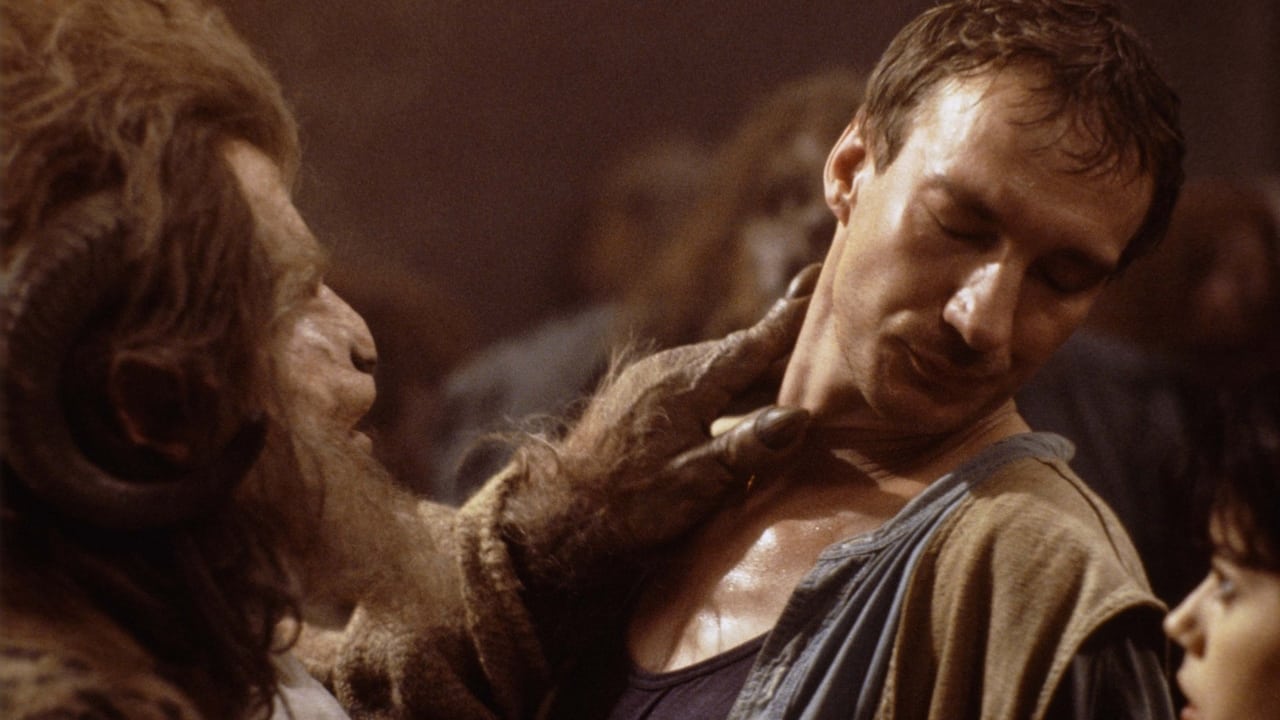
Amidst this human drama, the true stars might be the 'Beast Folk'. Brought to life by the legendary Stan Winston Studio, the practical creature effects remain impressive, even today. The textures of fur, hide, and distorted anatomy possess a visceral quality that CGI often struggles to replicate. The Sayer of the Law, Hyena-Swine, Lo-Mai – these figures are genuinely unsettling creations, embodying the film's core themes of unnatural hybridity and the thin veneer of humanity. Remember seeing those faces leer out from the shadows on a grainy CRT? They captured a specific kind of body horror that felt disturbingly possible, thanks to Stan Winston's masterful work, even if the script sometimes reduces them to generic movie monsters. The budget, a hefty $40 million (around $78 million today), certainly shows in the creature design and jungle sets, creating a viscerally unpleasant world.
A Flawed, Fascinating Failure
Does the film succeed in adapting Wells' chilling novel? Not entirely. The narrative, heavily rewritten from Stanley's original vision and further altered during shooting, feels disjointed. It careens between philosophical horror, creature feature, and moments of baffling camp (mostly courtesy of Brando). Thewlis does his best to ground the madness, but Douglas often feels like a passive observer swept along by events rather than an active participant. The film wrestles with big ideas – the ethics of genetic manipulation, the nature of humanity, the dangers of playing God – but often fumbles the execution, getting lost in its own spectacle and behind-the-scenes baggage. It pulled in just under $50 million worldwide, making it a commercial disappointment given its budget and star power.
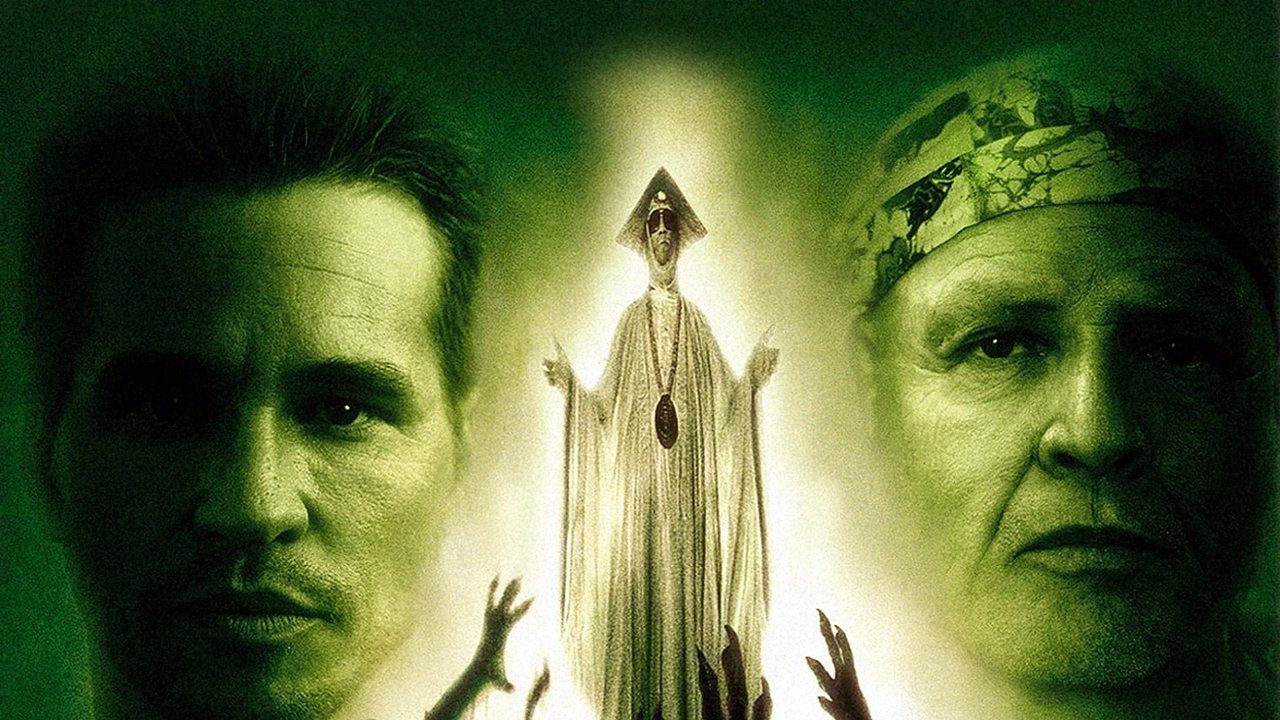
Yet, despite its flaws, The Island of Dr. Moreau (1996) exerts a strange pull. It's a lurid, excessive, and often incoherent slice of 90s studio filmmaking gone wild. It’s the kind of movie you’d rent on a whim, drawn in by the cover art and the promise of Brando and monsters, only to be left bewildered and vaguely disturbed. It's a fascinating car crash – you know it’s a mess, but you can't look away. The sheer audacity of Brando's performance, the quality of the creature effects, and the undeniable atmosphere of decay and corruption make it memorable, if not exactly 'good' in the traditional sense.

Rating: 4/10
This score reflects a film deeply compromised by its troubled production. While Stan Winston's creature effects are outstanding and the core concept remains potent, the disjointed narrative, uneven performances (particularly Brando's bizarre turn and the visible friction), and Frankenheimer's salvage-job direction prevent it from achieving its potential. It’s a captivating failure, a curio for fans of cinematic trainwrecks and practical effects showcases, but far from the definitive adaptation of Wells' masterpiece.
It remains a potent reminder from the VHS era that sometimes the most terrifying monsters aren't the ones stitched together in a lab, but the ones born from unchecked ego and Hollywood hubris. Doesn't that chaotic energy, preserved on tape, feel like a weirdly fitting epitaph for the whole endeavor?