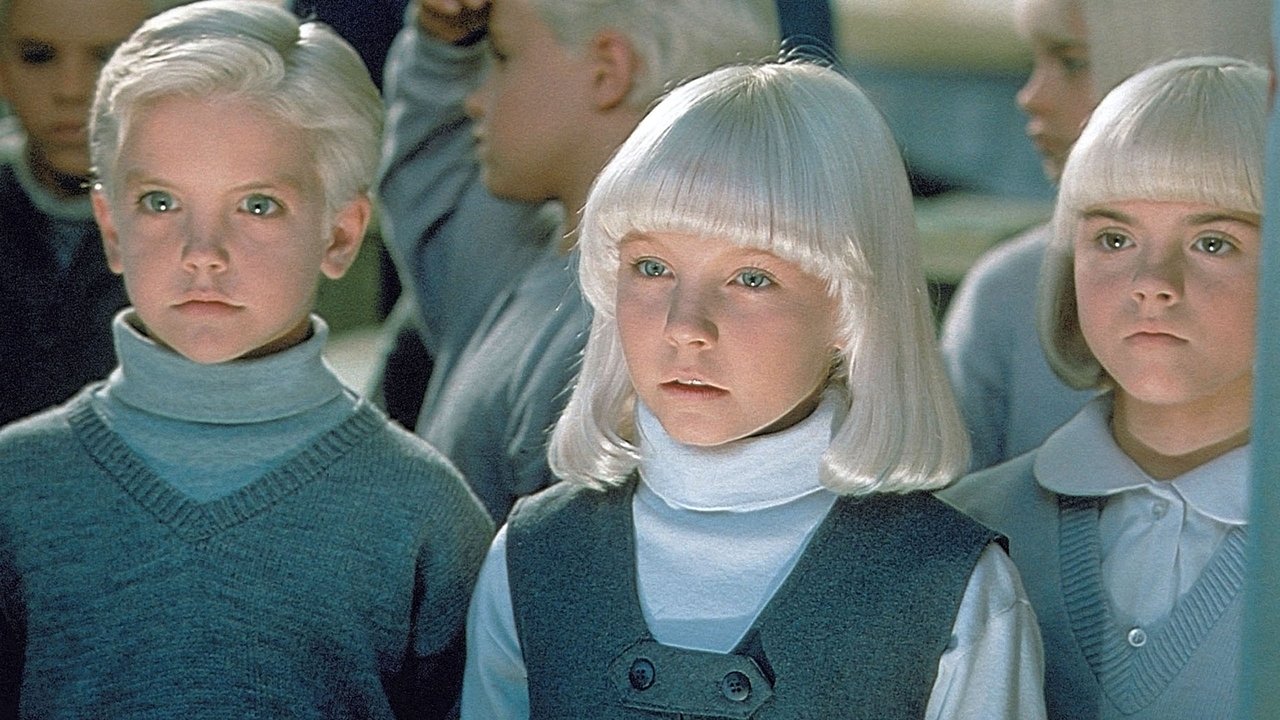
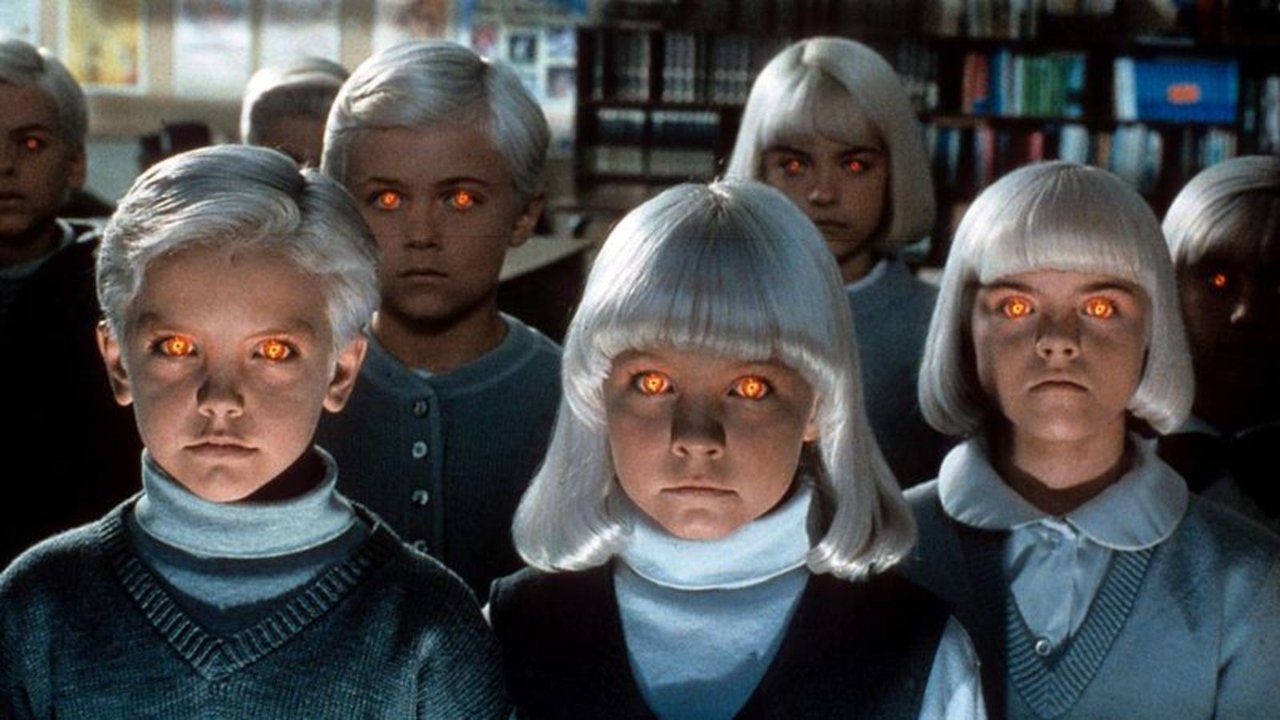
There's a chilling uniformity to their platinum blonde hair, their tailored grey outfits, their piercing, unwavering gazes. They move in unsettling synchronicity, these children of Midwich, born under circumstances too strange, too violating, to be natural. They are the cold, quiet heart of John Carpenter's 1995 reimagining of Village of the Damned, a film that arrived on VHS shelves carrying the weight of both a classic source material and the reputation of its director, a maestro of modern horror. Does it reach the heights of Carpenter's best? Perhaps not. But does it burrow under your skin with its own brand of icy dread? Absolutely.
### The Silence Before the Storm
The setup remains unnervingly effective, mirroring the 1960 original (itself based on John Wyndham's chilling novel The Midwich Cuckoos). The idyllic, isolated coastal town of Midwich, California, experiences a bizarre phenomenon: every living creature abruptly falls unconscious for six hours. When they awaken, nothing seems amiss... until ten local women, including virgins and the wife of the town doctor, Alan Chaffee (Christopher Reeve), discover they are inexplicably pregnant. The births occur simultaneously, yielding children who are physically striking but emotionally void, possessing powerful psychic abilities and a shared, alien consciousness. Carpenter, ever the master of widescreen composition, uses the picturesque locations (shot primarily around Inverness and Point Reyes Station, California) to amplify the wrongness, the serene backdrop making the children's cold presence feel even more invasive.
### Carpenter's Touch in a Studio Frame
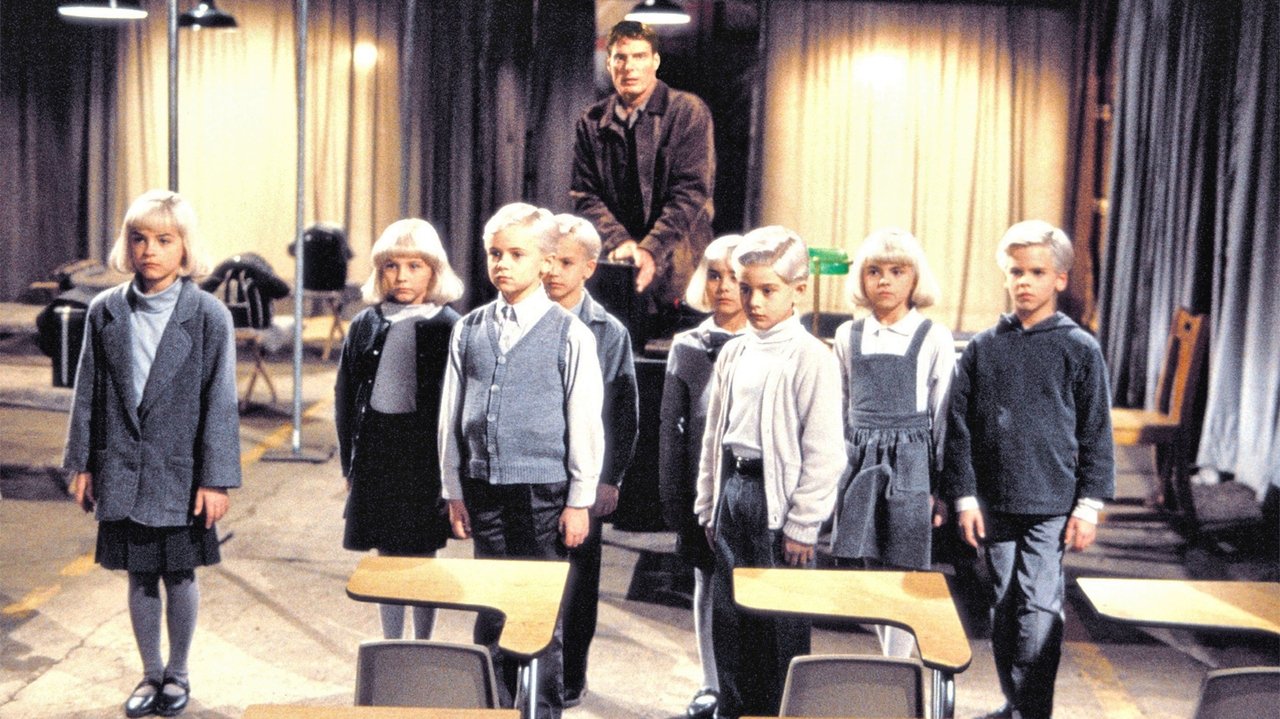
This isn't Carpenter unfiltered, the way we experienced him in masterpieces like The Thing (1982) or Halloween (1978). Village of the Damned was a studio assignment, one he reportedly took after other projects stalled, and you can occasionally feel a certain pull-back, a slight sanding of the edges. Yet, his signature is still present. The pacing is deliberate, building tension through quiet observation rather than constant jump scares. The synth-driven score, co-composed by Carpenter and the legendary Dave Davies of The Kinks, pulses with an appropriately ominous, electronic dread that feels distinctly of its time, yet effective. You see Carpenter's hand in the way he frames the children, often isolating them within the wide scope, emphasizing their otherness against the increasingly desperate townsfolk.
It's impossible to discuss this film without acknowledging the presence of Christopher Reeve. In what would tragically become his final starring role released before the devastating 1995 accident that paralyzed him, Reeve brings a grounded humanity and weary determination to Dr. Chaffee. His struggle – grappling with the unnatural nature of his own "son," David (Thomas Dekker), while trying to protect his town – anchors the film emotionally. There's an undeniable poignancy watching him now, a layer the film carries unintentionally but powerfully. The supporting cast includes familiar faces like Kirstie Alley as a government scientist with a cold agenda, Linda Kozlowski (Crocodile Dundee's leading lady) as a frightened town mother, and even Mark Hamill (Luke Skywalker himself!) in a surprisingly intense turn as the town's increasingly frantic Reverend.
### The Children Are Watching
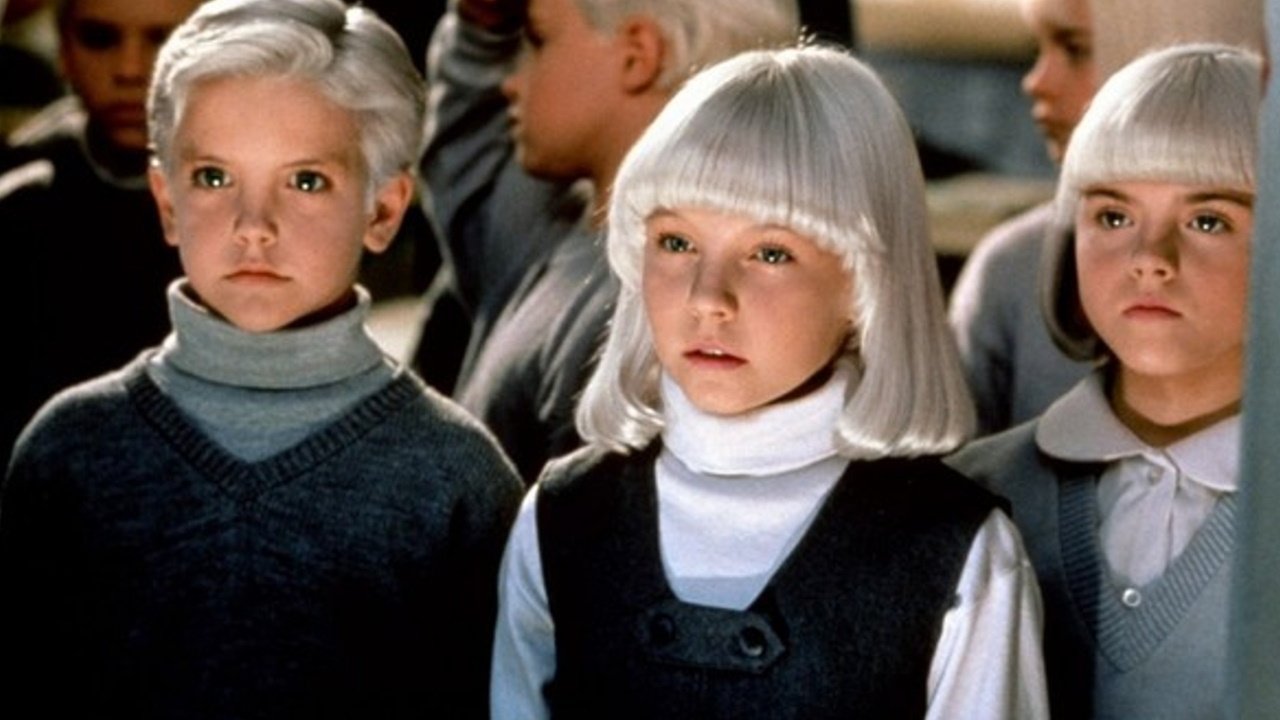
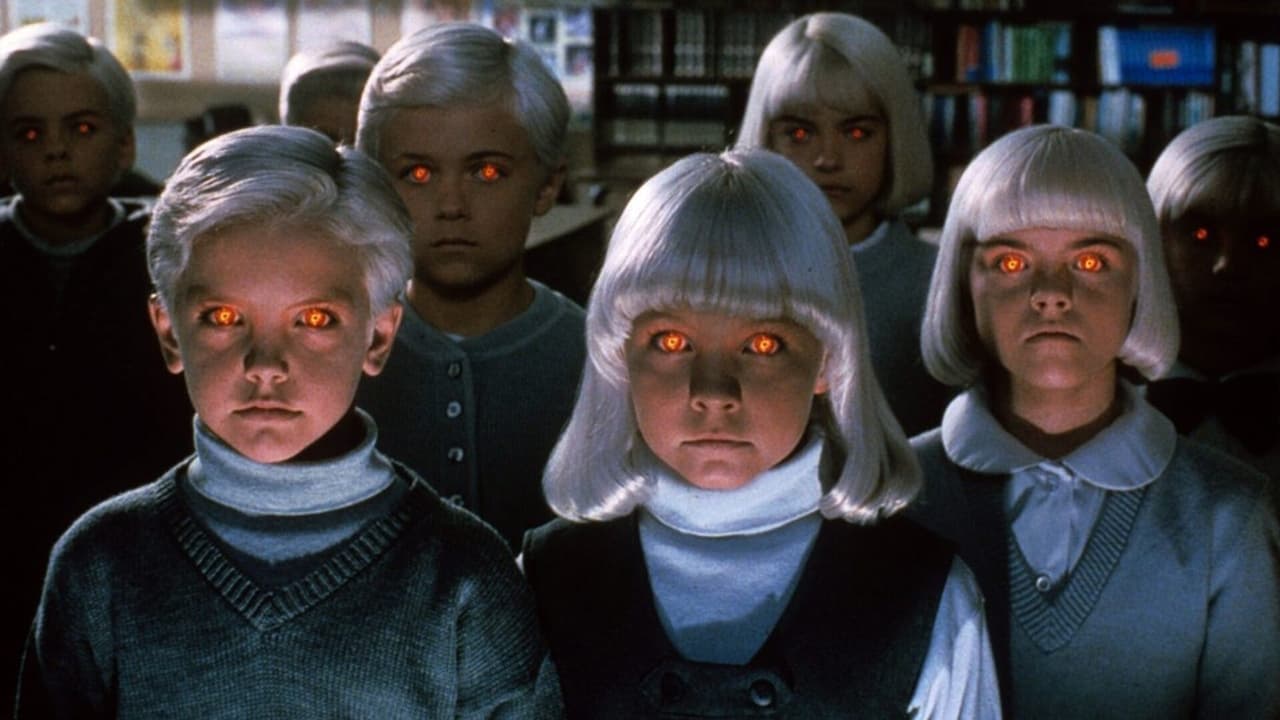
The success of Village hinges on the effectiveness of its juvenile antagonists. The child actors manage a collective performance that is genuinely unnerving. It’s not just the infamous glowing eyes (a practical effect enhanced optically, certainly striking on a CRT screen back in the day), but the lack of childish impulse, the monotone delivery, the cold calculation behind their actions. When they focus their collective will, the results are brutal and swift, Carpenter staging these moments with a stark efficiency that avoids excessive gore but maximizes impact. The way they turn suspicion and paranoia amongst the adults into a weapon feels particularly chilling. Did finding children capable of portraying such detached menace prove difficult? One can only imagine the casting calls.
Despite its strengths – Carpenter's undeniable craft, Reeve's solid performance, some genuinely creepy moments – the film wasn't a hit. Made for an estimated $22 million, it earned back less than $10 million at the US box office, cementing its status as one of Carpenter's less commercially successful ventures and perhaps contributing to why it sometimes feels like a footnote in his filmography. Some critics at the time found it inferior to the starker, black-and-white original, feeling the colour somehow lessened the impact. Maybe they had a point, maybe not – but this version possesses its own specific 90s flavour, a certain studio sheen layered over Carpenter's darker sensibilities.
### Legacy of the Damned
Does Village of the Damned (1995) stand shoulder-to-shoulder with Carpenter's best work? No, it lacks the raw invention of They Live (1988) or the suffocating paranoia of The Thing. It feels, at times, like a director fulfilling an obligation, albeit with professional skill and flashes of his trademark style. Yet, dismissing it entirely would be a mistake. There's a pervasive unease that lingers, particularly in the performances of the children and the tragic weight carried by Christopher Reeve's presence. It taps into primal fears – the loss of control, the unknown within the familiar, the chilling possibility that the next generation might be utterly alien. Renting this from the video store back in the day, perhaps drawn by Carpenter's name or the unsettling cover art, you likely found a sci-fi horror film that delivered a solid dose of eerie atmosphere, even if it didn't reinvent the wheel.
Rating: 6/10
Justification: While Carpenter's directorial skill is evident and Reeve delivers a strong anchor performance, the film sometimes feels constrained and doesn't quite capture the chilling brilliance of the original or Carpenter's own best work. The atmosphere is effective, the children are creepy, and the score hits the right notes, but uneven pacing and a sense of studio compromise hold it back from greatness. It's a solid, often unsettling watch, but ultimately a mid-tier entry in the Carpenter canon.
Final Thought: A worthwhile watch for Carpenter completists and fans of 90s sci-fi horror, Village of the Damned is a remake that, while flawed, still manages to conjure a palpable sense of small-town dread pierced by those unforgettable, glowing eyes.