It takes a certain kind of courage, doesn't it, to remake a film woven into the fabric of Hollywood legend? When word got out that Sydney Pollack, a director known for intelligent adult dramas like Out of Africa (1985) and the sharp social satire of Tootsie (1982), was tackling Billy Wilder’s effervescent 1954 classic Sabrina, eyebrows surely raised. And casting Harrison Ford, our beloved Indy and Han Solo, in the Humphrey Bogart role? That felt like a particularly daring gamble back in 1995. Yet, revisiting this glossy remake on a quiet evening, it offers a distinct charm, a kind of warm, comfortable echo of the original, filtered through a distinctly 90s lens.
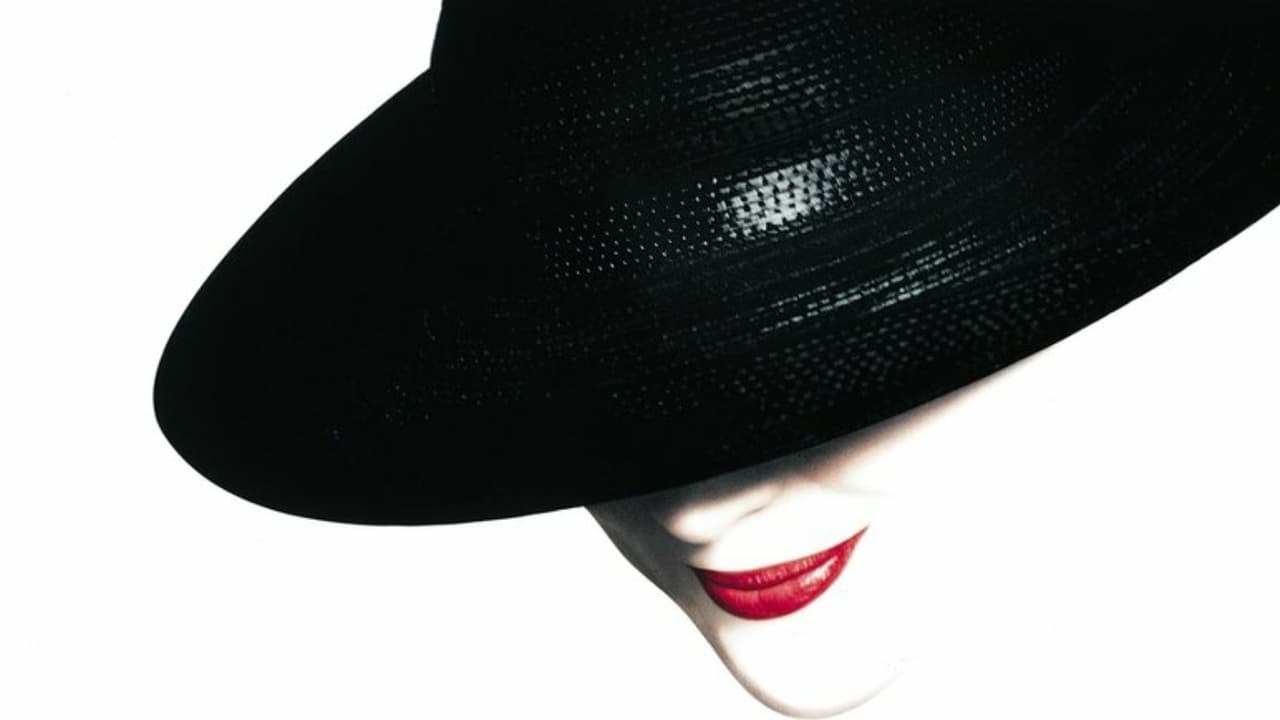
A Fairy Tale Updated (Mostly)
The bones of the story remain familiar: Sabrina Fairchild (Julia Ormond), the shy, unassuming daughter of the Larrabee family's chauffeur, lives in the shadow of their sprawling Long Island estate, hopelessly smitten with the charmingly irresponsible younger son, David (Greg Kinnear). A transformative trip to Paris promises sophistication and a chance to forget, but upon her return, the dazzlingly changed Sabrina captures David's attention, jeopardizing a billion-dollar merger orchestrated by the all-business older brother, Linus Larrabee (Harrison Ford). Linus, ever the pragmatist, steps in to divert David's affections, only to find himself unexpectedly falling for Sabrina himself.
What Pollack and writers Barbara Benedek (The Big Chill (1983)) and David Rayfiel achieve is less a radical reinvention and more a careful modernization. The Larrabee world feels less like old-money aristocracy and more like the gleaming, corporate-driven wealth of the mid-90s. The fairy tale aspect is still present, thanks largely to the luminous presence of Julia Ormond and the almost impossibly luxurious production design, but it’s grounded in a slightly more recognizable reality. That enormous indoor swimming pool, the sprawling lawns – it felt opulent even then, a fantasy world accessible via the magic of VHS.
Stepping into Iconic Shoes
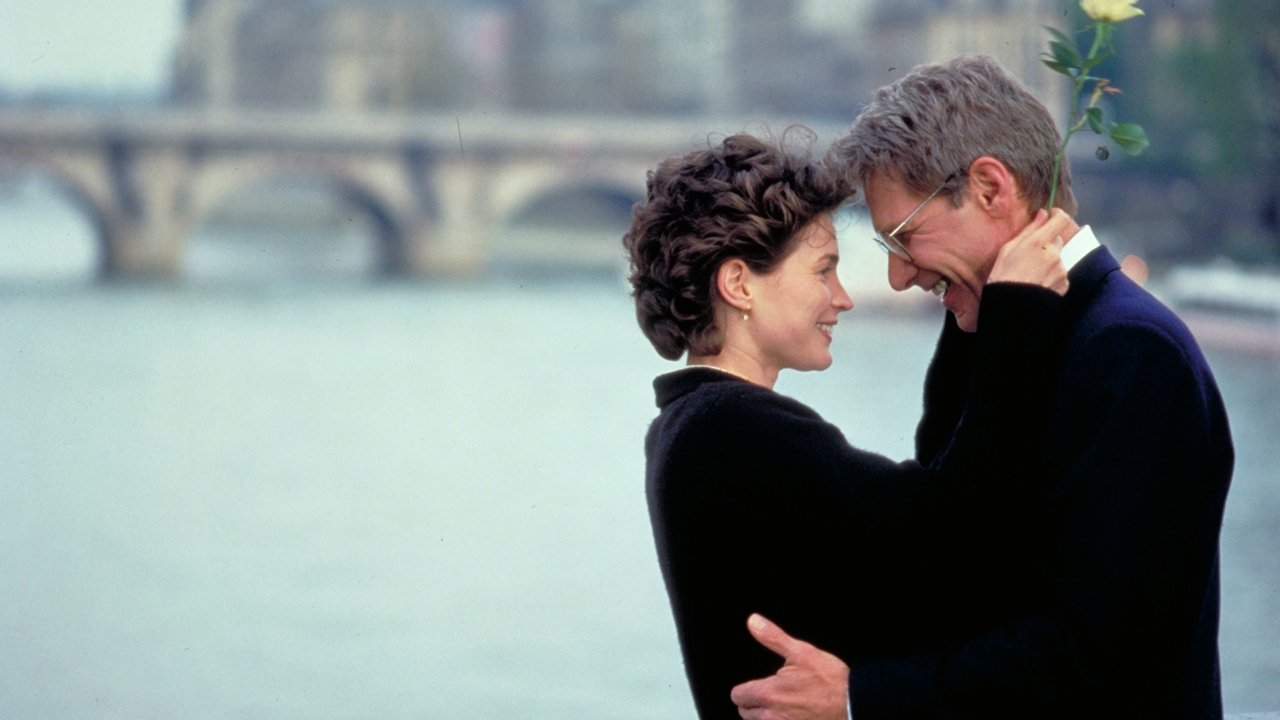
The casting remains the film's most debated aspect, particularly Ford as Linus. Bogart’s Linus was world-weary, cynical, yet with a flicker of vulnerability beneath the surface. Harrison Ford brings a different energy – initially gruff, almost entirely closed-off, his Linus is a man utterly consumed by work, seemingly incapable of seeing beyond the bottom line. It’s a performance that takes time to warm up. Ford, known more for his physical presence and roguish charm, leans into Linus's awkwardness and emotional constipation. The transformation, when it comes, feels earned, if perhaps less inherently romantic than Bogart's subtle thawing. It’s fascinating to see Ford stretch himself in a role demanding quiet introspection rather than whip-cracking action. He reportedly wasn't Pollack's first choice (rumors often mention Tom Cruise or even Warren Beatty, who starred in the other big 90s remake of a classic romance, Love Affair (1994)), but Ford makes Linus his own – a titan of industry blindsided by genuine feeling.
Julia Ormond, fresh off her star-making turn in Legends of the Fall (1994), faced the unenviable task of following Audrey Hepburn. She wisely doesn't try to mimic Hepburn's gamine sparkle. Instead, her Sabrina possesses a quieter intelligence and a tangible yearning. Her transformation feels believable, less a magical makeover and more the blossoming of confidence gained abroad. She brings a sincerity and warmth that anchors the film, even if the script occasionally leaves her reacting more than acting. You root for her discovery of self-worth as much as her romantic entanglements.

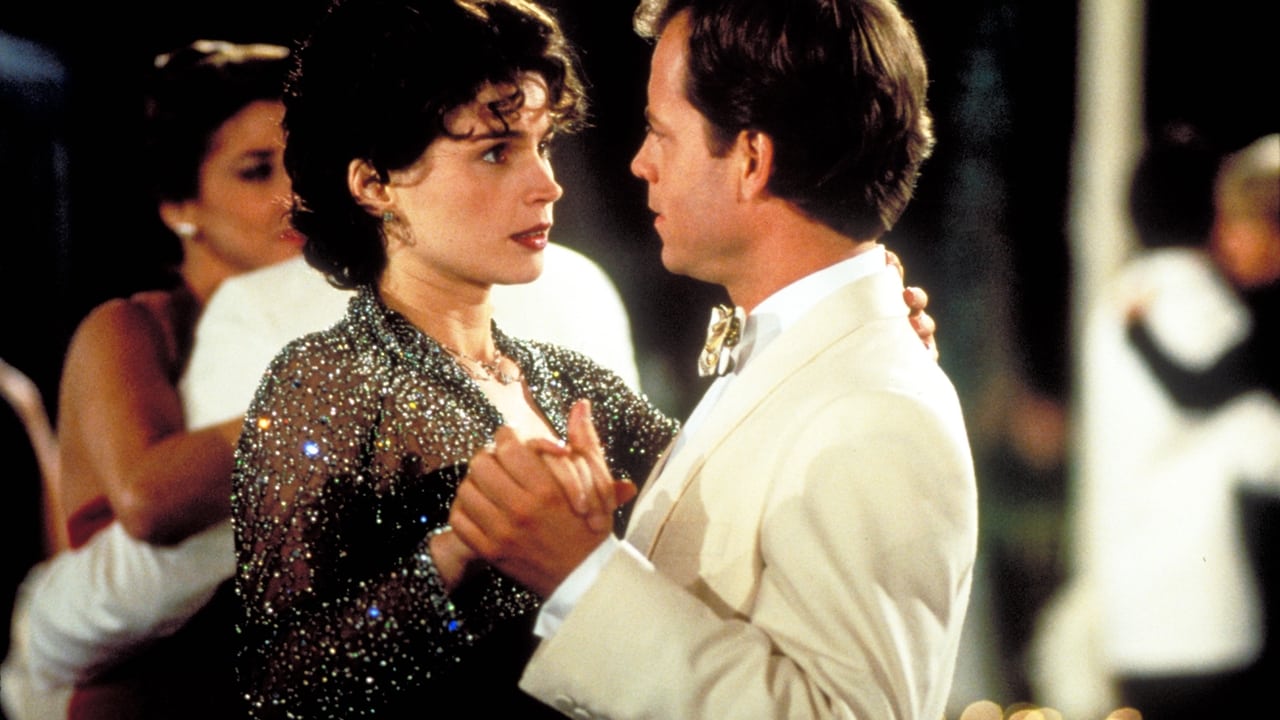
And then there's Greg Kinnear, in one of his earliest major film roles after gaining fame as the host of Talk Soup. He’s effortlessly charming and funny as David, capturing the character's breezy appeal and surface-level allure without making him entirely vapid. He makes David’s eventual (and necessary) turn feel somewhat plausible, adding a touch more dimension than William Holden's portrayal perhaps allowed in the original.
Pollack's Polished Touch and Retro Facts
Sydney Pollack's direction is typically meticulous and visually elegant. He knows how to frame his actors and create a sense of place. The Long Island estate feels both grand and slightly suffocating, a gilded cage. The Paris sequences, while perhaps not as transformative as in Wilder's film, are beautifully shot. There's a smoothness and professionalism to the entire production that makes it incredibly easy to watch.
Interestingly, this polished production came with a hefty price tag (around $58 million in 1995, roughly $116 million today) but didn't quite light up the box office, pulling in about $53 million domestically. It seemed audiences weren't entirely ready for this gentler, more romantic Harrison Ford, or perhaps the magic of the original simply loomed too large. Despite this, the film secured Oscar nominations for John Williams' lovely, understated score and the original song "Moonlight," performed by Sting. One fun tidbit: the spectacular Larrabee estate wasn't just one location but a composite of several grand properties on Long Island's North Shore, seamlessly stitched together by movie magic.
A Warm Embrace, If Not a Fiery Passion
Does the 1995 Sabrina surpass the 1954 original? For most, the answer is likely no. Wilder's film possesses a sparkling wit and an iconic trio of stars operating at peak luminescence that's hard to replicate. Yet, judged on its own terms, Pollack's version is a genuinely pleasant, well-crafted romantic comedy-drama. It feels like a comfortable old sweater – maybe not the most exciting thing in the closet, but familiar, warm, and reliably satisfying.
What lingers most after watching it now isn't just the 90s fashion or the sheer star power, but the quiet competence of it all. It’s a film made by professionals who clearly respected the source material but weren't afraid to tailor it for their own time. Ford’s slightly stiff vulnerability, Ormond’s earnest charm, Kinnear’s easy charisma – they create a different, perhaps less dazzling, but still engaging dynamic. I distinctly remember renting this one, perhaps comparing it mentally to the black-and-white original my parents loved, and finding it a perfectly enjoyable escape. It doesn't demand intense analysis, but it offers comfort, romance, and a glimpse of stars navigating roles slightly outside their expected zones.
Rating: 7/10
The score reflects a film that is beautifully made, wonderfully cast (even if controversially so for some), and genuinely charming, if lacking the indelible magic of its predecessor. It succeeds as a warm, sophisticated 90s romance, anchored by solid performances and Pollack's assured direction. It might not be lightning in a bottle, but it's a pleasant, glowing ember nonetheless.
It leaves you pondering, perhaps, the nature of remakes – can they ever truly stand apart, or are they destined always to be measured against the ghosts of films past? In Sabrina's case, maybe just being a lovely film in its own right is enough.