Ah, the forbidden pet. Remember that universal childhood yearning? The desperate plea for a puppy, a kitten, maybe even something a bit more… exotic? In 1994, Monkey Trouble tapped right into that vein, delivering a fantasy many kids surely entertained: what if you found, and secretly kept, a super-smart, incredibly cute Capuchin monkey? Forget hamsters; young Eva Gregory hit the jackpot when Dodger, a fugitive from a life of crime, scampered into her life. It’s the kind of simple, wish-fulfillment premise that felt tailor-made for a Saturday afternoon rental, promising laughs, mild peril, and undeniable cuteness.
### A Bond Forged in Secret
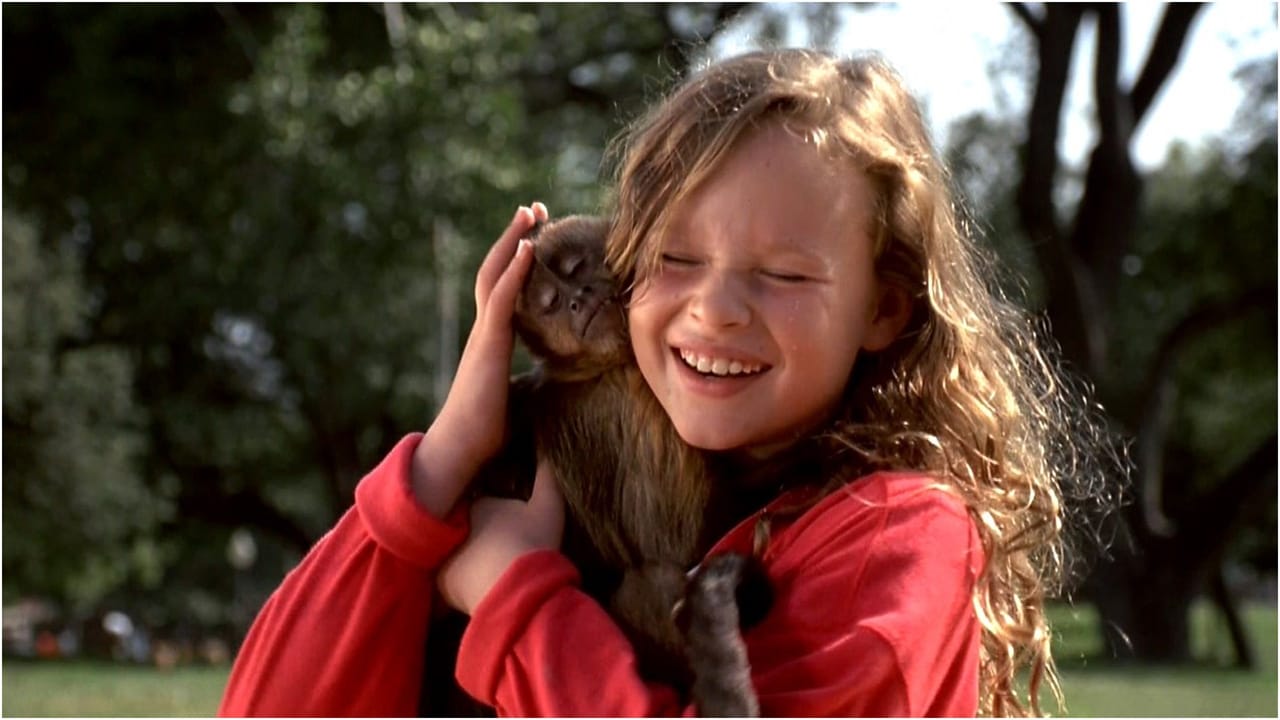
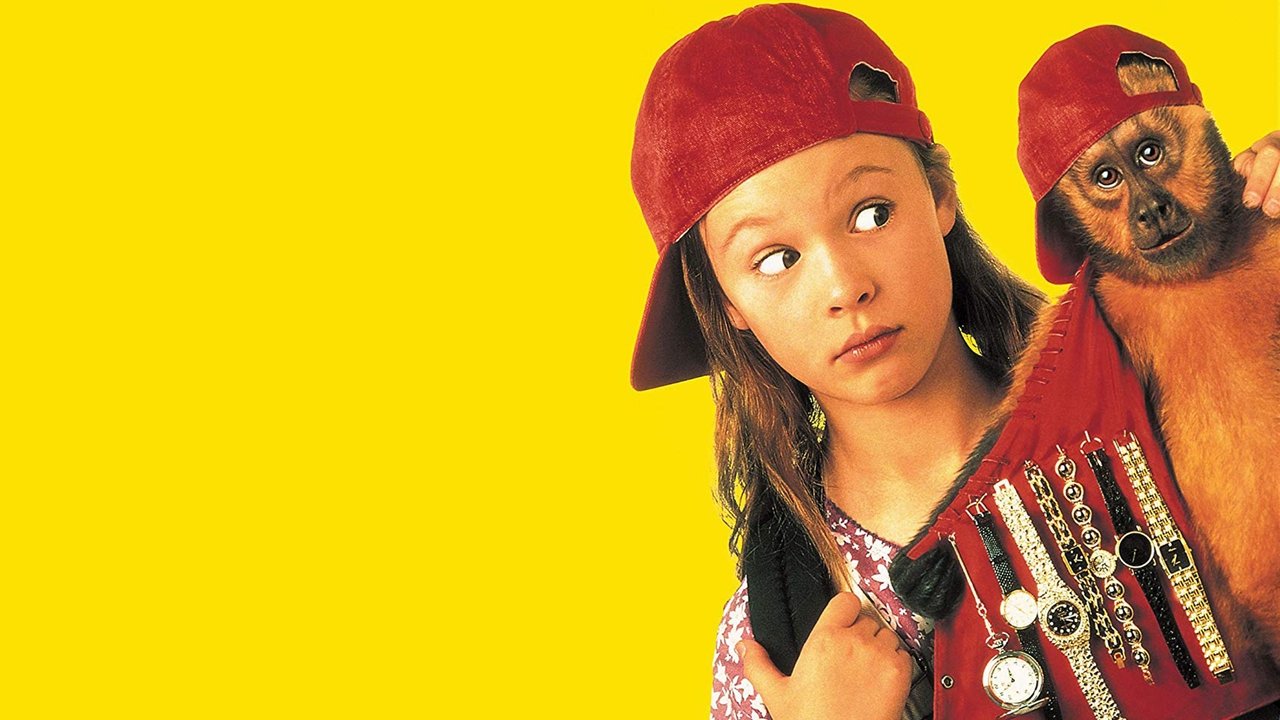
The setup is classic family-film fare. Nine-year-old Eva (played by a bright-eyed Thora Birch, already familiar from hits like Hocus Pocus the year prior) feels misunderstood. Her mom (a warm Mimi Rogers) is remarried to a seemingly allergic-to-everything stepdad (Christopher McDonald), and her pleas for a pet fall on deaf ears. Enter Dodger, the Capuchin monkey trained as a pickpocket by his disgruntled former owner, the vaguely menacing gypsy Azro. When Dodger escapes Azro's clutches during a street performance gone wrong, he finds refuge with Eva, who instantly falls for the little creature she names Fingers (later learning his real name). Directed by Franco Amurri (who also co-wrote with Stu Krieger, the pen behind the beloved animated classic The Land Before Time), the film quickly establishes the sweet, secretive bond between girl and monkey, hiding him from her oblivious parents in scenes that surely resonated with any kid who ever tried to sneak anything past their folks.
### Wait, Is That Harvey Keitel?
Now, let's address the Capuchin in the room: Harvey Keitel. Yes, that Harvey Keitel. Fresh off intense, iconic roles in films like Reservoir Dogs (1992) and Bad Lieutenant (1992), and just before his legendary turn in Pulp Fiction (1994), seeing him here as Azro, the vaguely European street performer/thief chasing a monkey, is… well, it's something. It’s like finding a rare truffle sprinkled on your peanut butter sandwich. Reportedly, Keitel took the somewhat unusual role partly because his own daughter was young at the time, wanting to make a film she could actually see. While Azro isn't exactly his most complex character (and relies on some rather broad, potentially dated stereotypes), Keitel commits with his signature intensity, lending the film an unexpected edge. His pursuit of Dodger provides the central conflict, a low-stakes but effective chase that keeps the plot moving. You can't help but chuckle slightly, though, imagining the conversations on set between the serious actor and his primate co-star.
### Dodger Steals the Show (Literally)
The real star, of course, is Dodger, played by a talented Capuchin named Finster. In an era before CGI animals became commonplace, the charm of Monkey Trouble rests heavily on Finster’s very real performance. Capuchins were quite the rage in Hollywood around this time – think Marcel in Friends or Betsy in Outbreak (1995). Finster imbues Dodger with genuine personality, whether he’s mimicking Eva, causing household chaos, or demonstrating his unfortunately well-honed pickpocketing skills. Those scenes where Dodger deftly lifts wallets and jewelry are cleverly filmed, relying on training, repetition, and smart editing. It’s a testament to the patience of the animal handlers and the director that Dodger feels like a genuine character, not just a prop. This reliance on a real animal performer is peak 90s filmmaking charm, something that gives the movie a tangible, tactile quality often missing today. It adds a layer of unpredictability and warmth that digital creations struggle to replicate.
### That Cozy 90s Family Film Feeling
Monkey Trouble slots perfectly into the landscape of mid-90s family entertainment. It wasn't a massive blockbuster – sources suggest a budget around $11-15 million, earning roughly $18 million globally – but it feels precisely like the kind of movie that found a long and happy life on the shelves of Blockbuster and Hollywood Video. It embodies that specific brand of family film: earnest, a little predictable, focused on relatable childhood problems amplified by extraordinary circumstances (like hiding a kleptomaniac monkey). Thora Birch carries the film with genuine warmth and appeal, making Eva’s bond with Dodger believable and heartwarming. Mimi Rogers provides solid maternal support, grounding the more fantastical elements. The film doesn’t strive for complex themes; its aim is simple entertainment, a cozy adventure with just enough excitement to keep younger viewers engaged, centered around the core appeal of having a truly unusual best friend. Watching it now definitely evokes that feeling of simpler times, when a girl and her monkey could carry a whole movie.
### Final Thoughts: A Nostalgic Treat
Is Monkey Trouble a cinematic masterpiece? Perhaps not. The plot is fairly straightforward, some characterizations feel a bit thin, and the humor is gentle rather than laugh-out-loud. But its charm is undeniable, particularly viewed through the lens of nostalgia. It’s sweet, largely innocent fun powered by a winning performance from Thora Birch and the undeniable charisma of Finster the monkey. And honestly, the sheer novelty of seeing Harvey Keitel as a disgruntled monkey owner is worth the price of admission (or rental fee, back in the day). It captures a specific moment in family filmmaking, relying on practical effects (namely, a real, trained animal) and earnest emotion.
Rating: 6/10
This score reflects the film's genuine heart and nostalgic appeal, balanced against its narrative simplicity and somewhat dated elements. It might not change your world, but Monkey Trouble delivers exactly what it promises: a charming, slightly mischievous adventure that likely delighted many kids back in the VHS era. It’s a warm reminder that sometimes, the best movie magic involves nothing more complicated than a girl and her very, very clever monkey.