The hum of the VCR fades, the tracking lines briefly shimmer, and then… silence. But not peace. Some films don’t just end; they linger, staining the quiet that follows. Jörg Buttgereit's 1993 descent into madness, Schramm (often subtitled Into the Mind of a Serial Killer), is precisely that kind of film – a jagged shard of celluloid lodged firmly under the skin, unearthed from the depths of the German underground video scene. It doesn’t announce itself with fanfare; it creeps in, leaving you complicit in its squalid intimacy.
### A Mind in Fragments
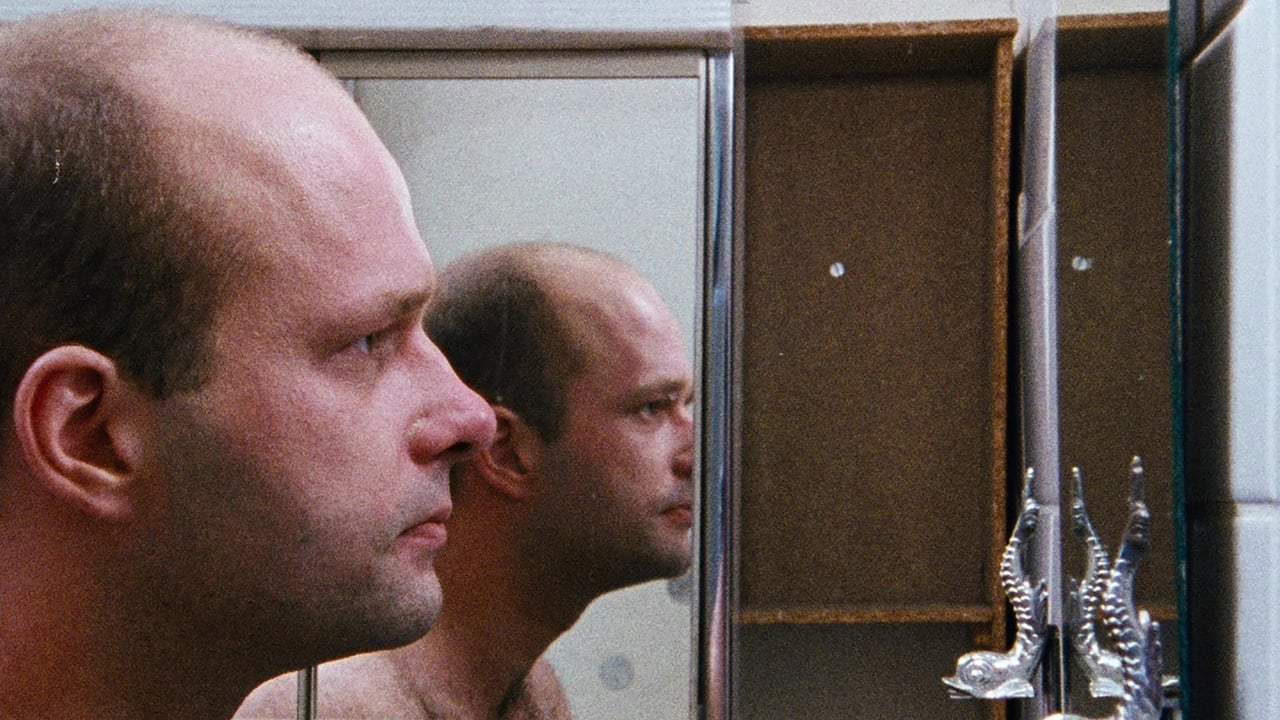
Forget linear storytelling. Schramm throws you headfirst into the fractured consciousness of Lothar Schramm (Florian Koerner von Gustorf), the titular "Lipstick Killer," as he lies dying on his apartment floor. What follows isn't a plot in the conventional sense, but a disordered mosaic of memories, brutal acts, mundane moments, and nightmarish hallucinations. We piece together his lonely existence as a taxi driver, his awkward interactions with a neighboring prostitute, Marianne (Monika M.), and the horrifying violence he inflicts behind closed doors. The film mirrors its subject's broken psyche; time folds in on itself, reality blurs with delusion, forcing the viewer into an uncomfortable proximity with pure pathology. It’s less a narrative and more an autopsy of a decaying soul, performed while the subject is still twitching.
### The Claustrophobic Canvas
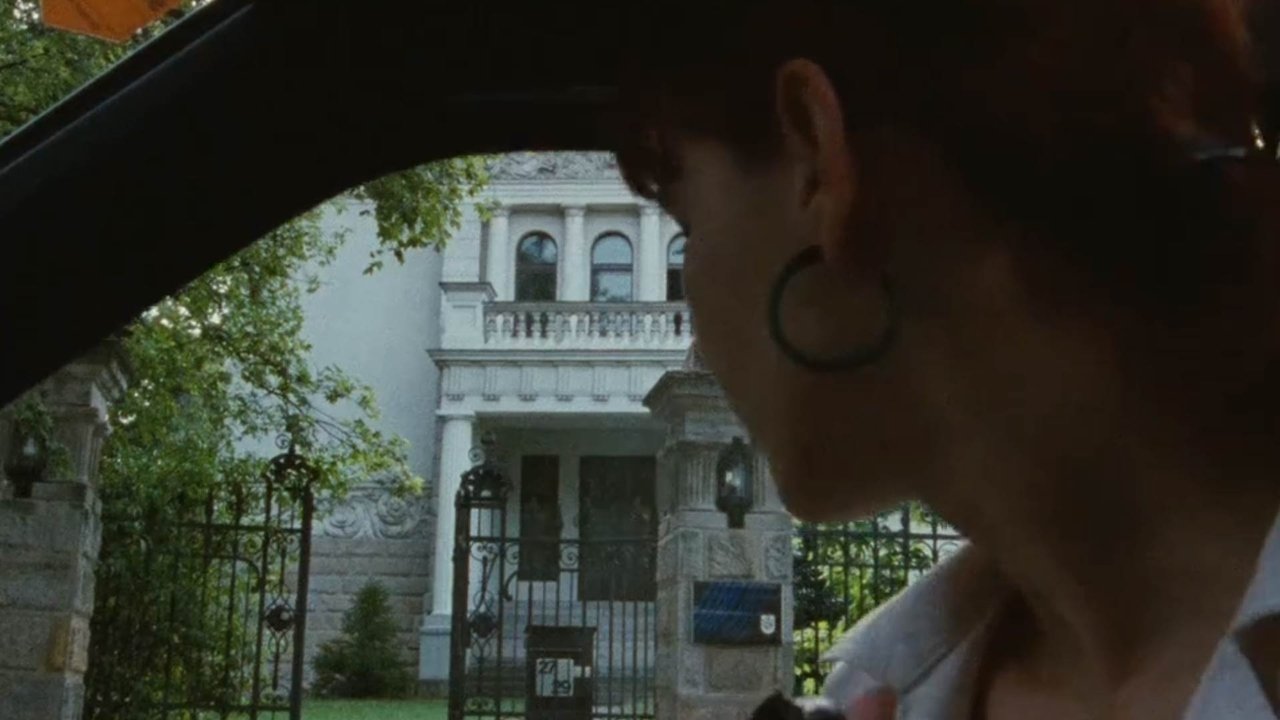
The film rarely leaves the confines of Schramm’s small, dingy apartment, a space that becomes an extension of his own deteriorating mind. This wasn't just an artistic choice; it was likely born of necessity. Working with a notoriously scant budget (rumored to be around 30,000 Deutsche Marks), Buttgereit, ever the master of resourceful guerilla filmmaking, reportedly shot much of the film in his own Berlin apartment. This constraint becomes a potent tool, trapping us with Schramm in his suffocating reality. The camera work, often handheld and unnervingly close, refuses to grant us distance. We’re not just observing; we’re practically breathing the same stale air, trapped within the same peeling wallpaper prison. The visual language is raw, immediate, almost documentary-like in its ugliness, amplifying the sense that we’ve stumbled upon something we were never meant to see.
### The Banality of the Beast
At the centre of this vortex is Florian Koerner von Gustorf, a frequent collaborator with Buttgereit (having served as cinematographer on the infamous Nekromantik). His portrayal of Schramm is chilling precisely because of its lack of overt monstrousness. Schramm is often awkward, pathetic, almost invisible – the quiet neighbour you’d never suspect. There are no grand pronouncements, no theatrical villainy. The film features minimal dialogue, forcing Gustorf to convey Schramm’s inner turmoil and simmering violence through physicality and pained expressions alone. It’s a performance built on unsettling stillness punctuated by bursts of shocking brutality, capturing the terrifying banality that can mask profound darkness. Remember that feeling when a seemingly ordinary character on screen reveals their hidden depths? Schramm embodies that dread.


### Viscera and Vision
Let's not mince words: Schramm is graphic. Buttgereit has never shied away from confronting the physical realities of death and decay, and this film is no exception. The practical effects, while reflective of their low-budget origins, possess a stomach-churning effectiveness. There’s a crudeness to them, a lack of slickness, that somehow makes the violence feel more visceral, more disturbingly real than polished CGI ever could. This unflinching depiction of brutality led to inevitable censorship battles, making Schramm – much like its predecessors Nekromantik (1987) and Nekromantik 2 (1991) – a sought-after piece of forbidden fruit on the murkier shelves of the VHS rental underground. Finding a copy often felt like unearthing transgressive samizdat literature. But crucially, the gore here isn't purely for shock; it serves the psychological portrait, illustrating the gruesome fantasies and actions tearing Schramm apart from the inside.
### Echoes in the Silence
The film’s sound design mirrors its fractured visuals. Long stretches of near silence are punctuated by jarring noises, ambient city sounds filtering through the thin walls, or a minimalist, often dissonant score. This deliberate use of sound, or the lack thereof, heightens the sense of isolation and dread. It underscores Schramm’s alienation from the world outside his apartment and amplifies the impact of the sudden, brutal intrusions of violence. It’s the kind of soundscape that makes the quiet moments almost as tense as the explicit ones.
### Final Descent: Not for the Faint of Heart
Schramm is not an easy watch. It’s deliberately repellent, challenging, and profoundly disturbing. It offers no easy answers, no catharsis, only a bleak immersion into a diseased mind. This is arthouse horror at its most uncompromising, a film that pushes boundaries not just in terms of graphic content, but in its fragmented, subjective approach to narrative. It’s a key work from Jörg Buttgereit, arguably the culmination of his "Trilogy of Death," solidifying his reputation as Germany’s premier purveyor of cinematic extremity. It certainly lacks the (comparatively) more conventional structure of some horror films, making it a difficult recommendation for casual viewing. But for those interested in exploring the outer limits of psychological horror and the raw potential of low-budget, confrontational filmmaking, Schramm remains a potent, unforgettable experience. It’s the kind of film that, once seen, takes up permanent residence in the darker corners of your memory. Did its fragmented reality unsettle you as much as the explicit gore?
Rating: 7/10
Justification: While undeniably niche and challenging due to its graphic nature and experimental structure, Schramm achieves its bleak artistic aims with unnerving precision. It's a masterclass in low-budget, atmospheric filmmaking and a chilling psychological portrait. The rating reflects its effectiveness within its extreme subgenre and its power to disturb, acknowledging it's far from universally appealing but expertly crafted for its intended impact.
Final Thought: Decades later, Schramm still feels dangerous – a raw, unfiltered glimpse into the abyss that reminds us how effectively underground cinema could burrow under your skin in the VHS era.