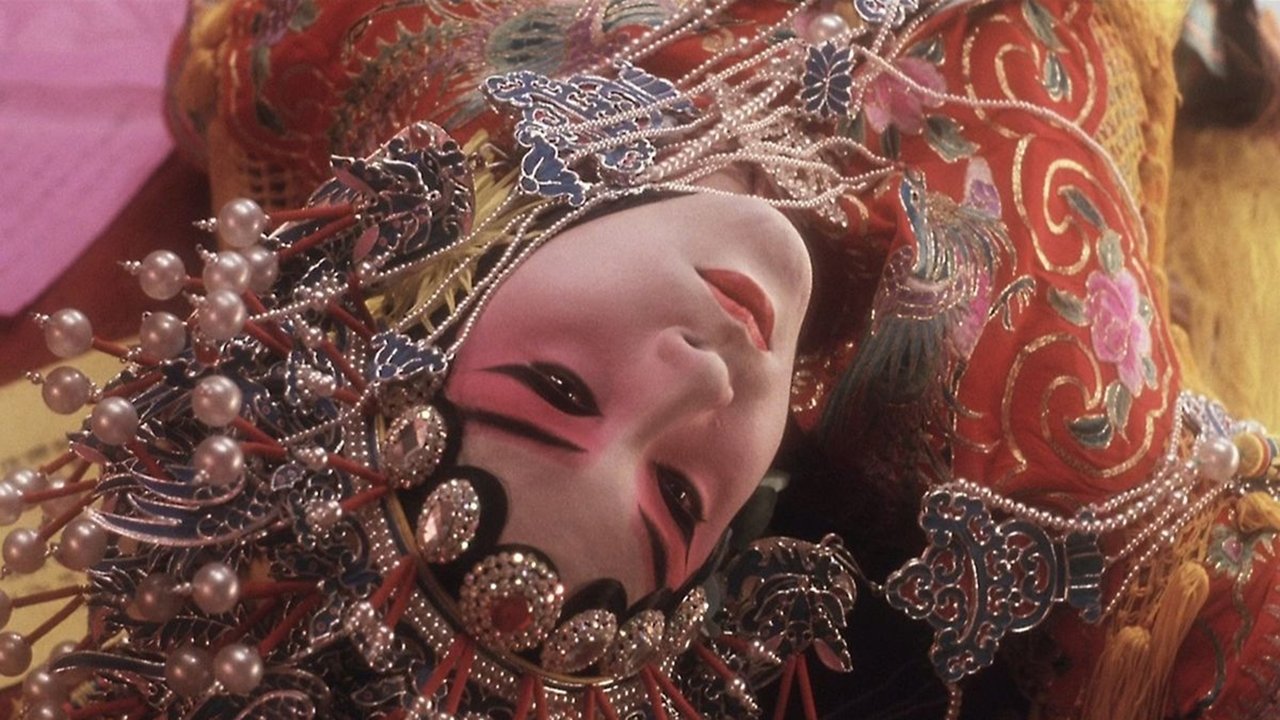
It begins, doesn't it, with a blurring of lines? The painted face of the opera singer, the raw emotion underneath, the stage becoming life and life tragically imitating art. Watching Chen Kaige's 1993 masterpiece Farewell My Concubine (Ba Wang Bie Ji) again after all these years, it’s this profound confusion of identity, forced upon one soul and reflected in the turbulent sweep of Chinese history, that settles deep in the bones. This wasn't your typical grab-and-go rental from Blockbuster's new release wall; finding this often meant a trip down the less-travelled "Foreign Film" aisle, the hefty double-VHS box hinting at the epic story held within those magnetic ribbons. And what a story it was.
A Stage for History's Cruel Play
Spanning over fifty years, from the chaotic Warlord Era of the 1920s through the Japanese invasion, the Communist revolution, and the devastating Cultural Revolution of the 60s and 70s, the film uses the intimate world of the Peking Opera as its microcosm. We follow Cheng Dieyi and Duan Xiaolou from their brutal apprenticeship as boys, where Dieyi, abandoned by his prostitute mother, is forced into the delicate dan (female) roles opposite the more traditionally masculine Xiaolou (jing roles). Their signature performance becomes the titular "Farewell My Concubine," depicting a loyal concubine's suicide rather than desert her vanquished king. It’s a role Dieyi tragically internalizes, his devotion to Xiaolou blurring the lines between stage partnership, brotherly bond, and unrequited love.
The Unforgettable Triangle
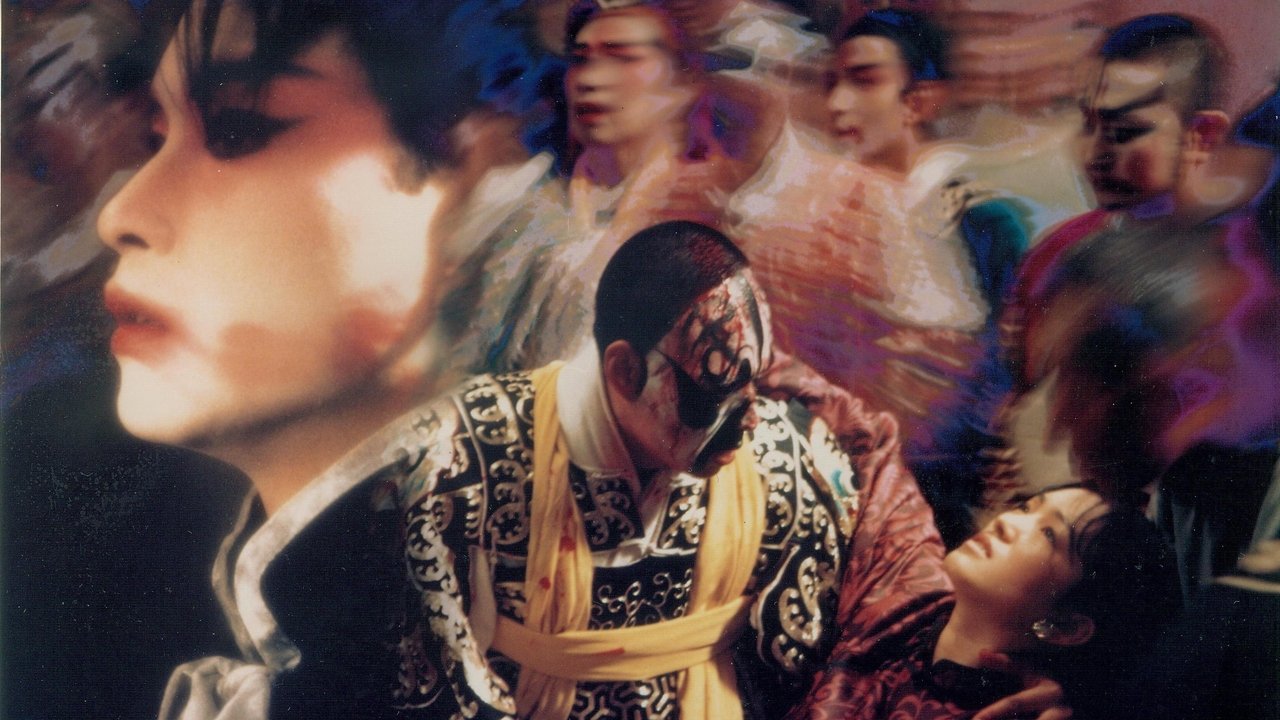
The delicate, dangerous equilibrium is shattered by the arrival of Juxian, a formidable courtesan played with astonishing fire and resilience by Gong Li (already a major star thanks to collaborations with Zhang Yimou like Raise the Red Lantern). Juxian rescues Xiaolou (a powerfully grounded Zhang Fengyi) from trouble and marries him, inserting herself permanently between the two opera brothers. What unfolds is a complex, heartbreaking triangle, set against a backdrop where personal loyalties are constantly tested and betrayed by the shifting political tides. Each performance feels devastatingly authentic. Zhang Fengyi embodies Xiaolou's pragmatic, sometimes callously masculine survival instinct, while Gong Li gives Juxian a fierce dignity, a woman fighting for her place in a world determined to crush her spirit.
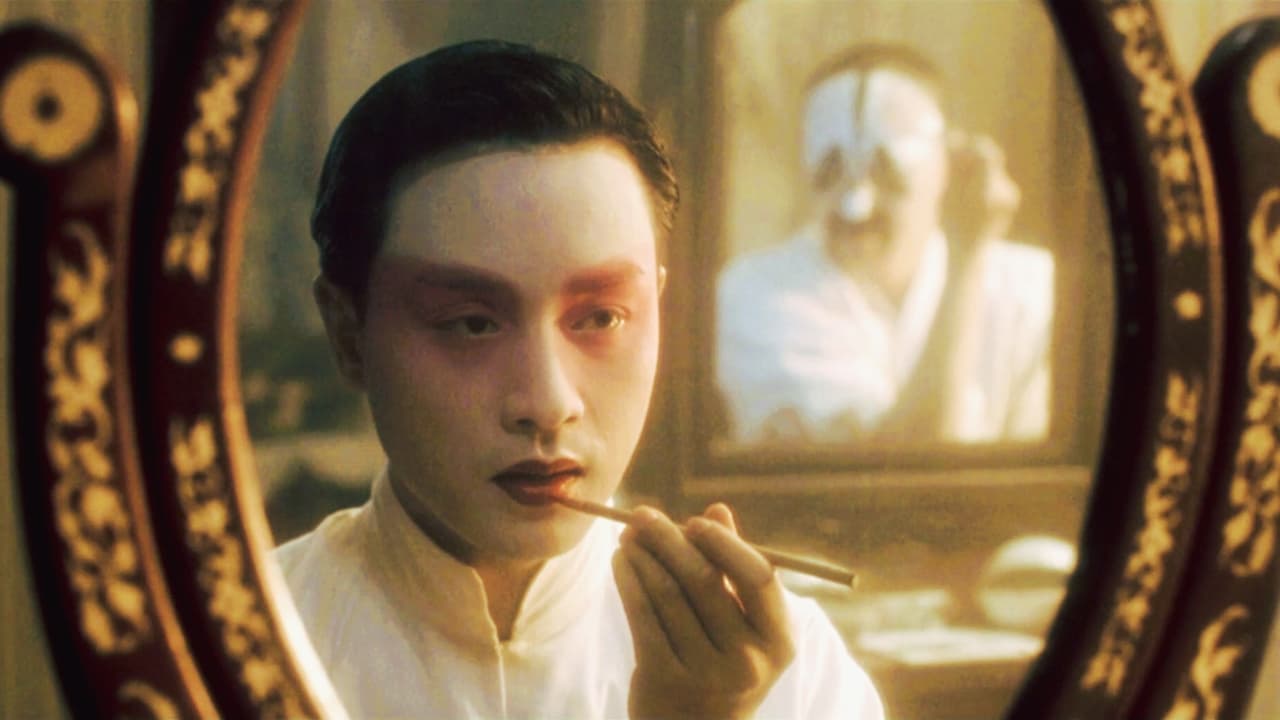
But it is Leslie Cheung's portrayal of Dieyi that remains etched in cinematic memory. Cheung, already a Cantopop megastar, wasn't the first choice – John Lone was considered – but it’s impossible now to imagine anyone else in the role. He reportedly threw himself into preparation, learning Mandarin and the intricate gestures of Peking Opera, embodying Dieyi's fragility, his obsessive devotion, and the profound identity crisis born from being forced into a female persona both on and off stage. There's a scene early on where the young Dieyi refuses to recite his line correctly, clinging to his male identity ("I am by nature a boy..."). His eventual, brutal submission ("I am by nature a girl...") is the crack that breaks his spirit, the moment his stage persona begins its lifelong bleed into his reality. Cheung conveys this lifelong ache with heartbreaking subtlety. Is his love for Xiaolou simply brotherly, or something more? Is his loyalty to the opera art itself, or to the man who embodies his stage partner? Cheung leaves these questions hanging, shimmering with ambiguity.
Artistry Amidst Chaos
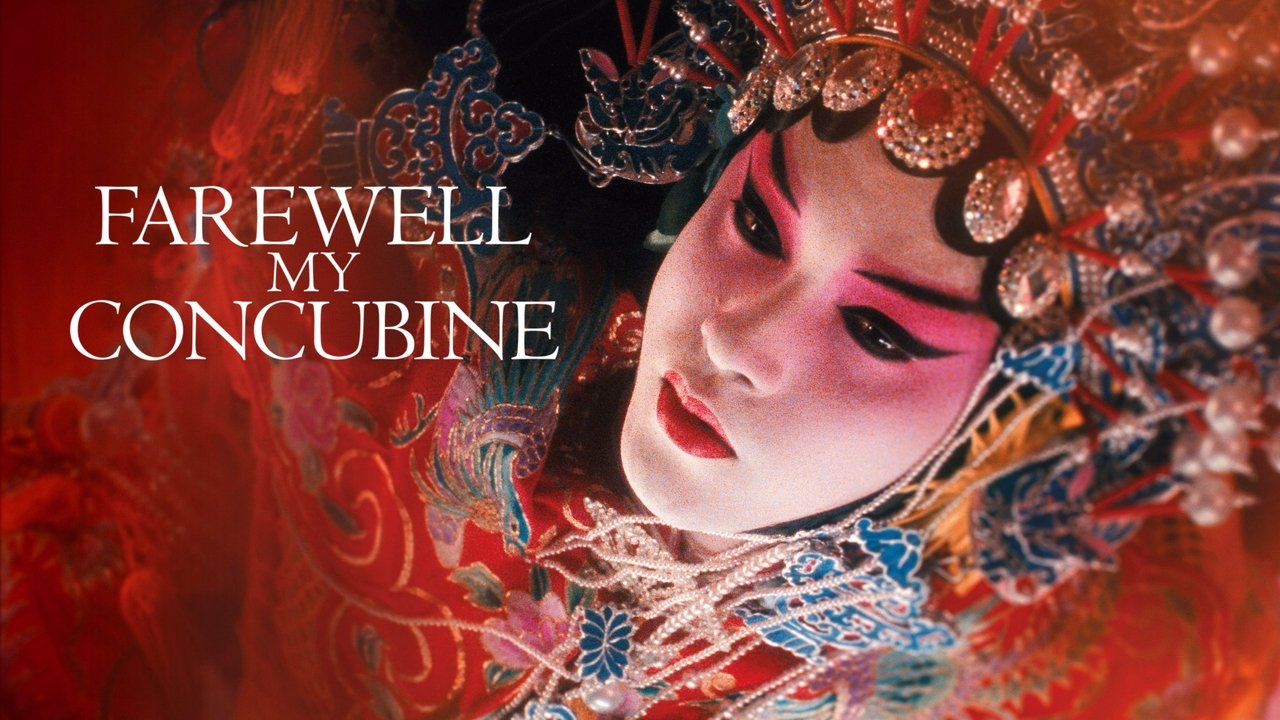

Chen Kaige, a key figure in China's "Fifth Generation" filmmakers who had experienced the Cultural Revolution firsthand, directs with an epic scope yet maintains an intense focus on his characters' inner lives. The visuals are stunning – the vibrant, elaborate world of the opera contrasting sharply with the increasingly drab and dangerous political realities outside its walls. The rigorous, often cruel training depicted in the opera school feels utterly real, mirroring the documented historical practices. The film itself faced its own struggles, initially banned in mainland China for its frank depictions of homosexuality (albeit ambiguous), suicide, and the turbulent political history, particularly the Cultural Revolution. It famously shared the Palme d'Or at the 1993 Cannes Film Festival with Jane Campion's The Piano, a victory that likely pressured Chinese authorities into eventually allowing a censored release. Watching the full, uncut version now feels like reclaiming a vital piece of cinematic history.
The film cost roughly $4-5 million USD, a substantial sum for a Chinese production at the time, partially funded internationally. Its global success ($5.2 million box office in the US alone) marked a significant moment, bringing widespread attention to the talent and ambition of contemporary Chinese cinema. Some behind-the-scenes whispers suggest Gong Li and Chen Kaige occasionally clashed over Juxian's portrayal, but if true, that creative friction only seems to have deepened the character's fierce complexity on screen.
Why It Endures
Farewell My Concubine isn't just a historical epic; it's a profound meditation on the nature of identity, the enduring power and terrible vulnerability of art, and the ways huge historical forces crush individual lives and loves. How much of ourselves is performance? What happens when the mask refuses to come off? The film asks devastating questions about loyalty and betrayal, forcing characters – and by extension, the audience – to confront the impossible choices demanded by survival under oppressive regimes. Doesn't the struggle to maintain one's integrity, one's art, one's love, in the face of overwhelming political pressure still resonate deeply today?
This isn't a film you casually revisit, perhaps, like some lighter VHS fare. It demands your attention, your emotional investment, and leaves you pondering its resonant themes long after the credits roll. It’s a reminder of the sheer power cinema can wield, transporting us across decades and continents to witness the intersection of personal tragedy and sweeping history.
Rating: 10/10
This rating feels entirely earned. From the masterful performances, particularly Leslie Cheung's career-defining role, to Chen Kaige's epic direction, the stunning visuals, the profound thematic depth, and its historical significance as a landmark of world cinema, Farewell My Concubine achieves a level of artistry and emotional power that is simply staggering. It's a film that justifies its length and complexity, offering layer upon layer for contemplation.
It remains an essential, unforgettable experience – a heavy tape maybe, but one carrying the weight of history, art, and the human heart itself. What lingers most is the echo of that final, devastating line on stage, a performance that tragically fulfills a lifetime of blurred reality.