What happens when the ghosts of the counter-culture clash head-on with the starched-collar ambition of the late Reagan/early Bush era? Sometimes, you get a film like Flashback (1990), a curious, often charming, and surprisingly resonant road trip that pairs two actors seemingly born to share the screen, even if their characters initially represent opposing poles of American identity. It’s a film that arrived just as the idealistic haze of the 60s was truly receding into history, replaced by the burgeoning cynicism and corporate gloss of the 90s, making its premise feel particularly timely upon its release – and perhaps even more poignant viewed through the longer lens of nostalgia.
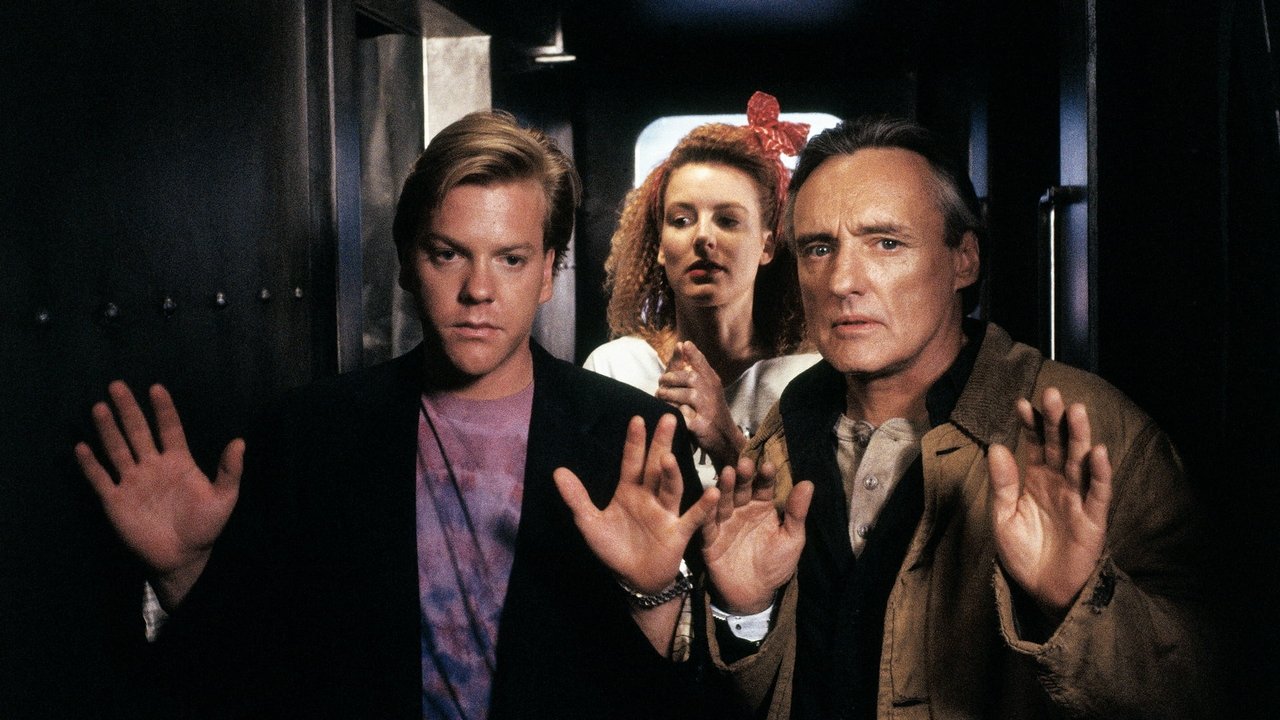
I remember pulling this one off the shelf at the local video store, likely drawn by the familiar faces of Dennis Hopper and Kiefer Sutherland. It promised a kind of cat-and-mouse thriller, but what unfolded felt more like a generational dialogue disguised as an escape movie.
Echoes of a Revolution
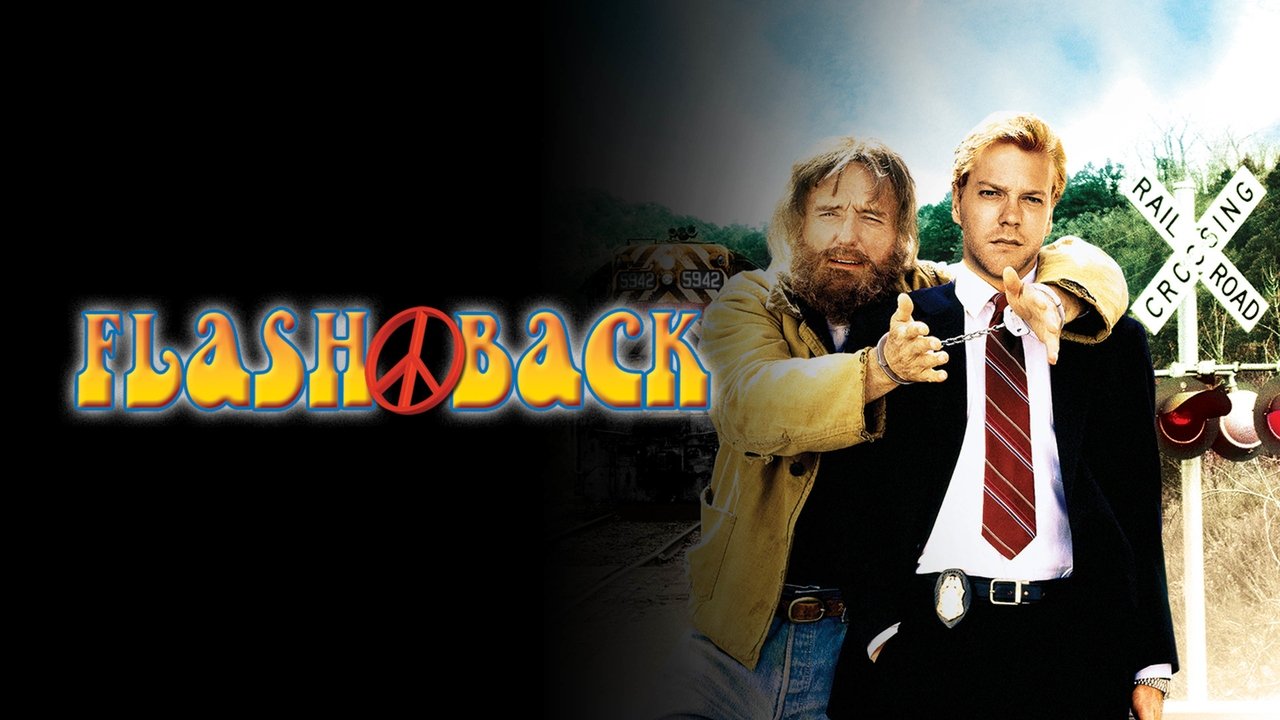
The setup is straightforward enough: uptight, ambitious young FBI Agent John Buckner (Kiefer Sutherland) is tasked with escorting notorious 60s radical Huey Walker (Dennis Hopper) – think Abbie Hoffman by way of a mischievous trickster spirit – across the country for trial. Walker, captured after decades on the run for a prank involving Spiro Agnew (a detail perfectly anchoring the film in its specific historical context), is everything Buckner isn't: flamboyant, anarchic, seemingly unbound by rules or consequences. Buckner, meanwhile, is the spitting image of the career-driven professional, desperate to shed his own vaguely counter-culture childhood associations (living on a commune, no less!) and climb the Bureau ladder.
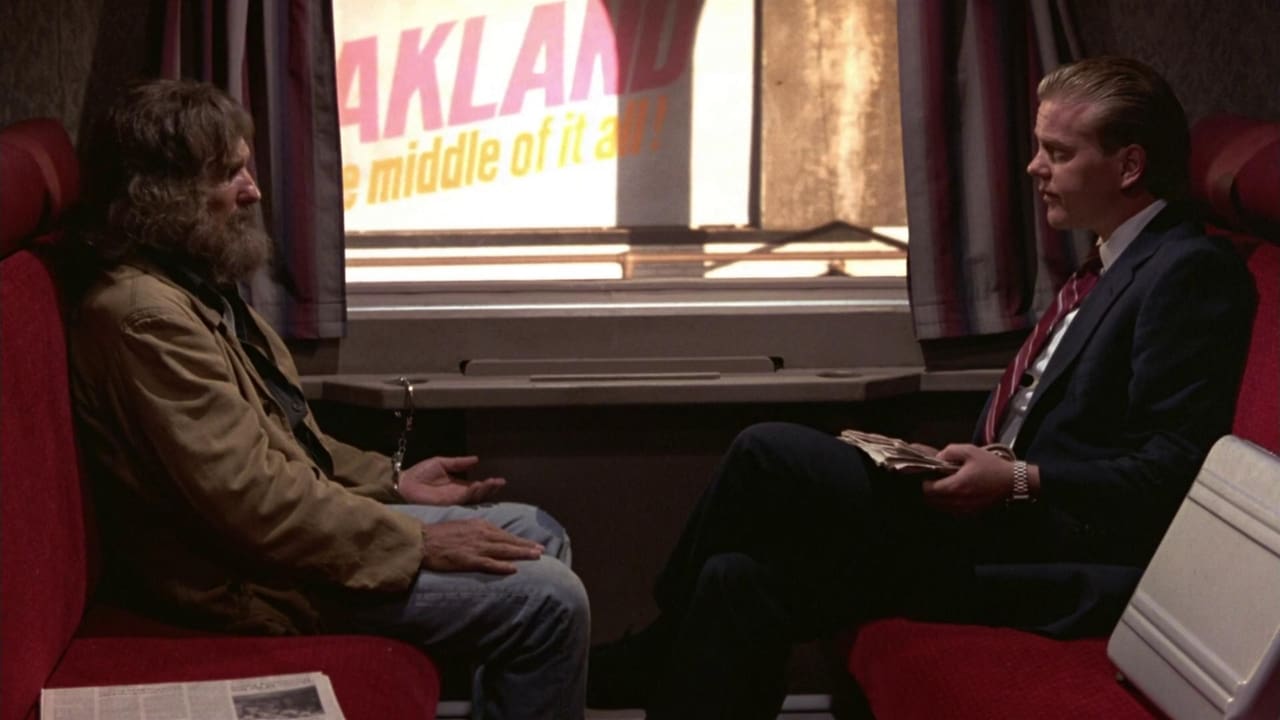
What follows is less a tense chase and more an unpredictable journey of ideological friction and grudging self-discovery. Director Franco Amurri, working from a script by David Loughery (who also gave us the Hopper-starring Dreamscape and later, action fare like Passenger 57), navigates a tricky tonal balance. The film flirts with buddy comedy, political commentary, and moments of genuine suspense, never quite settling comfortably into one genre. Yet, this slight unevenness somehow works, mirroring the messy collision of eras and personalities at its core. Apparently, early drafts were significantly darker, leaning more heavily into the thriller aspect before rewrites amplified the comedic and character-driven elements – a shift that likely saved the film from becoming just another forgotten procedural.
The Yin and Yang of Hopper and Sutherland
The absolute anchor of Flashback is the electric chemistry between its leads. Dennis Hopper, riding high on his late-80s career renaissance following Blue Velvet (1986) and Hoosiers (1986), is simply magnetic as Huey Walker. He embodies the fading counter-culture spirit with a mischievous glee that constantly threatens to boil over into genuine danger. Walker isn't just a caricature; Hopper infuses him with a weary wisdom beneath the performative rebellion, hinting at the disillusionment that follows failed revolutions. Reports suggest Hopper ad-libbed significantly, and you can feel that unpredictable energy crackling in his performance – it feels less like acting and more like channeling.
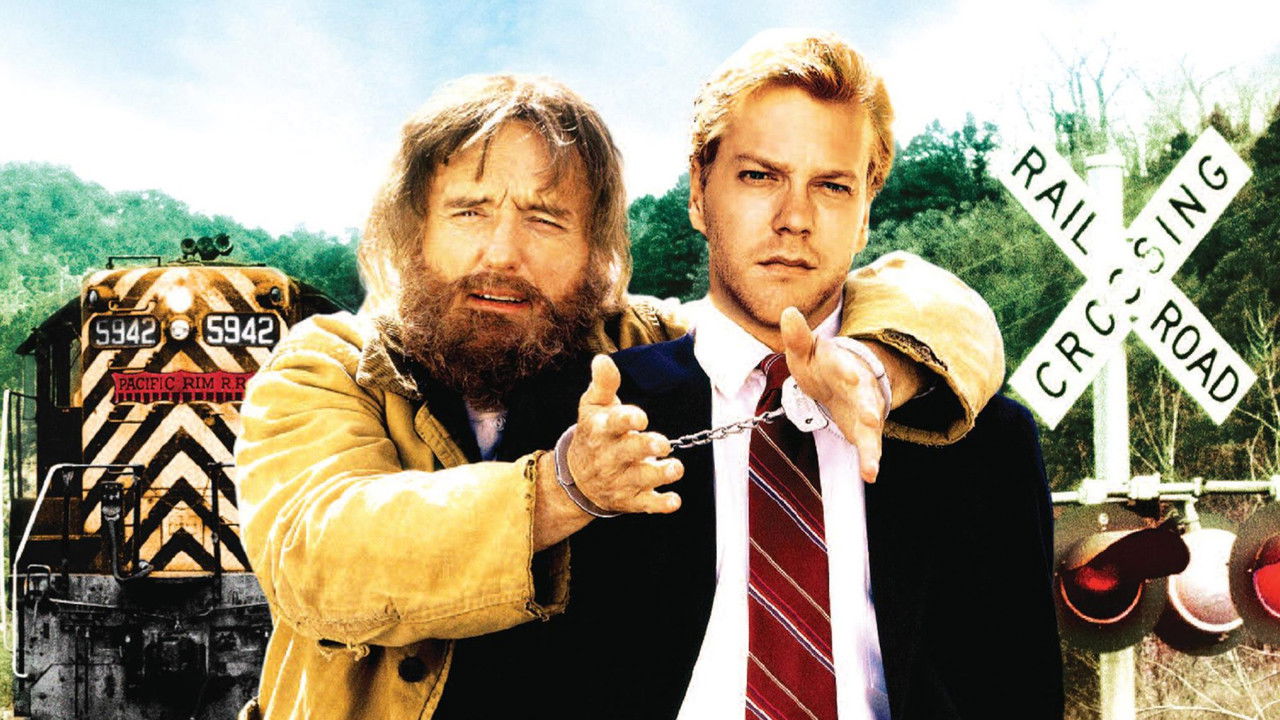
Against this force of nature, Kiefer Sutherland, then cementing his leading man status post-Young Guns II (1990), holds his own beautifully. His Buckner is initially a tightly wound knot of ambition and repression. The brilliance lies in how Sutherland subtly allows Walker's chaos to chip away at Buckner's carefully constructed facade. It’s not just about loosening a tie; it's about confronting the parts of his past, and himself, that he's desperately tried to bury. Their exchanges, shifting from antagonistic banter to moments of unexpected vulnerability, form the film’s heart. You genuinely believe these two opposing forces could, through sheer proximity and shared absurdity, start to understand, and even change, each other.
More Than Just a Road Trip
Beneath the entertaining chase sequences and witty dialogue, Flashback probes interesting questions. What does it mean to hold onto youthful ideals in the face of encroaching middle age and societal shifts? How much of our identity is performative, a role we play for ourselves or others? Walker’s flamboyant persona is just as much a construct as Buckner’s G-man stiffness. The journey forces both men to shed these skins, revealing the more complex individuals underneath. The film doesn't necessarily offer easy answers, but it poses these questions with a surprising degree of thoughtfulness amidst the action.
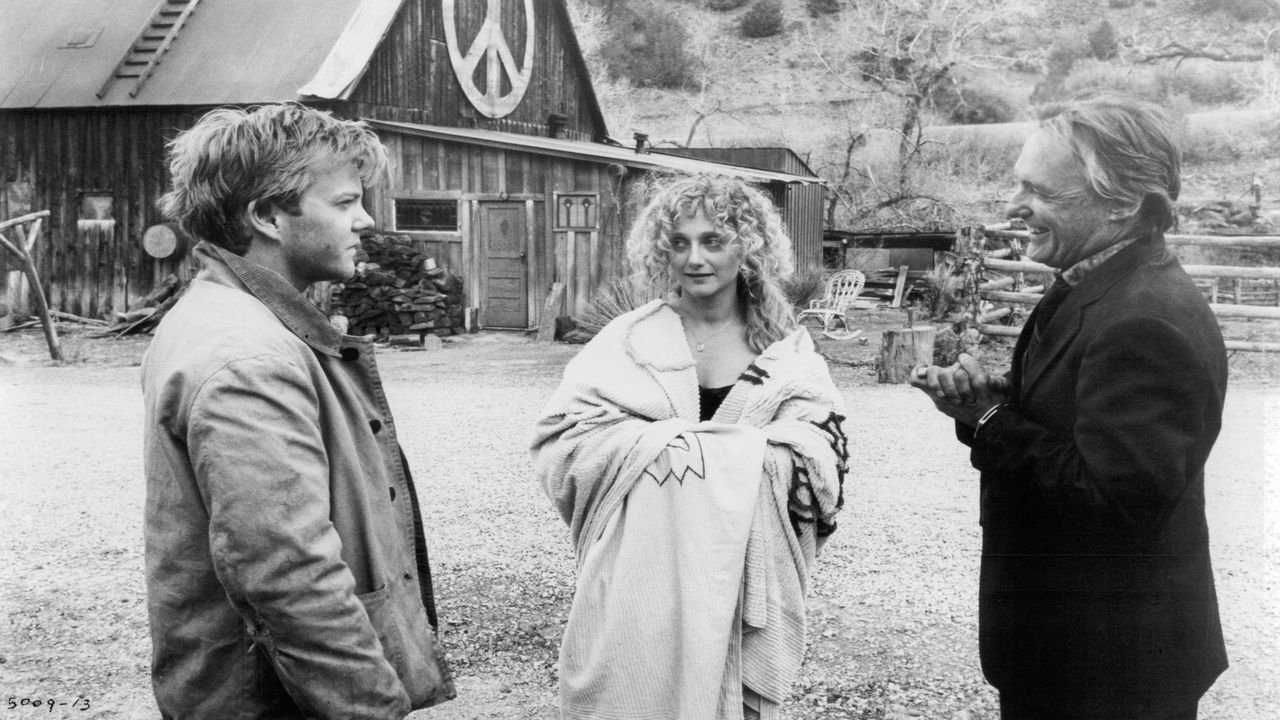
We also get a delightful, scene-stealing turn from Carol Kane as Maggie, the free-spirited pilot who gets swept up in their antics. Her unique energy adds another layer of quirky charm to the proceedings. Filmed against the scenic backdrop of Colorado and Utah, the journey itself feels expansive, providing a literal and metaphorical space for the characters' transformations.
Of course, it's not without its flaws. The plot relies on a few convenient contrivances, particularly towards the end, which some critics at the time found a little too tidy. And its relatively modest box office performance (grossing around $6.6 million against a $7 million budget) meant it never quite achieved blockbuster status, instead settling into the comfortable realm of a beloved cult favorite – the kind of gem you'd recommend to a friend with a knowing nod.
Rating: 7/10
Flashback earns a solid 7 out of 10. While its tonal shifts can occasionally feel abrupt and the plot mechanics sometimes strain credulity, the film is elevated significantly by the powerhouse performances of Hopper and Sutherland. Their dynamic is captivating, breathing life and depth into what could have been a standard odd-couple premise. It successfully blends humor, action, and surprisingly thoughtful commentary on idealism, identity, and the long shadow of the past. It's a quintessential example of a high-concept early 90s film that delivers more substance than you might initially expect, carried by two actors at the top of their game.
It’s one of those films that lingers, not necessarily for its plot twists, but for the questions it raises about who we were, who we become, and whether the spirit of rebellion ever truly fades away. Pulling this tape out feels like revisiting old friends – one wild, one buttoned-up, both learning to navigate the road ahead.