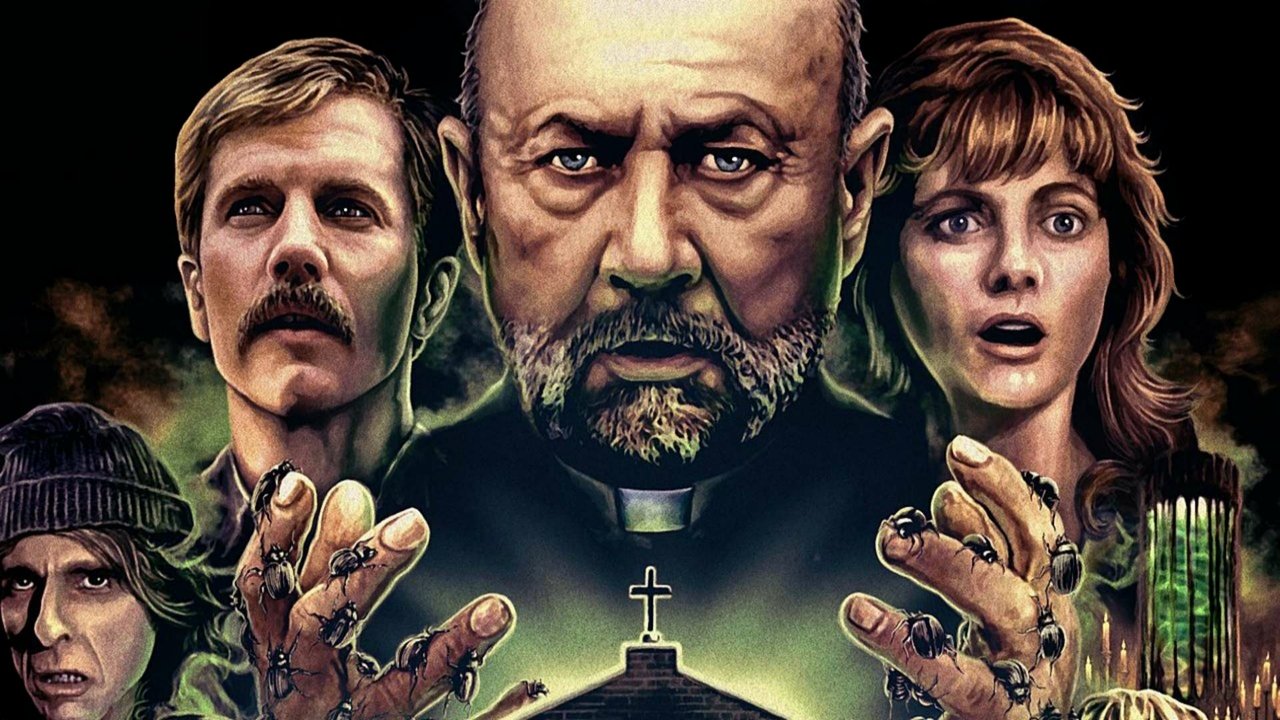
The image lingers, doesn't it? That swirling, sentient green liquid, contained but radiating a malice older than time itself. It’s one of the defining visuals of John Carpenter's Prince of Darkness (1987), a film that feels less like a traditional horror movie and more like a slow descent into cosmic dread, broadcast directly into the primitive corners of your brain. This wasn't just another creature feature pulled off the dusty shelves of the video store; this felt... different. Colder. More intelligent in its malevolence.

The Gathering Storm
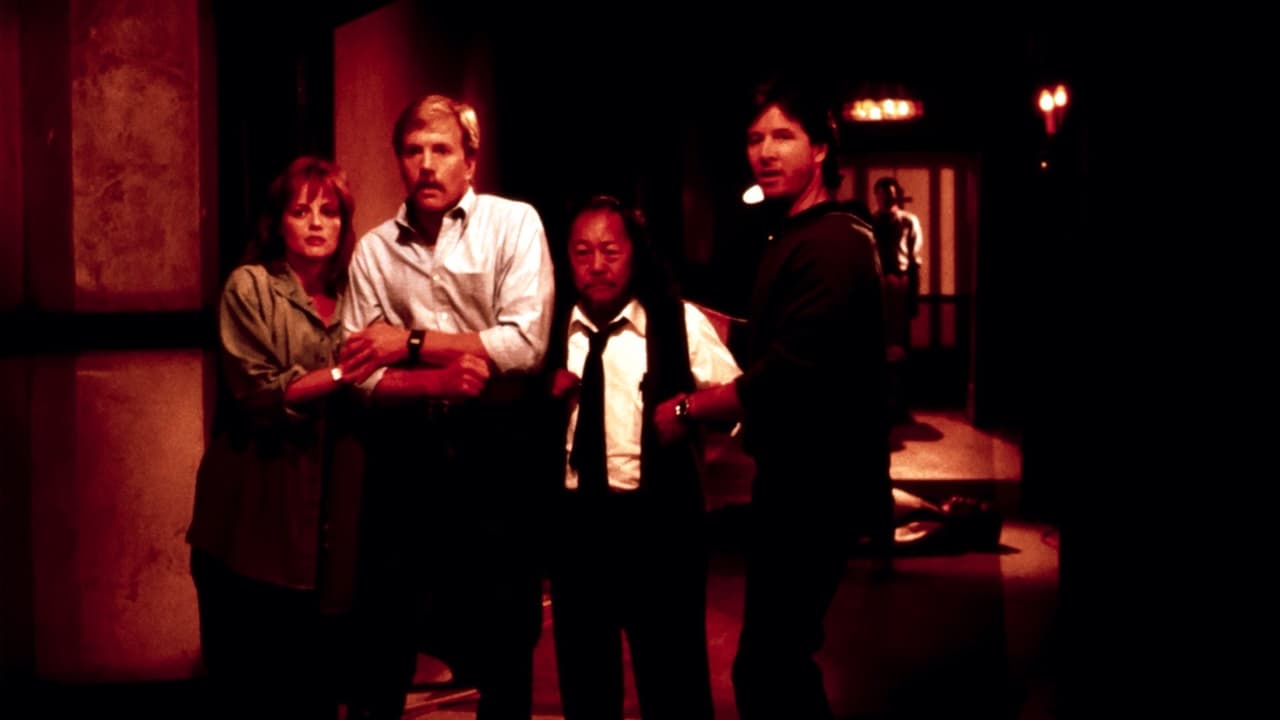
Carpenter, writing under the pseudonym "Martin Quatermass" (a clear nod to the influential British sci-fi writer Nigel Kneale), crafts a scenario dripping with existential fear. A reclusive Catholic priest (Donald Pleasence, bringing his signature intensity honed in Carpenter's own Halloween (1978)) discovers a chilling secret in the basement of an abandoned Los Angeles church: a glass cylinder filled with that ominous green substance. He summons Professor Howard Birack (Victor Wong, perfectly cast as the inquisitive but grounded physicist) and a team of his brightest students – physicists, mathematicians, linguists – to investigate. Their mission? To scientifically analyze what the Church has guarded for millennia, something described in ancient texts not as Lucifer, but as the son of an entity far more terrifying: the Anti-God.
What follows is less about jump scares and more about suffocating claustrophobia and the unnerving collision of faith and quantum physics. The church becomes a pressure cooker, the team trapped inside as the entity within the cylinder begins to exert its influence, communicating through dreams, technology, and eventually, flesh itself. Remember those shared, grainy dream sequences, broadcast seemingly from the future? They still possess a uniquely disturbing quality, a low-fi prophecy of utter desolation that felt chillingly plausible on a flickering CRT screen.
An Atmosphere Thick with Dread
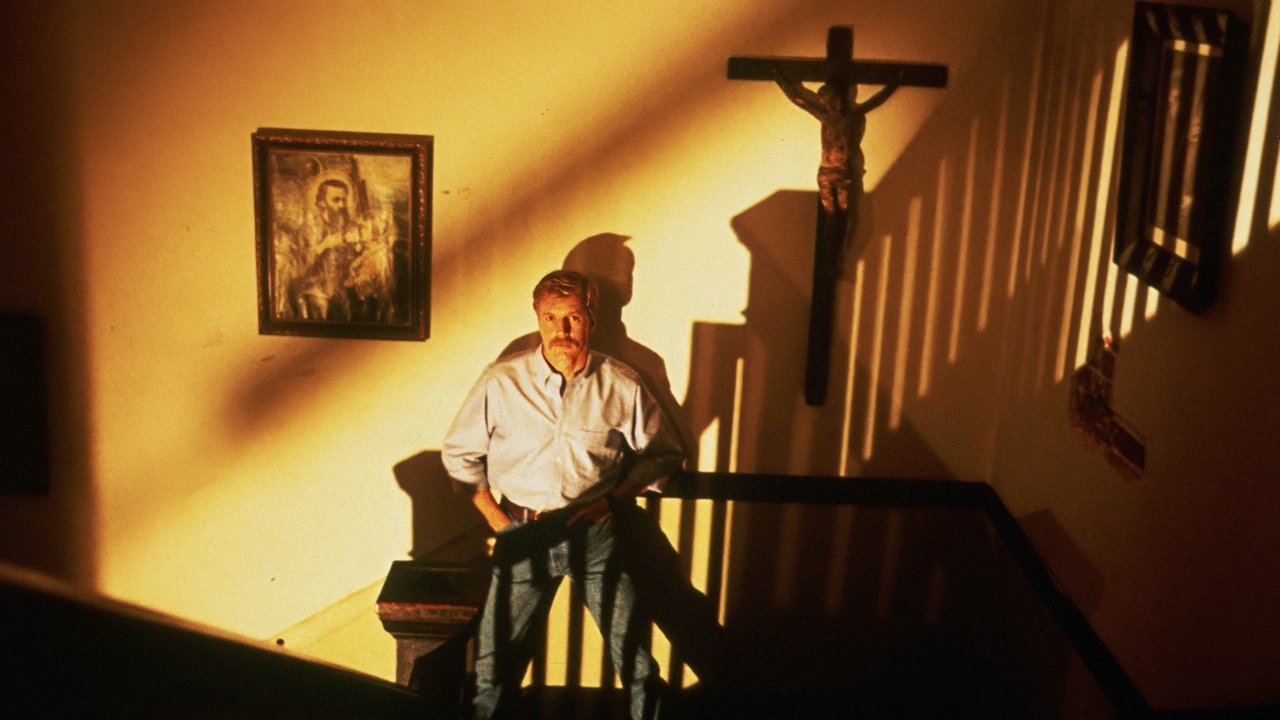
Prince of Darkness is pure, uncut Carpenter atmosphere. Made for a lean $3 million – a testament to Carpenter's resourcefulness after studio interference on Big Trouble in Little China (1986) – the film uses its limitations to its advantage. The single location, a real former church in Little Tokyo, Los Angeles, becomes a character in itself – oppressive, decaying, and ultimately, besieged. Carpenter, alongside Alan Howarth, composed the score, a signature blend of pulsing synthesizers and ominous, minimalist themes that perfectly underscore the mounting dread. It’s a soundscape that gets under your skin, mimicking the invasive nature of the evil itself.
The film cleverly plays with scientific concepts – tachyon transmissions, parallel dimensions, the very nature of matter – grounding its supernatural horror in a framework that feels disturbingly logical. This isn't just demonic possession; it's infection, transformation, the universe itself turning hostile. The practical effects, while occasionally showing their late-80s seams today, retain a visceral power. The slow, grotesque transformations of the possessed, the unsettling behavior of insects and worms, and that mirror scene – where a character is pulled through the reflective surface – possess a tangible, nightmarish quality that CGI often struggles to replicate. Did that moment genuinely shock you back then? It certainly left an imprint. It’s rumored that achieving the liquid mirror effect involved a complex setup with a pool of mercury, a substance notoriously difficult and dangerous to handle, adding another layer of real-world unease to the production.
Echoes of the Abyss
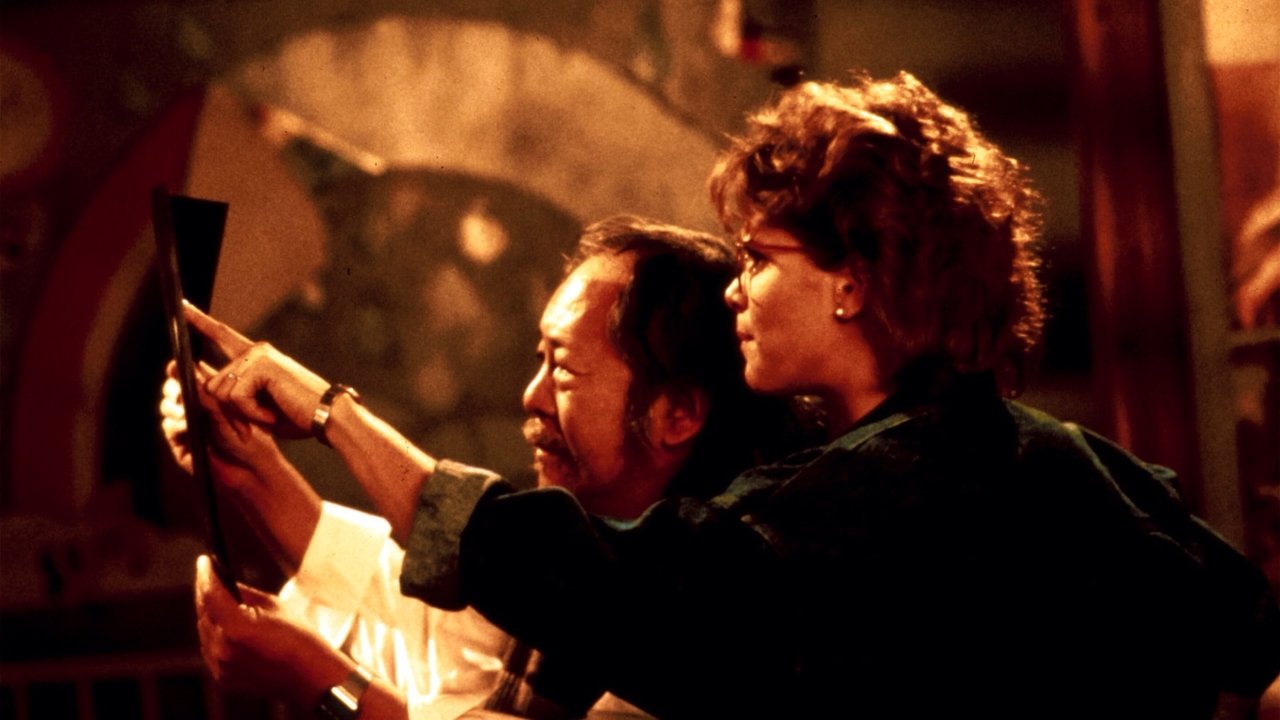
While the ensemble cast features capable performances, it's Donald Pleasence as Father Loomis (yes, the same character name as in Halloween, a deliberate Carpenter touch) and Victor Wong as Professor Birack who anchor the film. Their dynamic – the desperate priest clinging to faith and the pragmatic scientist grappling with the impossible – forms the intellectual and emotional core. We also get a memorable, unsettling cameo from rock legend Alice Cooper as the leader of the possessed street schizos encircling the church, a genuinely creepy presence adding to the external siege.
The film isn't without its critics; some find the pacing deliberately slow, the student characters somewhat interchangeable, and the scientific exposition occasionally dense. Yet, these aspects arguably contribute to its unique feel. It’s a film that demands patience, immersing the viewer in its bleak worldview rather than offering easy thrills. It feels like a deliberate middle chapter in Carpenter's "Apocalypse Trilogy," nestled between the stark paranoia of The Thing (1982) and the reality-bending horror of In the Mouth of Madness (1994).
Final Transmission
Prince of Darkness remains a potent piece of philosophical horror. It’s a film that dares to suggest that evil isn't just a spiritual concept, but a physical, scientific reality waiting to be unleashed. It taps into anxieties about the unknown, the limits of human understanding, and the terrifying possibility that our perception of reality is fragile and permeable. Rewatching it now, that swirling green canister still feels like a Pandora's Box for the scientific age.
Rating: 8/10
This score reflects the film's masterful creation of atmosphere, its chilling central concept, Carpenter's signature direction and score, and its enduring power to unsettle. While perhaps less immediately accessible than some of Carpenter's other classics, its unique blend of science fiction and theological horror, along with standout performances and genuinely disturbing imagery, earns it a high place in the pantheon of 80s genre cinema. It might lack the visceral punch of The Thing, but its creeping, intellectual dread leaves a distinct and lasting chill, a perfect late-night watch that reminds you some doors are best left unopened. It’s a stark, intelligent nightmare committed to celluloid – or, as we remember it, magnetized onto tape.