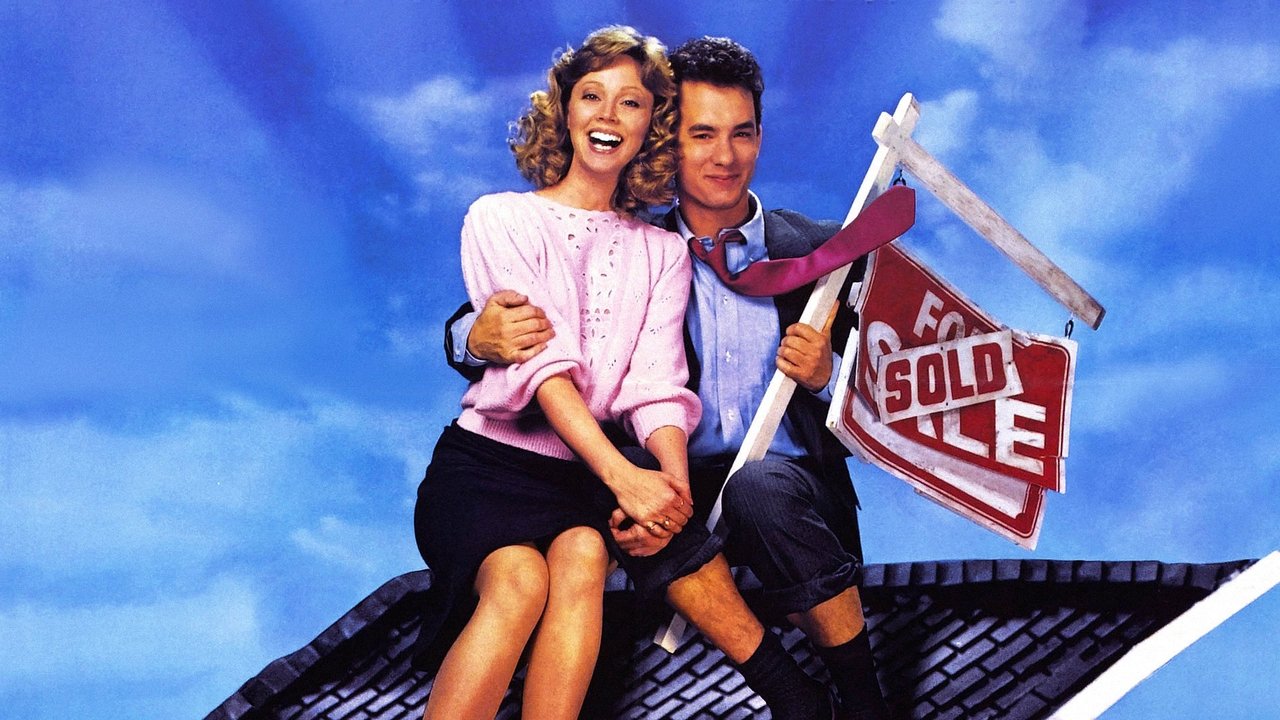
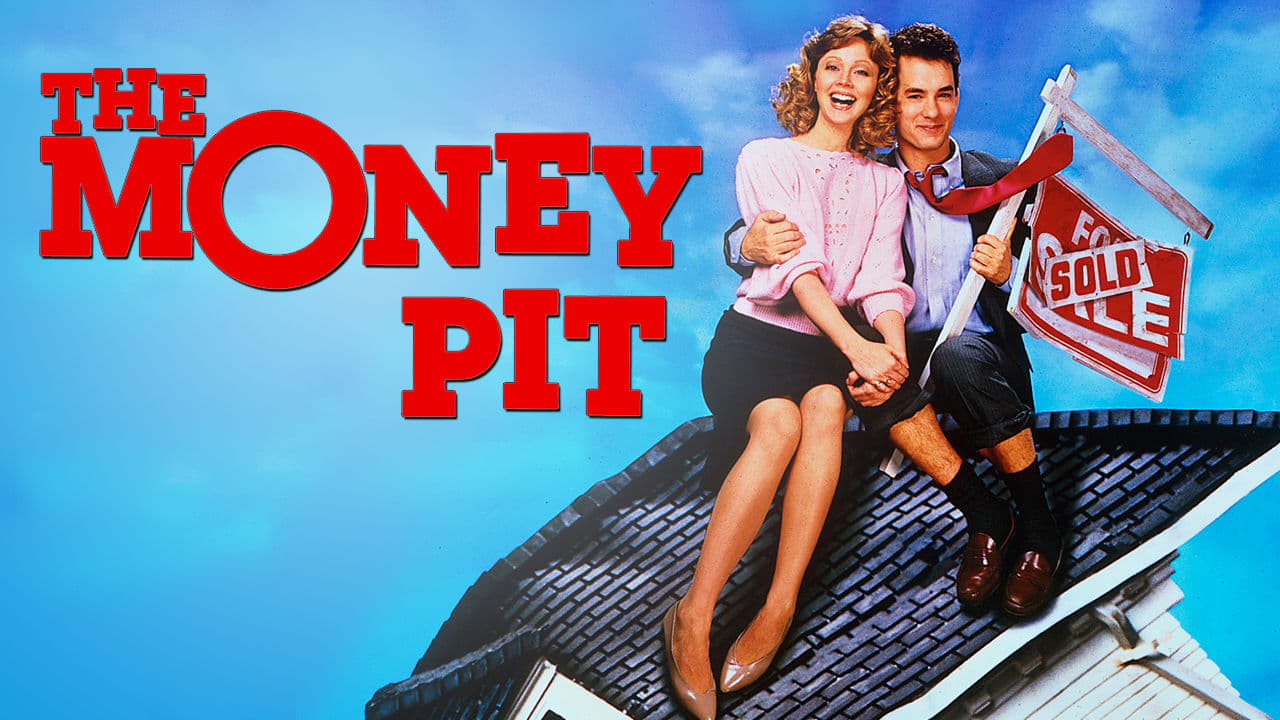
Okay, picture this: it's Friday night, you've just browsed the seemingly endless aisles of your local video store, the smell of popcorn and plastic cassette cases in the air. You spot that cover – a frantic-looking Tom Hanks and Shelley Long amidst utter domestic carnage. You grab The Money Pit (1986), maybe drawn in by Hanks' rising star power after Splash, or Long's familiar face from Cheers. Little did you know you were renting perhaps the ultimate 80s cautionary tale about home ownership, wrapped in a package of relentless, practically-executed slapstick.

That Dream House... Or Is It?
The premise is simple, almost archetypal: young, upwardly mobile couple Walter Fielding Jr. (Hanks) and Anna Crowley (Long) need a place to live and stumble upon a suspiciously cheap mansion. It looks like a steal, a dream realized! Of course, the "deal" is a facade hiding a structural nightmare of epic proportions. What starts as quirky inconvenience rapidly escalates into full-blown domestic warfare against dry rot, faulty wiring, crumbling masonry, and plumbing seemingly designed by Satan himself.
Directed by Richard Benjamin, who also gave us the charming My Favorite Year (1982), The Money Pit isn't subtle. It's a symphony of destruction, a feature-length series of increasingly elaborate gags designed to pulverize the house and the sanity of its inhabitants. And let's be honest, watching Tom Hanks absolutely lose his mind as his dream home literally disintegrates around him is a specific kind of 80s cinematic joy. He commits fully to the physical comedy, displaying that early-career manic energy that would soon make him a global superstar. Shelley Long, meanwhile, provides the perfect counterpoint of escalating exasperation.

When Things REALLY Went South (Literally)
Forget CGI fixes; the thrill of The Money Pit lies in knowing that what you're seeing actually happened on set (mostly!). That iconic scene where the grand staircase collapses under Walter's feet? Pure, unadulterated practical effects wizardry. Reportedly, constructing and repeatedly destroying that staircase was a major engineering feat for the production team. You feel the weight of the wood splintering, the genuine panic. Same goes for the bathtub crashing through the floor – there's a visceral impact, a sense of real weight and consequence that modern digital effects often struggle to replicate. Remember how jaw-dropping that sequence felt back then on a fuzzy CRT screen? It was chaos made tangible.
While the stunning exterior shots used a real mansion in Lattingtown, Long Island (the Northway Colonial, for you location buffs!), much of the interior destruction was meticulously crafted and executed on sound stages, allowing for controlled, repeatable mayhem. It’s a testament to the physical craft of filmmaking prevalent in the era. The sheer scale of the destruction feels almost cartoonish now, but back then, it was hilariously overwhelming.
Meet the Maestro of Mayhem
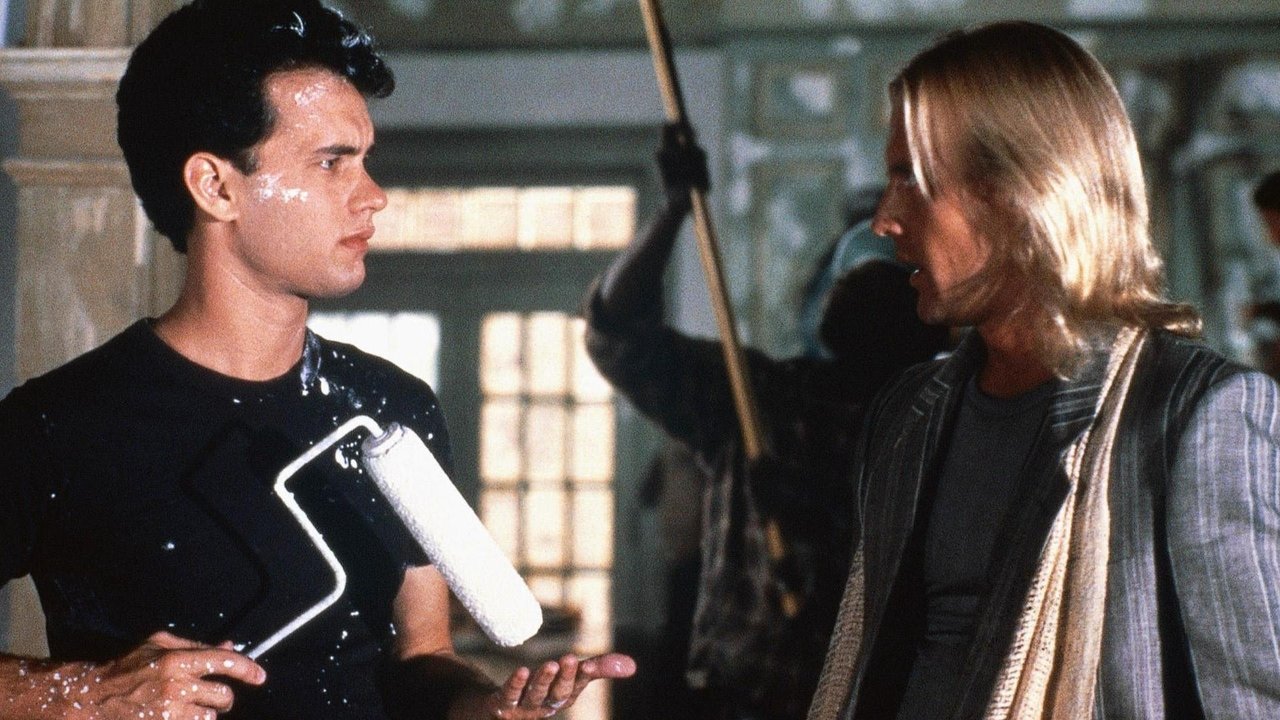
No discussion of The Money Pit is complete without mentioning Alexander Godunov as Max Beissart, the eccentric, egotistical conductor who also happens to be Anna's ex... and eventually, their reluctantly hired contractor. Godunov, the famed ballet dancer who had defected from the Soviet Union just a few years prior (and who also memorably appeared in Die Hard and Witness), steals every scene he’s in. His blend of artistic temperament and construction chaos is unforgettable. "The plumbing is art!" he declares, amidst utter failure. It’s a performance that perfectly encapsulates the film’s absurdity.
And here’s a retro fun fact that still blows my mind: the screenplay was co-written by David Giler. Yes, the same David Giler who co-wrote the terrifying sci-fi classic Alien (1979) and worked on its sequels! Talk about range – from chest-bursters in space to exploding turkeys in the kitchen. It adds a layer of delicious irony to the domestic horror unfolding on screen. It’s also worth noting this film itself is a loose remake of the 1948 Cary Grant comedy Mr. Blandings Builds His Dream House, updating the premise for the yuppie anxieties of the 80s.
A Solid Hit, If Not Critical Darling
Executive produced by Steven Spielberg's Amblin Entertainment, The Money Pit had a certain polish, even amidst the destruction. Made for around $10 million, it pulled in a respectable $55 million worldwide – proving audiences were eager for this kind of large-scale physical comedy, even if critics at the time were somewhat mixed, often citing the relentless nature of the gags as overwhelming. But who cared about the critics when you were doubled over laughing on your couch, watching that poor turkey meet its explosive end in the oven? This movie found its true home on VHS and cable, becoming a staple for anyone who’s ever dealt with a leaky faucet and feared the worst.
The Verdict
The Money Pit isn't sophisticated cinema, and the plot mechanics driving the relationship drama feel a bit thin compared to the structural carnage. Some jokes land harder than others, and the sheer repetition of disaster might wear thin for some viewers today. But its charm is undeniable. It’s a showcase for Tom Hanks on the cusp of mega-stardom, a masterclass in practical effects comedy, and features an all-timer supporting performance from Alexander Godunov. It perfectly captures a certain brand of high-concept 80s studio comedy. I distinctly remember renting this tape multiple times, each viewing cementing those images of domestic destruction in my mind.
Rating: 7/10 - The rating reflects its status as a highly enjoyable, if slightly one-note, 80s comedy staple. The practical effects are impressive, Hanks and Long are appealing leads, and Godunov is gold. It might creak a bit like the house itself, but the foundation of fun is still solid.
Final Thought: It’s the kind of movie that makes you appreciate your own non-collapsing home, a perfectly preserved VHS-era reminder that sometimes, the biggest disasters make for the biggest laughs. Just maybe get an inspection first.