Okay, grab your popcorn and adjust the tracking – tonight on VHS Heaven, we’re diving into a weird little gem that probably sat right next to the big action flicks and rom-coms on the rental shelf: Paul Mazursky's 1988 political comedy, Moon Over Parador. This wasn't the movie grabbing headlines like Die Hard that year, but it had that quirky cover art and a cast list – Richard Dreyfuss, Raul Julia, Sônia Braga – that made you think, "Huh, what's this about?" It promised something a little different, a little exotic, and maybe just a little bit nuts.
An Actor's Nightmare (or Dream?)
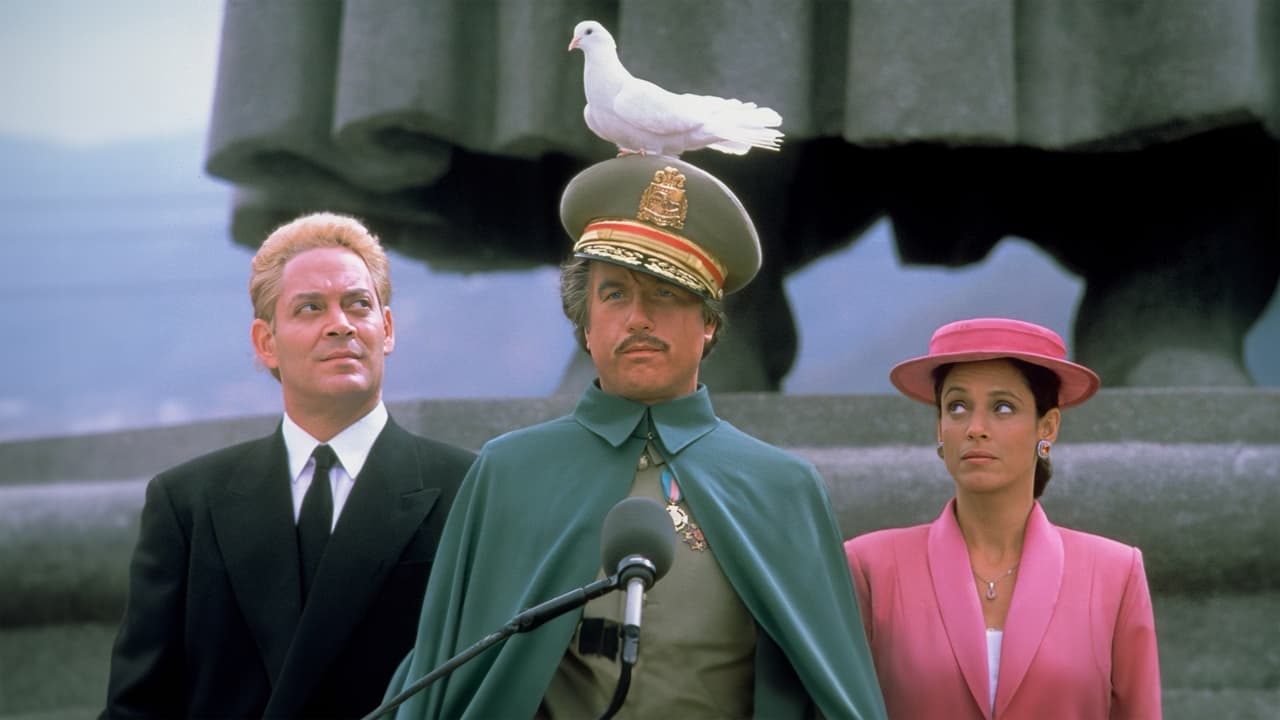
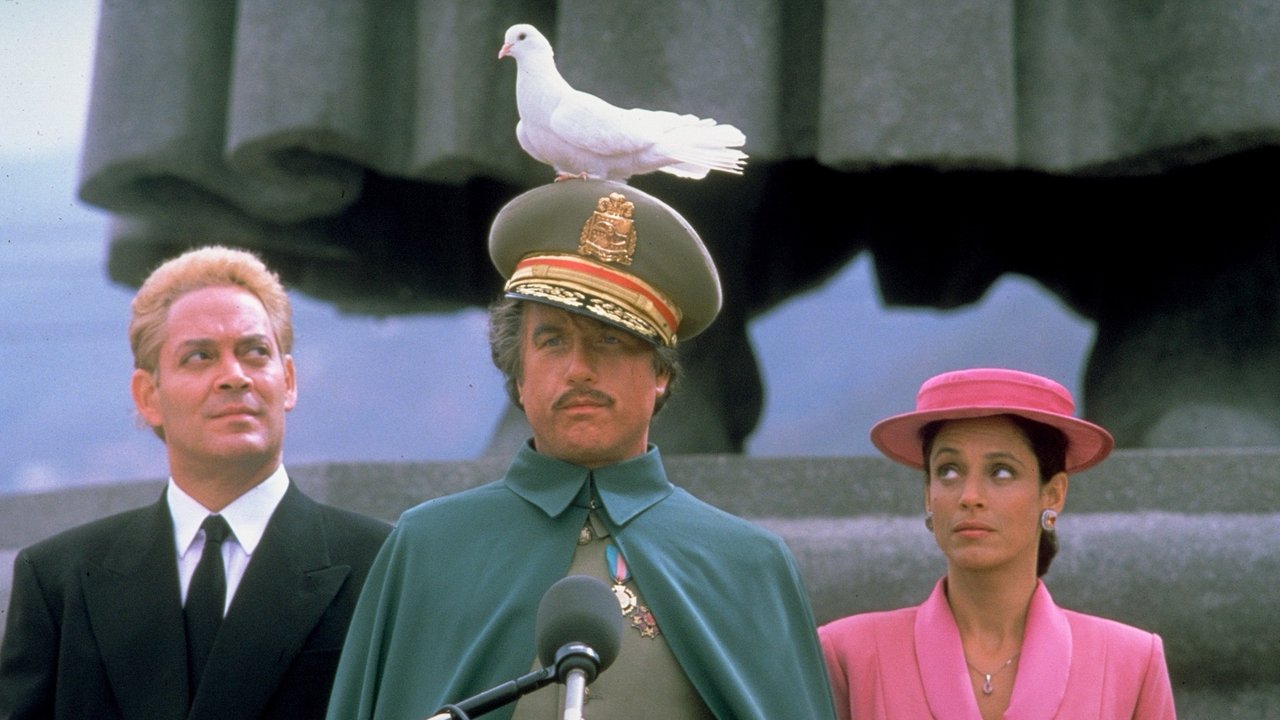
The premise alone feels like something cooked up late at night after one too many bad auditions: Jack Noah (Richard Dreyfuss), a B-list American actor shooting a forgettable movie in the fictional banana republic of Parador, gets an offer he literally can't refuse. The country's ancient, womanizing dictator, Alphonse Simms, has just kicked the bucket after a heroic binge. The dictator's ruthless Chief of Police, Roberto Strausmann (Raul Julia), notices Jack's uncanny resemblance to the deceased leader and strong-arms him into impersonating Simms to prevent political chaos (and maintain Strausmann's grip on power). Suddenly, Jack is thrust from obscurity into the presidential palace, juggling political speeches, assassination attempts, and the fiery affections of the late dictator's mistress, Madonna (Sônia Braga).
It's a classic fish-out-of-water setup, elevated by the sheer talent involved. Richard Dreyfuss, hot off hits like Stakeout, absolutely throws himself into the role(s). He captures both the panic of the overwhelmed actor and the surprising moments where Jack starts to actually enjoy playing the part, maybe even making a difference. His energy is infectious, bouncing off the walls of the presidential palace. It's pure Dreyfuss – neurotic, fast-talking, but with that undercurrent of genuine heart.
Power Players in Paradise
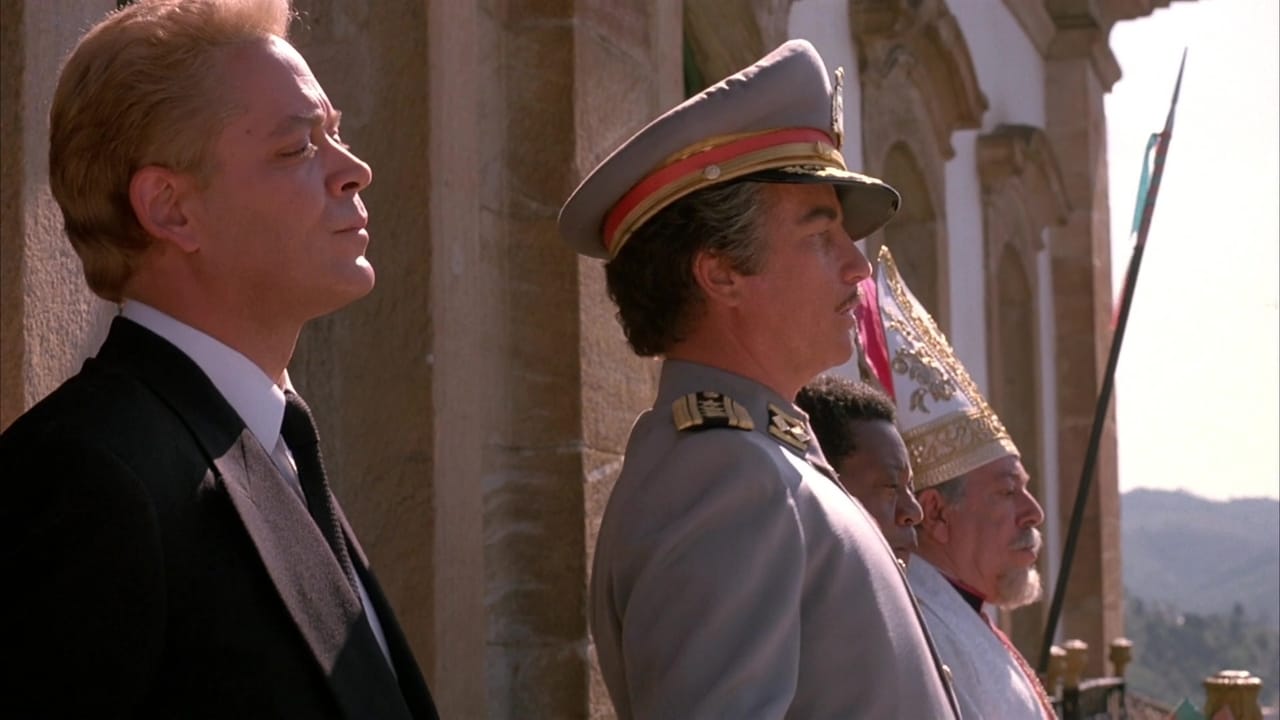
But let's be honest, Raul Julia almost steals the entire movie as Strausmann. He plays the villain with such sophisticated, coiled menace. It’s not cartoonish evil; it’s the chillingly pragmatic ruthlessness of a man who understands power. Every line delivery drips with silky threat, a perfect counterpoint to Dreyfuss's flustered Everyman. Julia was such a commanding presence on screen, years before his iconic turn as Gomez Addams, and you see that charisma blazing here. And Sônia Braga, who captivated audiences in films like Kiss of the Spider Woman, brings her signature heat and intelligence to Madonna. She’s more than just the dictator’s lover; she's a passionate nationalist who gradually sees through the charade, forcing Jack to confront the real stakes of his performance.
Director Paul Mazursky, known more for his sharply observed character studies like An Unmarried Woman or the brilliant social satire Down and Out in Beverly Hills, takes a slightly broader approach here. The comedy mixes witty political jabs with moments of near-slapstick as Jack fumbles his way through state dinners and military parades. Retro Fun Fact: Mazursky, never one to shy away from the camera, actually gives himself a hilarious cameo in the film – he plays the dictator’s elderly, heavily made-up mother! It’s a typically quirky Mazursky touch.
Creating Parador
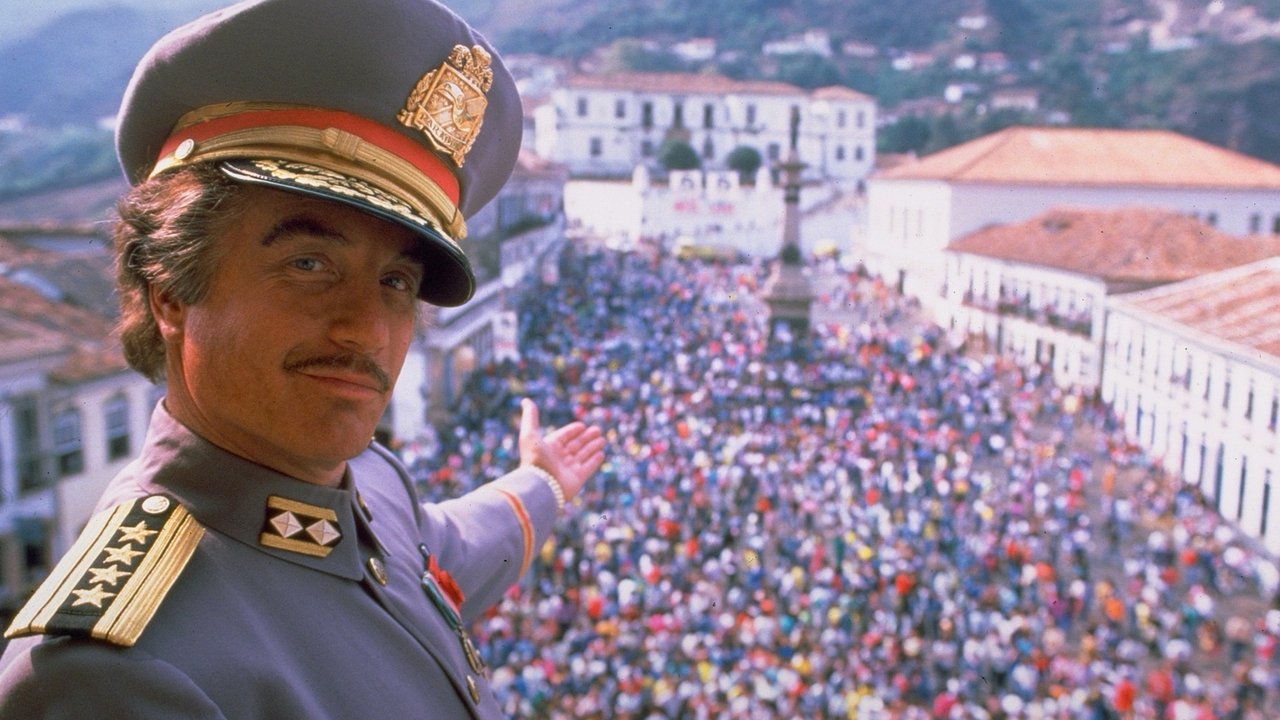
One of the film's real strengths is its sense of place. Parador feels tangible, thanks in large part to the inspired decision to film on location. Retro Fun Fact: The stunning, colourful backdrop wasn't a Hollywood backlot; it was largely filmed in the historic colonial town of Ouro Preto, Brazil. This choice lends the film an authentic, slightly faded grandeur that elevates it beyond a simple farce. You can almost feel the humid air and hear the bustling street life, even amidst the absurdity of the plot. It gives the film a texture that studio-bound comedies of the era often lacked.
The humour definitely has that late-80s flavour – sometimes sharp, sometimes a little goofy, and occasionally dipping into stereotypes that might raise an eyebrow today. The political satire isn't exactly biting deep, focusing more on the absurdity of the situation than offering a profound critique of dictatorships. When it was released, Moon Over Parador received decidedly mixed reviews and didn't exactly set the box office alight. Critics seemed unsure what to make of its tonal shifts, but audiences often found a certain charm in its eccentricities, making it a perfect candidate for rediscovery on VHS. It felt like a secret handshake – if you rented this, you were probably looking for something slightly off the beaten path.
Is the Moon Still Shining?
So, how does Moon Over Parador hold up after pressing eject on the VCR of time? It remains a thoroughly enjoyable, slightly peculiar comedy powered by its fantastic lead performances. Dreyfuss is a whirlwind, Julia is magnetic, and Braga is captivating. The premise is clever, and the Brazilian locations give it a visual richness. It might not be the sharpest political satire ever made, and some of the humour feels distinctly of its time, but it possesses a warmth and eccentricity that's hard to dislike. Watching it again took me right back to browsing those video store aisles, looking for something unexpected.
VHS Heaven Rating: 7/10
Justification: The score reflects the stellar performances (especially Julia and Dreyfuss), the unique atmosphere created by the location shooting, and the film's overall quirky charm. It loses a few points for its sometimes uneven tone and satire that doesn't quite land all its punches, but it's a thoroughly entertaining example of late-80s studio comedy trying something a little different.
Final Thought: Moon Over Parador is like that odd souvenir you brought back from vacation – maybe not high art, but full of colour, personality, and a reminder of a time when Hollywood still occasionally let its leading men play dictator for a day, just for laughs. A delightful oddity worth dusting off.