There’s a certain quiet chill that settles over you when the Men in Grey first appear, puffing on their spectral cigars. It’s not the jump-scare fright of a slasher flick, nor the bombastic menace of a cartoon villain. It’s something subtler, more insidious, creeping in like a fog. That unsettling atmosphere is the first hint that Momo (1986), the German-Italian adaptation of Michael Ende's thoughtful children's novel, isn't your typical 80s fantasy adventure. Forget swashbuckling heroes and damsels in distress; this is a film that trades spectacle for soul, offering a poignant fable about the preciousness of time itself.

Based on the book by the same author who gave us The NeverEnding Story, Momo feels like its quieter, more introspective cousin. While Wolfgang Petersen's 1984 adaptation of Ende's other masterwork exploded with visual effects and iconic creatures, director Johannes Schaaf (who also co-wrote the screenplay alongside Ende himself, Rosemarie Fendel, and Marcello Coscia) takes a more measured, almost melancholic approach. It's a film that trusts its young audience – and indeed, its nostalgic adult audience today – to engage with deeper philosophical questions wrapped in a seemingly simple story.
### Where Time Goes to Die
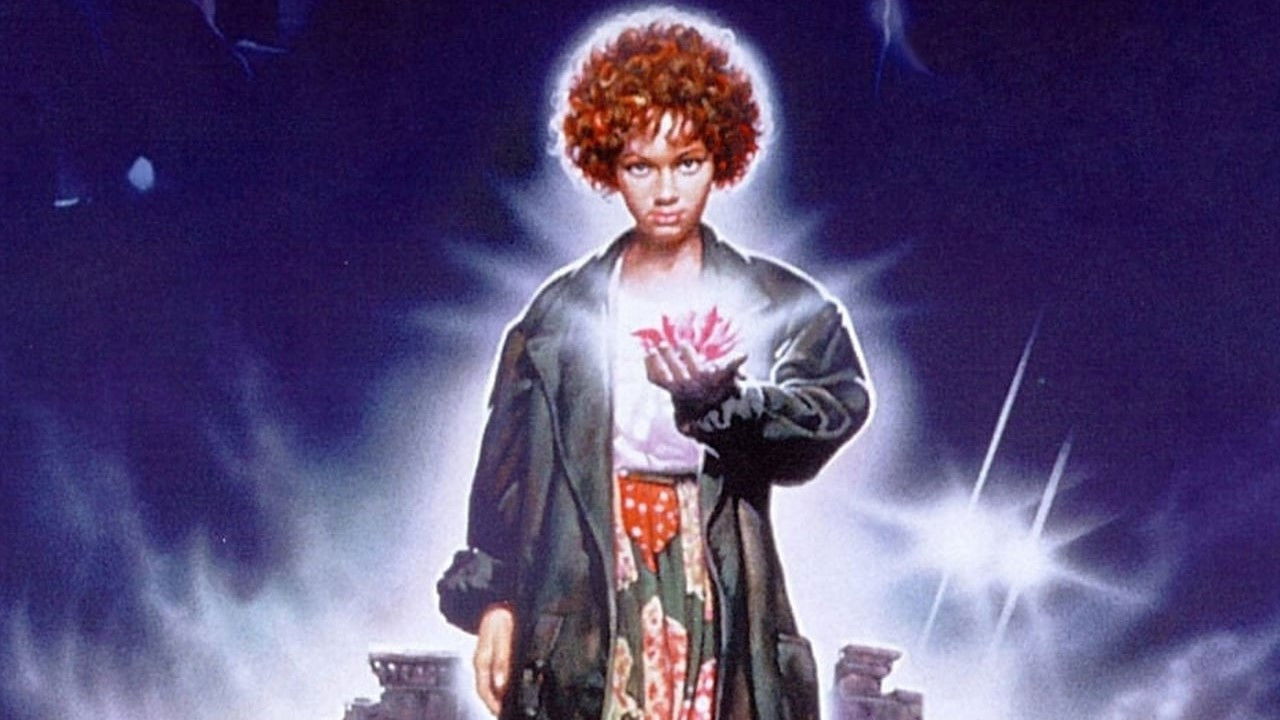
Our titular heroine, Momo (Radost Bokel), is a young orphan of mysterious origin who finds a home in the ruins of an ancient amphitheater. She possesses an extraordinary gift: she truly listens. Her quiet presence draws people in, helps them solve problems, mend arguments, and rediscover their joy. Her friends, the philosophical street-sweeper Beppo (Mario Adorf, a versatile German star) and the imaginative storyteller Gigi (Bruno Stori), form the heart of a vibrant, unhurried community.
But this idyllic existence is threatened by the arrival of the Men in Grey, agents of the Timesavings Bank. These chillingly drab figures persuade the townsfolk to "save" time by eliminating all "unnecessary" activities – playing, chatting, dreaming, caring. Time saved, they promise, can be banked for later use, earning interest. Of course, the horrifying truth is that the saved time is stolen, consumed by the Men in Grey themselves, fueling their parasitic existence and draining the world of warmth and color. It’s a remarkably potent metaphor for the pressures of modern consumerism and the relentless pace of life, perhaps even more relevant now than it was in the mid-80s. Watching the adults become hurried, stressed, and disconnected feels unnervingly familiar.
### A Journey Beyond the Clock
As the world turns grey and sterile, only Momo remains immune, her innate ability to simply be protecting her. Her journey to stop the time thieves leads her to the mystical realm of Master Secundus Minutius Hora, the administrator of time itself. And who better to embody such ancient wisdom and gentle authority than the legendary director and actor John Huston? In what stands as one of his final screen appearances (the film was released shortly after his passing), Huston brings a profound, weary grace to the role. Seeing him, frail but commanding amidst the fantastical clockwork imagery of Hora's domain, is genuinely moving. It’s a fascinating piece of casting trivia – the titan who directed classics like The Maltese Falcon (1941) and The African Queen (1951) lending his gravitas to this European fantasy film.
The production itself, filmed largely at the famed Cinecittà studios in Rome, has a distinctly European flavour. The design contrasts the earthy warmth of Momo's ruined amphitheater with the stark, angular coldness imposed by the Men in Grey. While some of the effects might look dated to modern eyes – particularly the slightly ethereal look of the Men in Grey or the mechanics of Hora's realm – they possess a handmade charm that fits the film's storybook quality. And let's not forget Cassiopeia, Master Hora's tortoise, who communicates through glowing messages on her shell and can see precisely half an hour into the future. It’s a delightful character realised through charmingly practical means.
### The Quiet Power of Listening
Radost Bokel, reportedly chosen from thousands of hopefuls for the role, is perfectly cast as Momo. With her wide, expressive eyes and unruly mop of dark hair, she embodies the character's quiet strength and innate wisdom. She doesn't need grand speeches or heroic feats; her power lies in her empathy and her unwavering presence. It’s a performance that carries the film's emotional weight beautifully.
Michael Ende, famously unhappy with the adaptation of The NeverEnding Story, had a much more direct hand in Momo, co-writing the script. Perhaps this accounts for the film's fidelity to the book's themes and tone. It’s a patient film, sometimes slow, mirroring the unhurried pace of life the Men in Grey seek to destroy. It demands attention and rewards it with a thoughtful, resonant story that lingers long after the credits roll. It never achieved the blockbuster status or pop culture ubiquity of its fantasy contemporaries, remaining something of a hidden gem, often discovered on a dusty VHS tape nestled between louder, brasher adventures. I distinctly recall renting it from a local store, expecting maybe Falkor or Atreyu, and finding this strangely captivating, almost somber fairytale instead. It wasn't what I expected, but it stuck with me.
VHS Heaven Rating: 8/10
Momo is a unique and quietly profound fantasy film that stands apart from the typical 80s fare. Its strengths lie in its thoughtful themes, Radost Bokel's captivating performance, John Huston's poignant final appearance, and its hauntingly effective allegorical villains. While its deliberate pace and slightly dated effects might not appeal to everyone, the film's core message about the value of time, imagination, and human connection feels timeless. It earns a solid 8 for its artistic integrity, emotional resonance, and for daring to be a different kind of fantasy – one that whispers rather than shouts, but whose message echoes just as loudly.