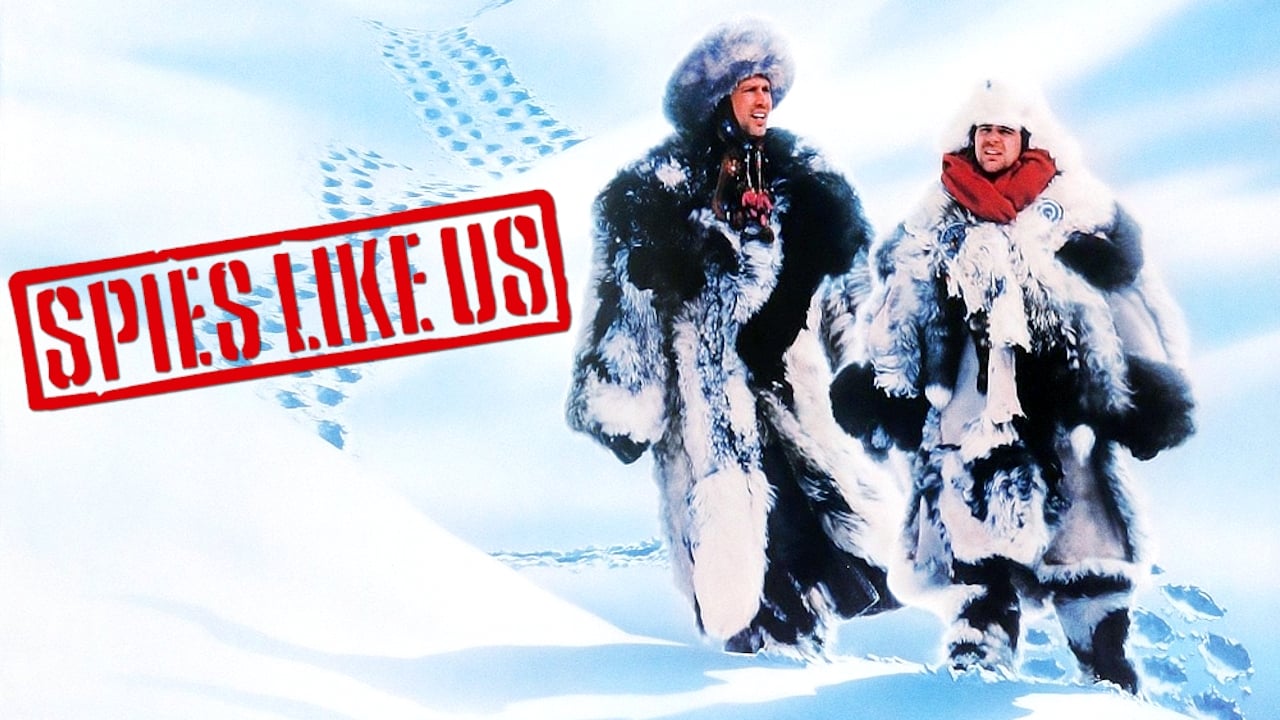
Alright, fellow tapeheads, let’s rewind to a time when the Cold War was still chilly, studio comedies felt gloriously oversized, and two Saturday Night Live titans reunited to save the world… sort of. Slide that worn copy of Spies Like Us (1985) into the VCR, ignore the tracking lines for a second, and let’s talk about this gloriously goofy espionage adventure. Forget sleek, modern spy thrillers; this is pure, uncut 80s absurdity, delivered with the kind of chaotic energy only Chevy Chase and Dan Aykroyd could muster.

### Decoys in the Desert
The premise is delightfully simple, almost a throwback itself: Emmett Fitz-Hume (Chevy Chase, perfecting his patented charming-smarm character) and Austin Millbarge (Dan Aykroyd, the earnest, tech-loving nerd) are two low-level government employees who get caught cheating on the Foreign Service entrance exam. Instead of being fired, they’re fast-tracked into a secret CIA program. Why? Because they are perfectly expendable. The brass, led by the stern General Sline (Steve Forrest), figure these two buffoons are the ideal decoys to draw Soviet attention while a real team carries out the real mission involving a stolen Soviet mobile ICBM launcher. What could possibly go wrong?
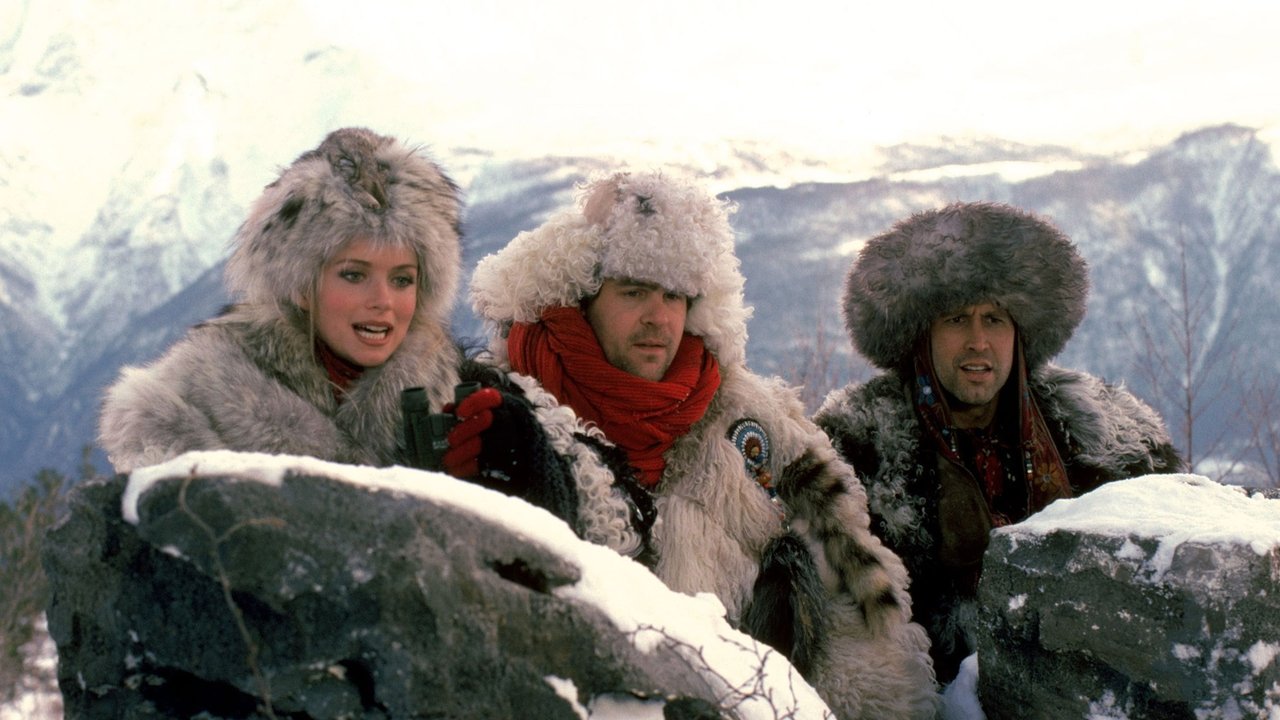
This setup is pure comedy gold, leaning into the fish-out-of-water trope with gleeful abandon. Watching Fitz-Hume try to bluff his way through intense situations while Millbarge attempts to apply logic (and often fails spectacularly) is the core engine of the film. Their journey takes them from grueling (and hilarious) training sequences to the deserts of Pakistan and eventually into the snowy depths of the Soviet Union (actually snowy Norway standing in quite convincingly).
### The Landis Touch and That 80s Energy
Helming this comedic chaos is John Landis, a director who knew a thing or two about orchestrating mayhem after giving us The Blues Brothers (1980) and Trading Places (1983) – another film pairing SNL alumni. Landis brings his signature style here: a mix of broad comedy, surprisingly decent action staging for a comedy, and a penchant for cramming the screen with unexpected cameos. Seriously, keep your eyes peeled! You’ll spot everyone from Bob Hope (a nod to the film's 'Road picture' inspirations, which Aykroyd and co-writer Dave Thomas openly admitted) to directors like Terry Gilliam, Sam Raimi, Costa-Gavras, and even Joel Coen. Spotting them felt like finding Easter eggs before we even called them that!
The film feels like an 80s comedy, and I mean that in the best way. There's a certain rhythm, a willingness to go for the big gag, and yes, some jokes that might feel a little dated now, but mostly land with nostalgic charm. Remember that scene in the medical tent? "Doctor. Doctor. Doctor." It’s simple, it’s silly, and it still gets a chuckle. It’s a testament to Chase and Aykroyd's timing, honed over years together. While there were whispers of on-set friction between Landis and Chase, stemming from past collaborations, it doesn't seem to dampen the manic energy on screen.


### Practical Effects and Cold War Fun
Let's talk about the action and effects, because that's where the VHS charm really glows. The final act revolves around that giant Soviet missile and a frankly ludicrous giant space laser defense system. Watching it now, you can appreciate the model work, the pyrotechnics, the sheer physicality of it all. That missile launch? It felt huge on our flickering CRT screens back in the day. Sure, today it might look a little less seamless than CGI wizardry, but there's a tangible weight to it, a feeling that something real was built and filmed. Remember how impressive those miniature explosions seemed? That raw, slightly unpolished feel is part of the appeal.
The film also playfully engages with the Cold War paranoia of the era. While it's certainly not a biting political satire, it uses the US-Soviet tensions as a backdrop for outrageous situations and misunderstandings. The underlying message – that maybe the people in charge aren't always the sharpest tools in the shed, and mutual destruction is absurd – bubbles beneath the surface of the gags.
### Was It a Hit?
Upon release, Spies Like Us did pretty well at the box office, pulling in over $60 million on a $22 million budget – respectable numbers for 1985. Critics were somewhat mixed, as they often were with broad studio comedies starring SNL vets back then, but audiences generally enjoyed the ride. It became a staple on video store shelves and cable TV, cementing its place as a fondly remembered, if not critically lauded, piece of 80s pop culture. And who could forget the theme song by Paul McCartney? It might not be his absolute best, but it’s undeniably catchy and pure 80s synth-pop joy.
Rating: 7/10
This score reflects the undeniable chemistry between Chase and Aykroyd, the genuinely funny moments, Landis's capable direction, and the sheer nostalgic fun factor. It loses a few points for a plot that’s thinner than a floppy disk and some humor that hasn't aged quite as gracefully, but the highlights outweigh the weaknesses. It’s a great example of the kind of lighthearted, star-driven comedy adventure that thrived in the 80s.
Final Thought: Spies Like Us is like finding that favourite comfy sweatshirt in the back of the closet – maybe a little worn, maybe slightly out of fashion, but it still brings a smile and feels just right for a lazy Saturday night viewing. It’s a reminder of a time when espionage comedy meant less about gritty realism and more about two lovable goofballs stumbling their way towards saving the world, one ridiculous situation at a time. Doctor? Doctor!