Alright tapeheads, gather ‘round. Sometimes, digging through the metaphorical bargain bin of memory unearths something truly unexpected, a film that wasn’t playing at the multiplex or heavily advertised between Saturday morning cartoons. It’s a different kind of nostalgia – the thrill of discovering something utterly unique, maybe glimpsed on a fuzzy UHF channel late at night, or passed along on a copied tape with Cyrillic scrawled on the label. Today, we're hitting rewind on a gem from behind the Iron Curtain: Aleksandr Tatarskiy's 1983 claymation marvel, Last Year's Snow Was Falling (Падал прошлогодний снег).
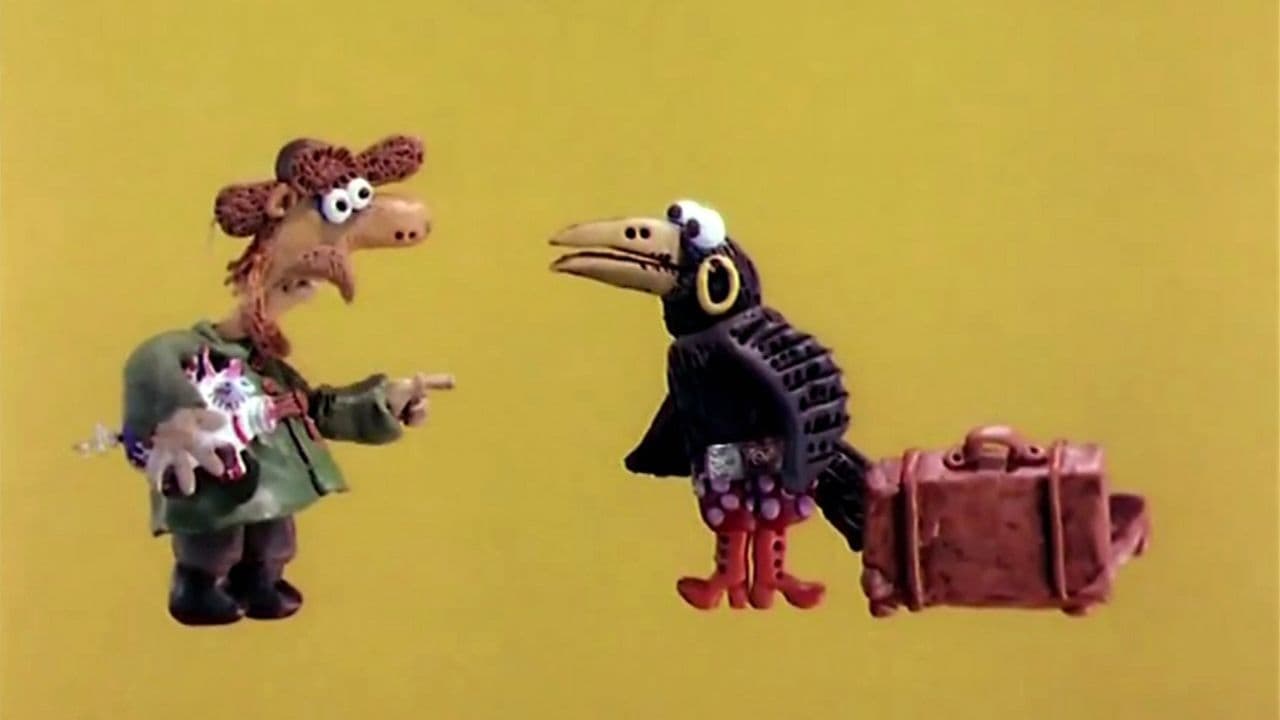
Forget slick Hollywood animation for a moment. This 20-minute short film feels handcrafted, molded from plasticine and pure, unfiltered imagination. It’s the kind of thing that makes you appreciate the sheer effort of stop-motion animation in the pre-digital age – the polar opposite of today’s smooth CGI. Remember seeing those occasional thumbprints or the slightly jerky movements in old stop-motion? Here, it’s part of the undeniable charm, a testament to the painstaking frame-by-frame labor involved. This was the practical effect of its time for animation, requiring incredible patience and artistry.
A Quest Most Peculiar
The premise, narrated with delightful eccentricity by the legendary Stanislav Sadalskiy, follows a hapless, greedy, and none-too-bright peasant man dispatched by his stern wife to fetch a Christmas tree (well, a New Year's tree, in the Soviet tradition). What follows is less a straightforward quest and more a descent into absurdist fantasy. Our protagonist encounters talking animals, magical transformations, bizarre landscapes, and constantly gets sidetracked by his own foolishness and nonsensical daydreams. The plot, penned by Sergey Ivanov, isn't linear; it's a whimsical, often hilarious, collection of vignettes driven by the narrator's playful commentary and the character's own ineptitude.
One fascinating tidbit: Stanislav Sadalskiy actually improvised much of his dialogue, bringing an incredible energy and personality to both the narrator and the peasant – yes, he voiced both! This dual performance is a masterclass, giving the film its distinctive, slightly manic rhythm. His delivery is packed with witty wordplay and folk sayings (some famously untranslatable, adding to its mystique outside Russia) that became instantly quotable in its homeland.
Claymation with Character
Director Aleksandr Tatarskiy, who later co-founded the renowned Pilot Studio (a powerhouse of post-Soviet animation), wasn't just moving clay figures; he was injecting life and a very specific, slightly melancholic Russian humor into every frame. The character design is wonderfully expressive, all bulbous noses and frantic gestures. The transformations are fluid and dreamlike – a simple walk through the woods can lead anywhere. There’s a raw, tactile quality here that digital animation rarely captures. You feel the texture of the clay, the ingenuity of the miniature sets.
It's amazing to think this burst of creative freedom emerged from the often-restrictive Soviet era. In fact, the film apparently faced some hurdles with the state censors (Goskino), who were initially baffled by its surrealism and perceived lack of a clear ideological message. Tatarskiy reportedly had to fight to keep its quirky spirit intact, a common struggle for artists navigating the system back then. Thank goodness he succeeded, because its refusal to conform is precisely what makes it so special.
Enduring Whimsy
While perhaps not a common sight in Western video stores back in the day, Last Year's Snow Was Falling became an absolute cultural touchstone in Russia and former Soviet republics. It's aired traditionally around New Year's for decades, embedding its nonsensical phrases and unforgettable imagery into the collective consciousness. It’s the kind of animation that appeals to both kids (for the visuals and slapstick) and adults (for the witty narration, satire, and underlying philosophical musings on folly and desire).
Does it hold up? Absolutely. Its humor is timeless, its animation style remains unique and visually captivating, and its short runtime makes it incredibly rewatchable. It doesn't rely on pop culture references of its time; its charm comes from its pure, unadulterated weirdness and warmth.
Rating: 9/10
The near-perfect score reflects its masterful execution within its medium, its enduring cultural impact (in its context), and its sheer, undiluted creative spirit. The claymation is inventive, the voice work iconic, and the whole package is a delightful slice of absurdist fantasy. It might lack the epic scope of other films we cover, but its charm is immense.
Final Thought: Forget polished pixels; Last Year's Snow Was Falling is a reminder of the messy, wonderful magic that happens when artists get their hands dirty with clay and imagination – a fuzzy, fantastic transmission from another time and place, still sparkling after all these years. Definitely worth tracking down if you crave something truly different.