Alright, fellow tapeheads, dim the lights, maybe crack open a Tab if you can find one, and let's rewind to a specific kind of cinematic chaos that felt right at home flickering on a CRT screen. Tonight, we're pulling Floyd Mutrux's The Hollywood Knights (1980) off the shelf – a movie that practically smells like gasoline, cheap beer, and teenage rebellion, circa Halloween night, 1965. Forget slick plotting; this is pure, unadulterated hangout movie territory, cranked up with raunchy humor and one of the best rock n' roll soundtracks of the era.
### Cruisin' Down Memory Lane (and Van Nuys Blvd.)
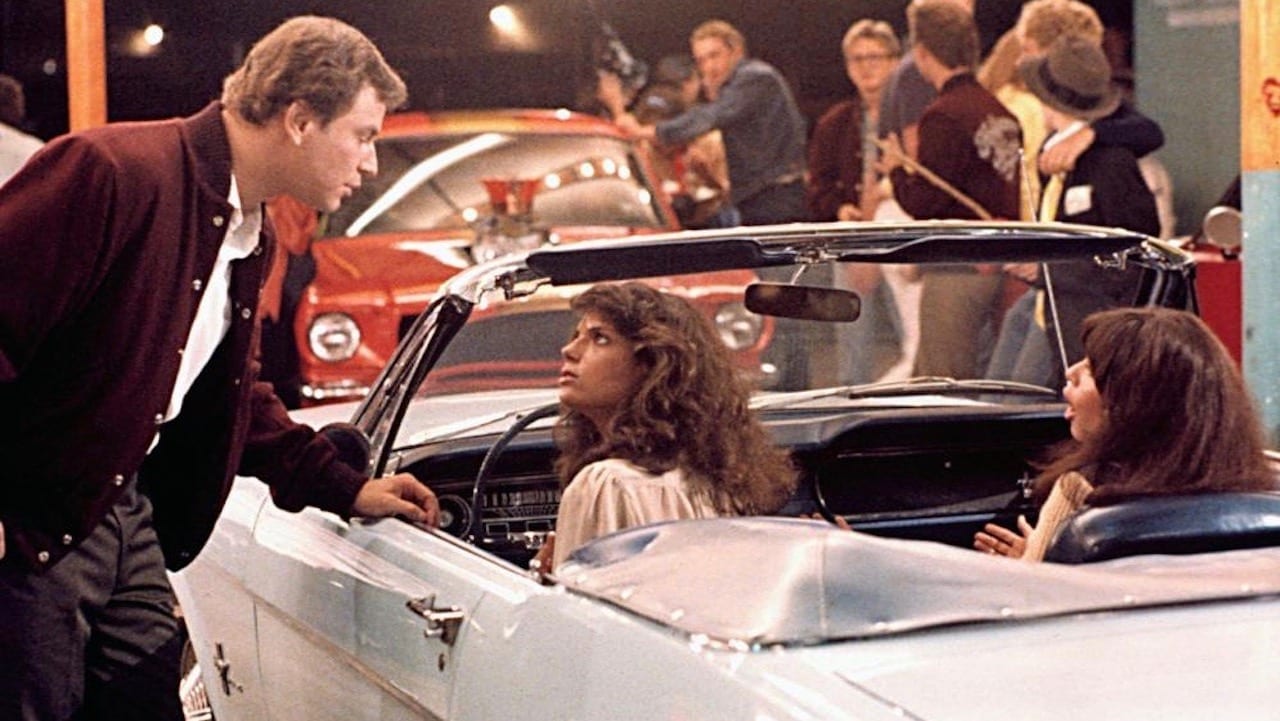
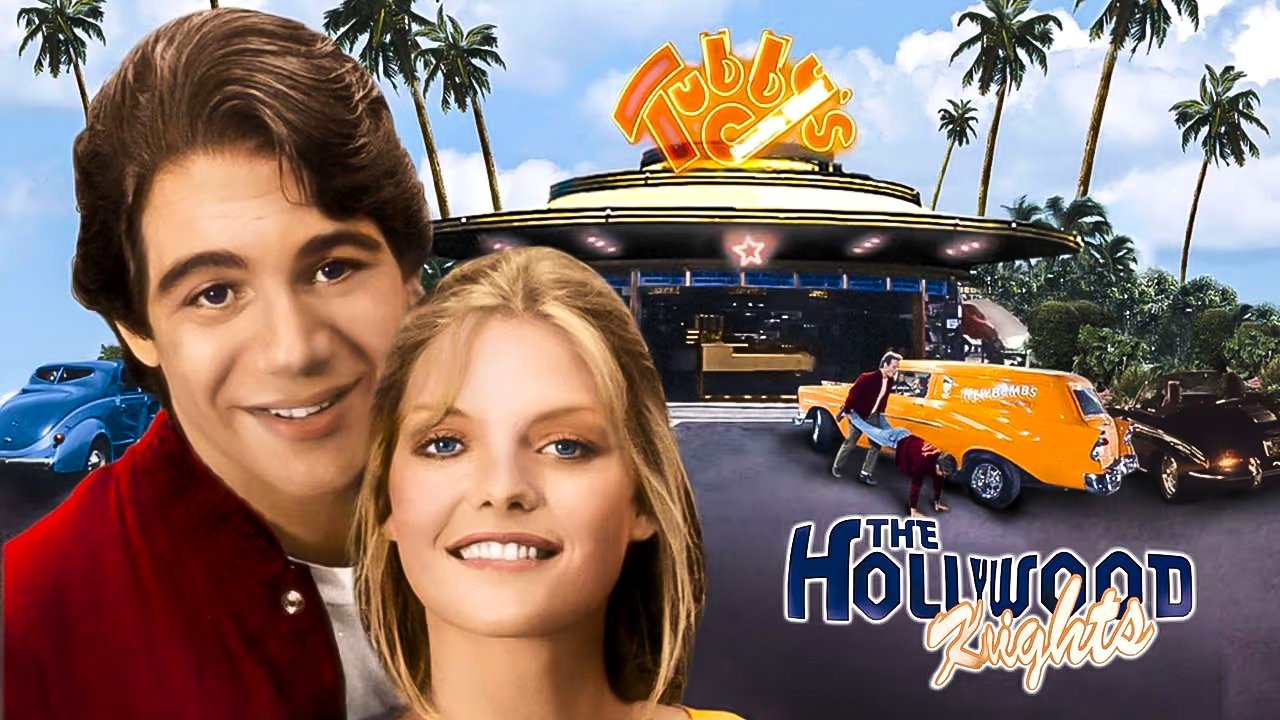
Think American Graffiti, but swap out the gentle nostalgia for a firecracker shoved into a toilet bowl. The Hollywood Knights throws us into the final night of Tubby's Drive-In, a beloved Beverly Hills hangout spot slated for demolition. Our heroes are the titular Knights, a car club dedicated to fast cars, faster women (or trying to be), and pulling outrageous pranks on the clueless, stuffy adults trying to shut them down. Led nominally by the cool-headed Duke (a pre-Who's the Boss? Tony Danza, already flashing that familiar charm), the real anarchic energy comes from Newbomb Turk, played with manic glee by Robert Wuhl in a star-making turn.
This isn't a film driven by intricate story mechanics. It’s episodic, capturing the feeling of one long, legendary night. We follow different groups – the guys trying to score, the couples navigating relationship bumps, and Newbomb orchestrating increasingly elaborate (and often jaw-droppingly crude) acts of vengeance against the Beverly Hills establishment types. Remember that infamous "punch bowl" scene? Yeah, that's pure Newbomb, and it perfectly encapsulates the film's gleefully low-brow spirit. It’s the kind of gag that probably made your parents tell you to change the channel back in the day, but secretly, you and your friends were howling.
### A Cast on the Verge
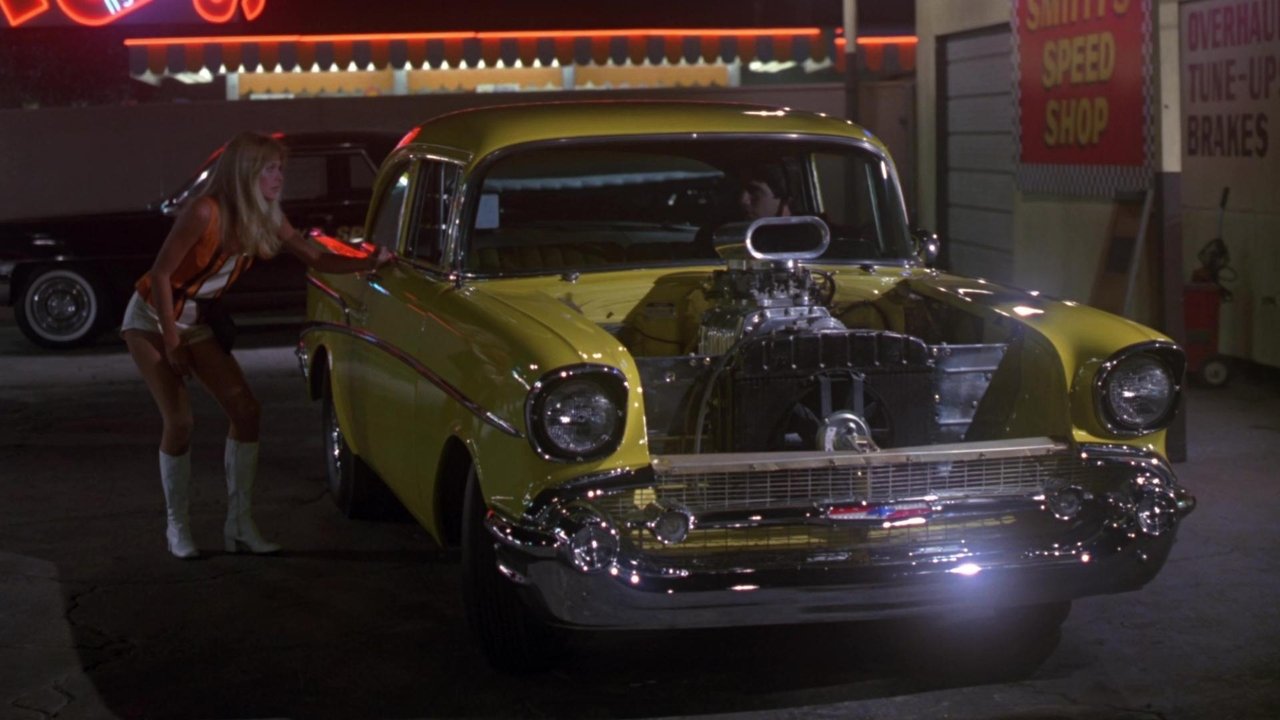
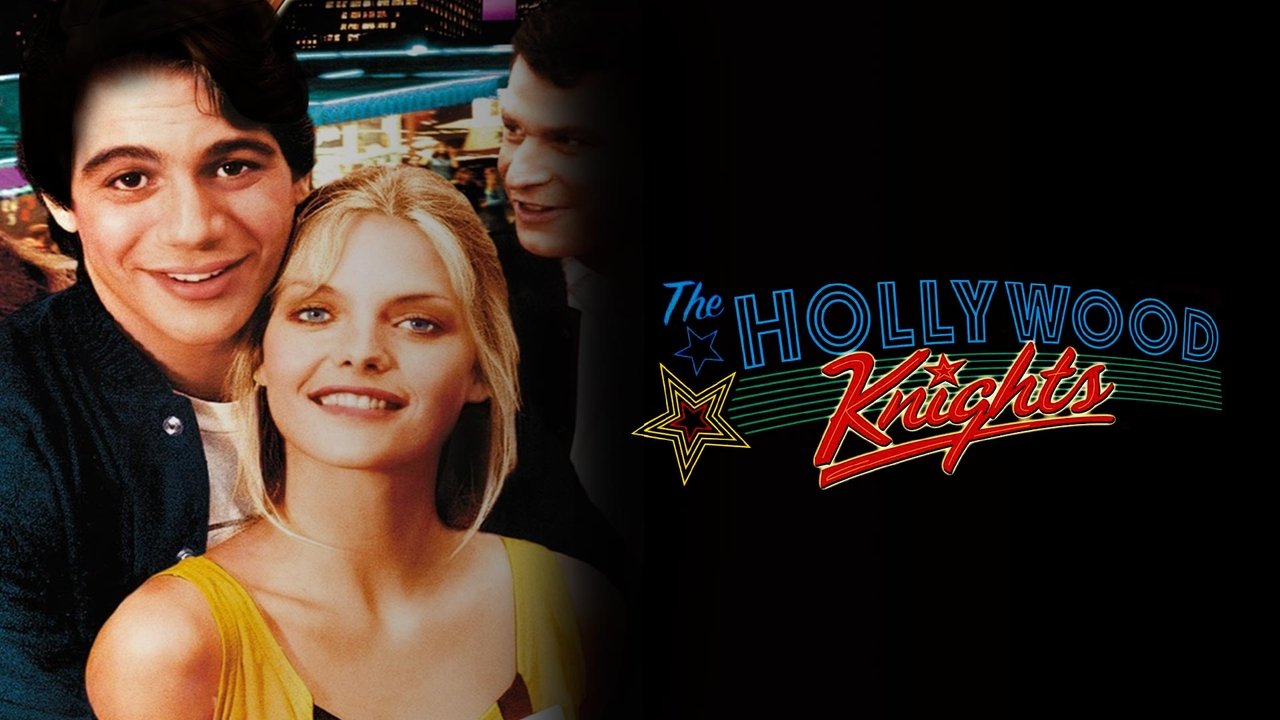
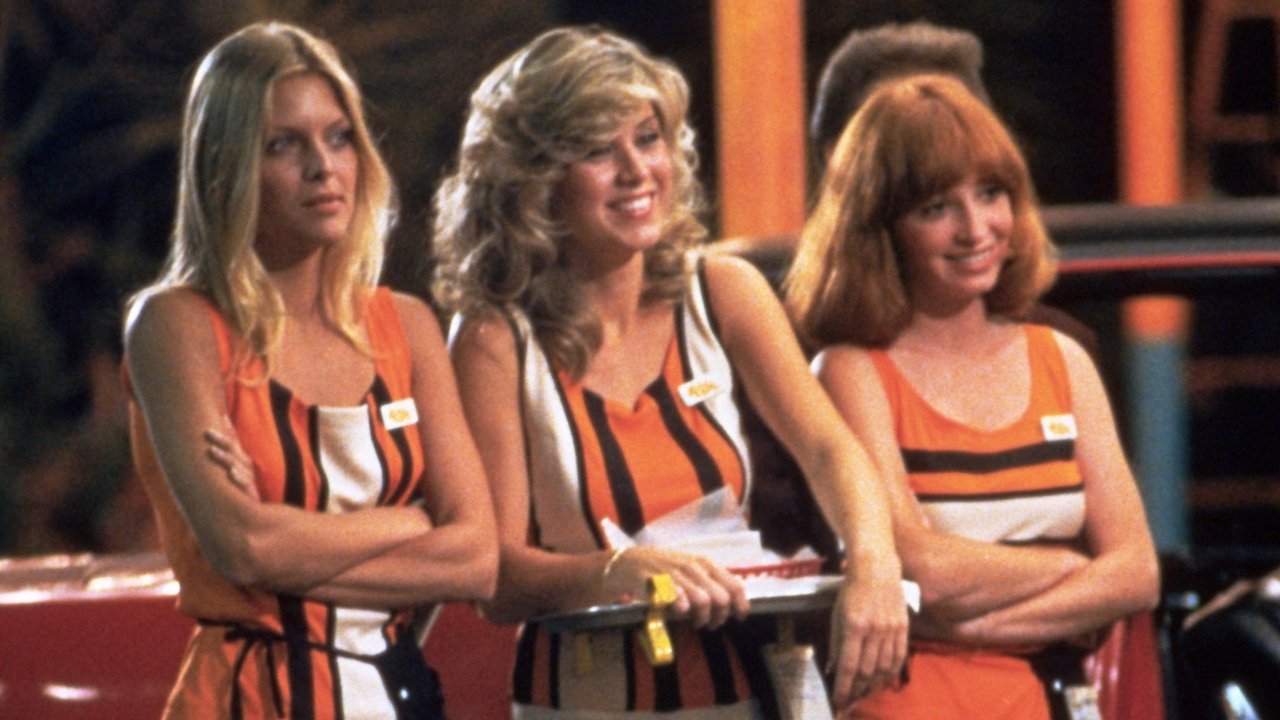
What makes The Hollywood Knights fascinating to watch now, beyond the nostalgia, is seeing so many familiar faces right at the beginning of their careers. Tony Danza was juggling this with his role on Taxi, bringing an effortless likability to Duke. Fran Drescher, years before The Nanny, pops up with that unmistakable voice and presence. But the real "whoa" moment for many rediscovering this flick? Look closely at Suzie Q, the carhop serving up burgers and dreams – yes, that’s Michelle Pfeiffer in her very first film role! It’s wild to see her here, fresh-faced and holding her own amidst the boys' club chaos, hinting at the incredible career to come.
But let's be honest, the movie belongs to Robert Wuhl. Newbomb Turk is an engine of pure comedic destruction. His symphony recital interruption ("Volare!") is legendary amongst fans. Wuhl, who reportedly improvised heavily, channels a raw, almost primal energy that powers the film’s funniest and most outrageous moments. He's the id of the Knights made manifest, and it’s a performance that cemented the film's cult status. Without Wuhl's relentless energy, The Hollywood Knights might have just felt like a collection of skits; he ties it all together with sheer, unhinged charisma.
### That Soundtrack, Though!
You simply cannot talk about The Hollywood Knights without mentioning the music. Director Floyd Mutrux (who also gave us the similarly music-driven Aloha, Bobby and Rose) understood the power of period-perfect needle drops. The soundtrack is wall-to-wall classics from the early-to-mid 60s: The Beach Boys, Wilson Pickett, Martha and the Vandellas, The Righteous Brothers... it's an absolute killer playlist. Reportedly, securing the rights to all that amazing music ate up a significant chunk of the film's relatively modest $4 million budget, and you can hear every penny on screen. The music isn't just background noise; it is the atmosphere, evoking that specific pre-Beatlemania, end-of-innocence vibe perfectly. It’s the sonic glue holding the whole glorious mess together.
### Made Fast, Played Loud
Shot quickly over roughly 20-odd nights, primarily on location around Los Angeles (look for classic Van Nuys Boulevard cruising shots!), the film has a raw, almost documentary feel at times, capturing the energy of late-night hangs. There are no elaborate CGI pranks here – the humor, like the cars, is practical and grounded, even when it gets completely absurd. It feels authentic to its setting, even filtered through the lens of 1980.
It wasn’t exactly a critical darling upon release, often dismissed as a vulgar American Graffiti clone. But like so many future classics, it found its audience on cable TV and, crucially for us here at VHS Heaven, on home video. It became that tape you passed around, the one you watched late at night when you wanted something loud, funny, and unapologetically adolescent. Its humor is definitely a product of its time – some jokes haven't aged gracefully, leaning heavily into stereotypes and raunchiness that might raise eyebrows today. But viewed as a time capsule, it's a fascinating, funny snapshot.
### The Verdict
The Hollywood Knights isn't high art, and it never pretends to be. It's a greasy, loud, often crude, but undeniably energetic blast of nostalgic fun. It captures that feeling of being young, restless, and convinced that this night, this moment, is the most important thing in the world. The cast is packed with future stars, the soundtrack is unimpeachable, and Robert Wuhl delivers an all-time great comedic performance as Newbomb Turk.
Rating: 7.5 / 10
Why this score? It earns points for sheer energy, an incredible soundtrack, launching multiple careers (Michelle Pfeiffer's debut!), and Robert Wuhl's iconic performance. It loses a few points for its episodic nature sometimes feeling disjointed and for humor that, while fitting the era, can occasionally feel dated or overly crass today. However, its cult status is well-deserved, and its heart is firmly in the right place – celebrating youthful rebellion and the end of an era.
Final Thought: If you want a reminder of what raw, R-rated teen comedies felt like before they got slicker (and maybe a little safer), fire up The Hollywood Knights. It’s like finding a slightly sticky but awesome mixtape in the glove compartment of a vintage Mustang – pure, unadulterated, rock n' roll nostalgia.