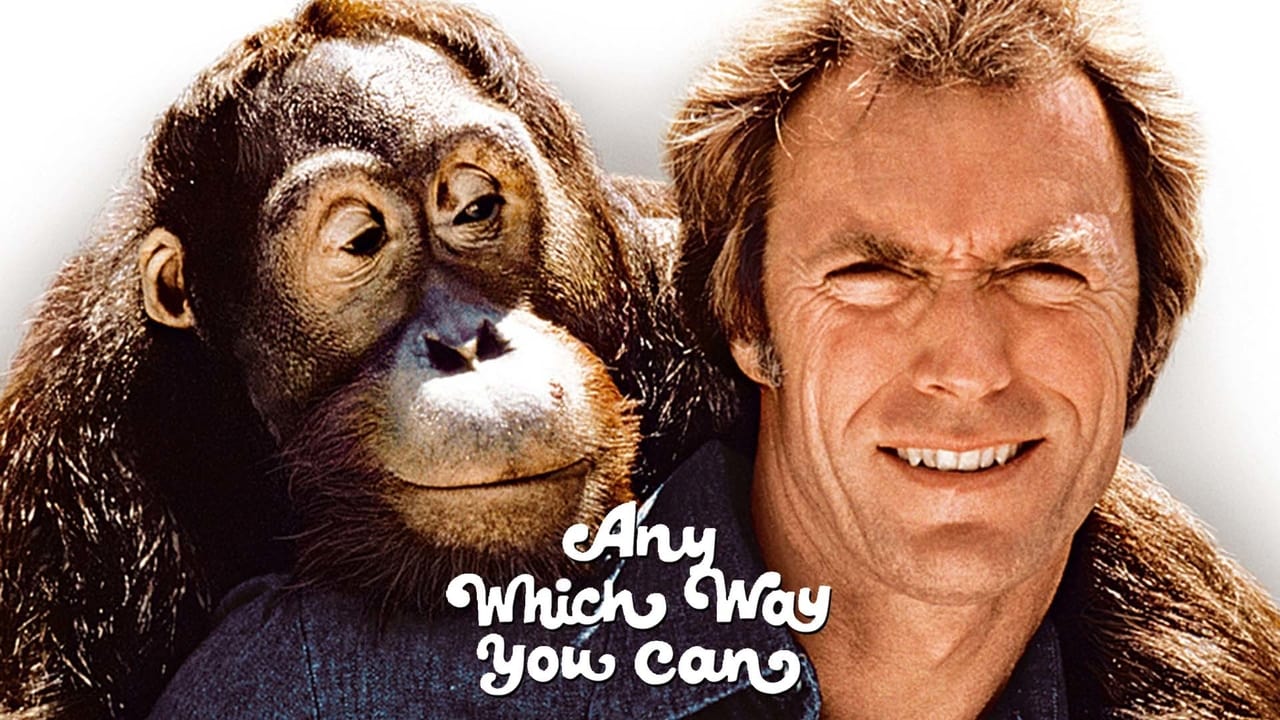
Alright, settle in, pop the tab on a cold one, and let's talk about a flick that felt like finding buried treasure on the dusty shelves of the local video store back in the day: Clint Eastwood's surprisingly successful follow-up, Any Which Way You Can (1980). Yeah, the one where Dirty Harry trades his .44 Magnum for an orangutan sidekick… again. It sounds utterly bizarre on paper, and honestly, it kind of is, but man, did this movie deliver a specific kind of rough-and-tumble 80s charm that’s hard to replicate.
### More Monkey Business, More Problems
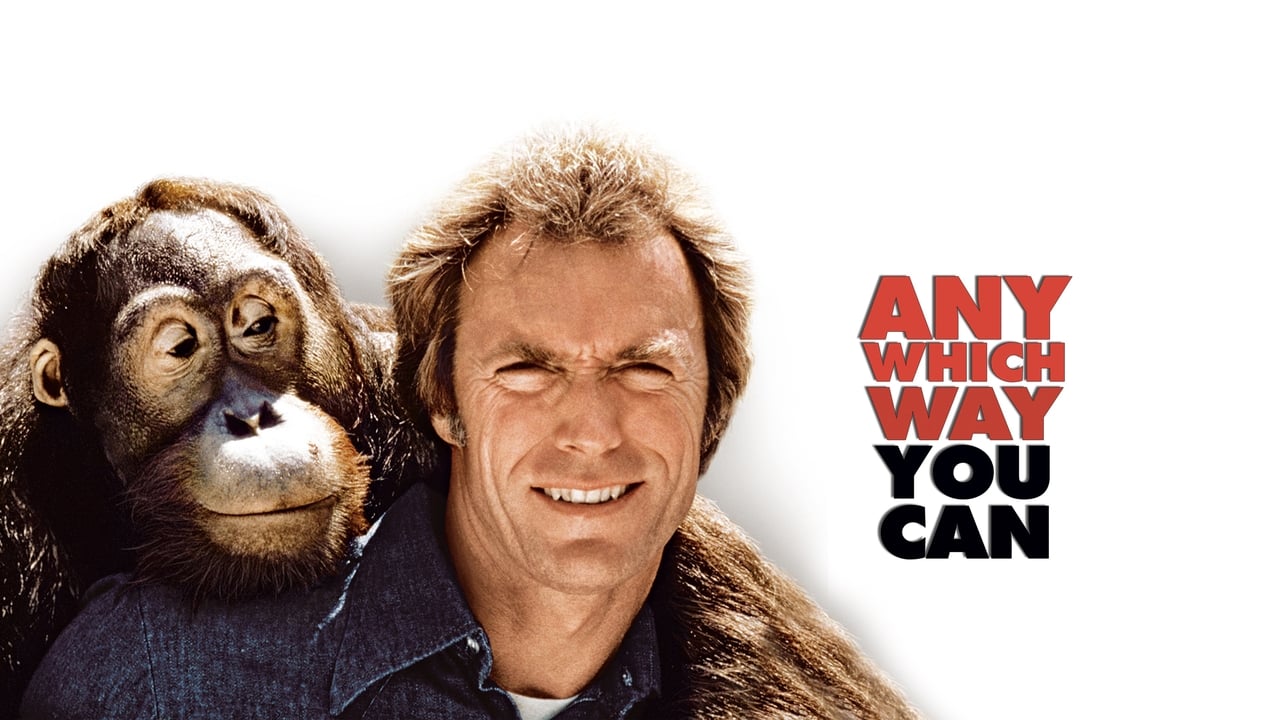
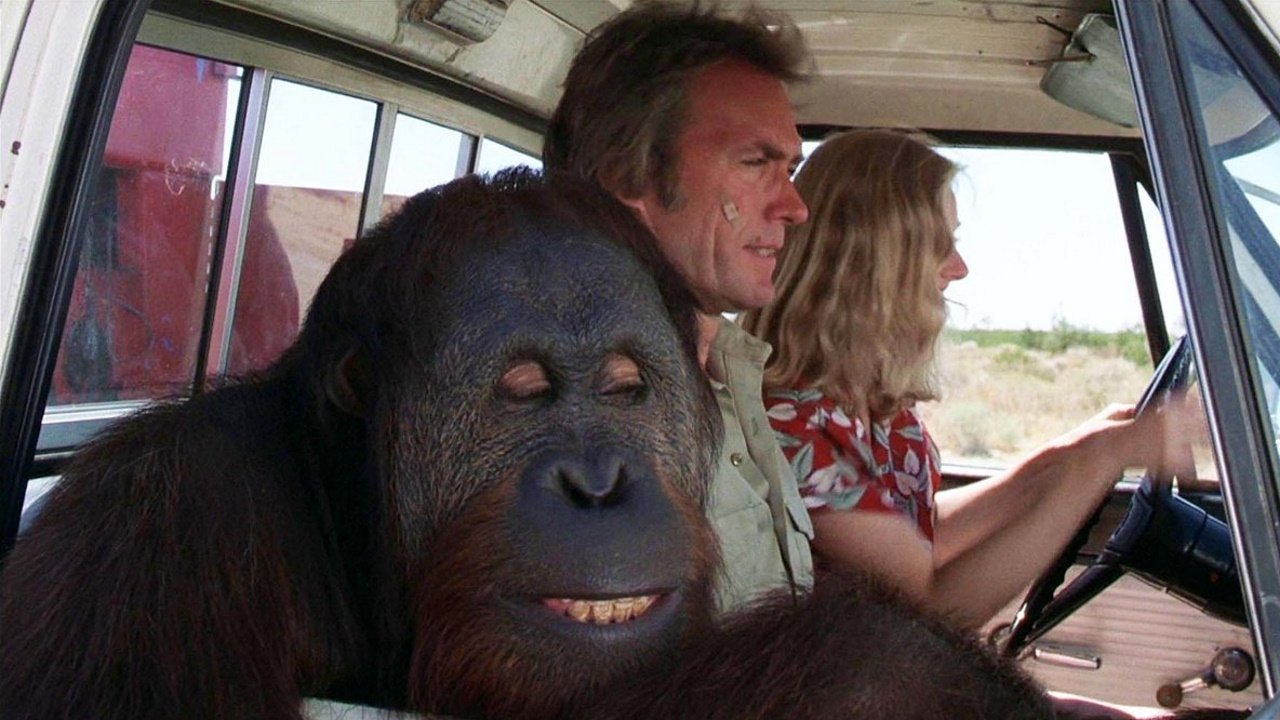
Picking up after Every Which Way But Loose, we find truck driver and bare-knuckle brawler Philo Beddoe (Eastwood, looking effortlessly cool even in plaid) trying to leave the underground fighting circuit behind. He's still got his loyal, slightly dimwitted buddy Orville (Geoffrey Lewis, a frequent and welcome face in Eastwood's films) and, of course, his scene-stealing orangutan companion, Clyde. Fun fact: the original Clyde actor, Manis, had passed away between films, so the Clyde we see here is actually a different talented ape named C.J., reportedly nicknamed Clint Junior on set! Anyway, Philo's trying to settle down with country singer Lynn Halsey-Taylor (Sondra Locke), but trouble, usually involving fists and cash, just seems to follow him like a shadow. This time, the mob wants to rope him into one last, big-money fight against the legendary East Coast champion, Jack Wilson (William Smith, a truly imposing screen presence).
### Road Trippin' and Knuckle-Dustin'
What follows is pure, unadulterated 80s road movie shenanigans mixed with surprisingly brutal brawls. Director Buddy Van Horn, Eastwood’s long-time stunt coordinator stepping behind the camera (he'd later direct Pink Cadillac and The Dead Pool for Clint), keeps things moving at a brisk pace. You can feel Van Horn's stunt background bleeding into the action; it’s grounded, messy, and feels real in a way that slick, modern choreography often misses. Remember those bar fights? Guys weren't doing wire-fu; they were getting thrown through actual balsa wood tables, landing hard on dusty floors. The film bounces between goofy setups involving Clyde's antics (often funnier than they have any right to be), the perpetually inept biker gang, the Black Widows (still trying and failing to get revenge on Philo), and the looming threat of the big fight. It’s a weird mix, a sort of blue-collar slice-of-life occasionally punctuated by someone getting punched square in the face.
The journey to the climactic showdown in Jackson Hole, Wyoming, provides plenty of excuses for roadside dust-ups and character moments. It's less a tightly plotted narrative and more a series of rambling, entertaining episodes. The supporting cast, including Harry Guardino as the exasperated mob bookie and Ruth Gordon returning as the cantankerous Ma Boggs, adds to the flavour. And the soundtrack? Pure early 80s country-pop bliss, featuring Glen Campbell, Fats Domino, and even a duet between Ray Charles and Clint himself ("Beers to You")! Eastwood’s foray into country music tie-ins was a fascinating sideline during this period.
### The Main Event: Old-School Grit
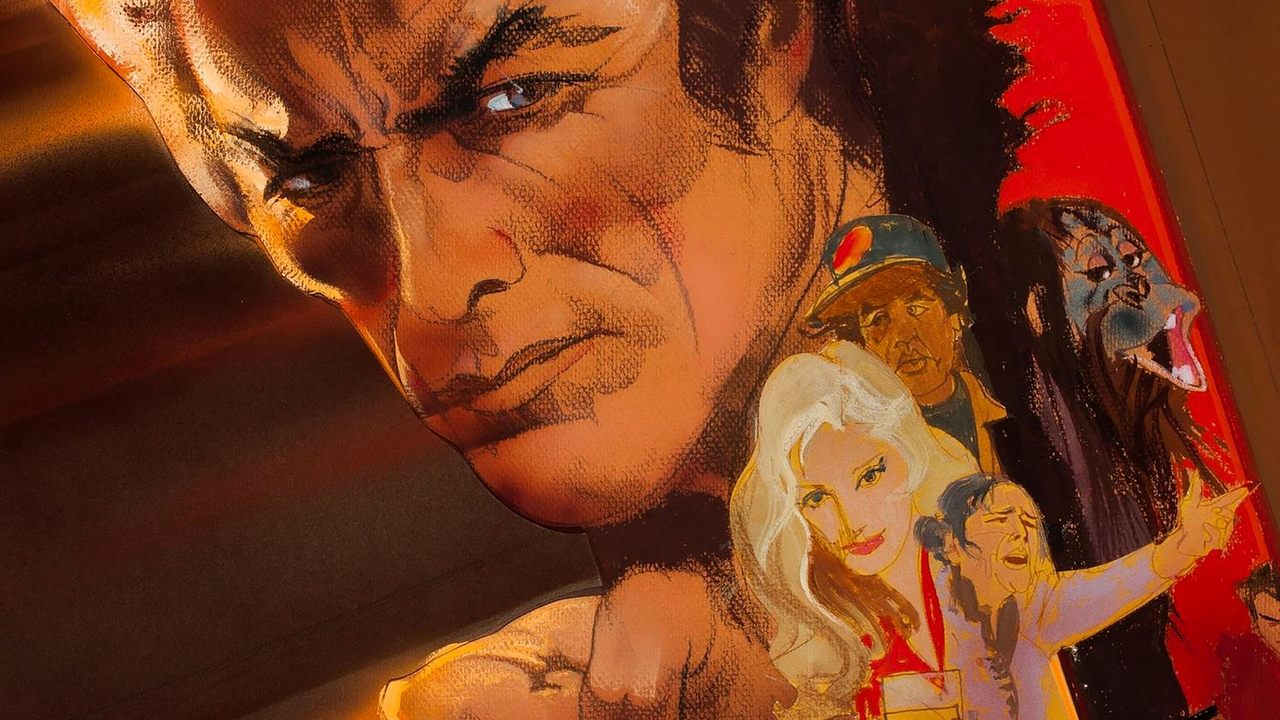
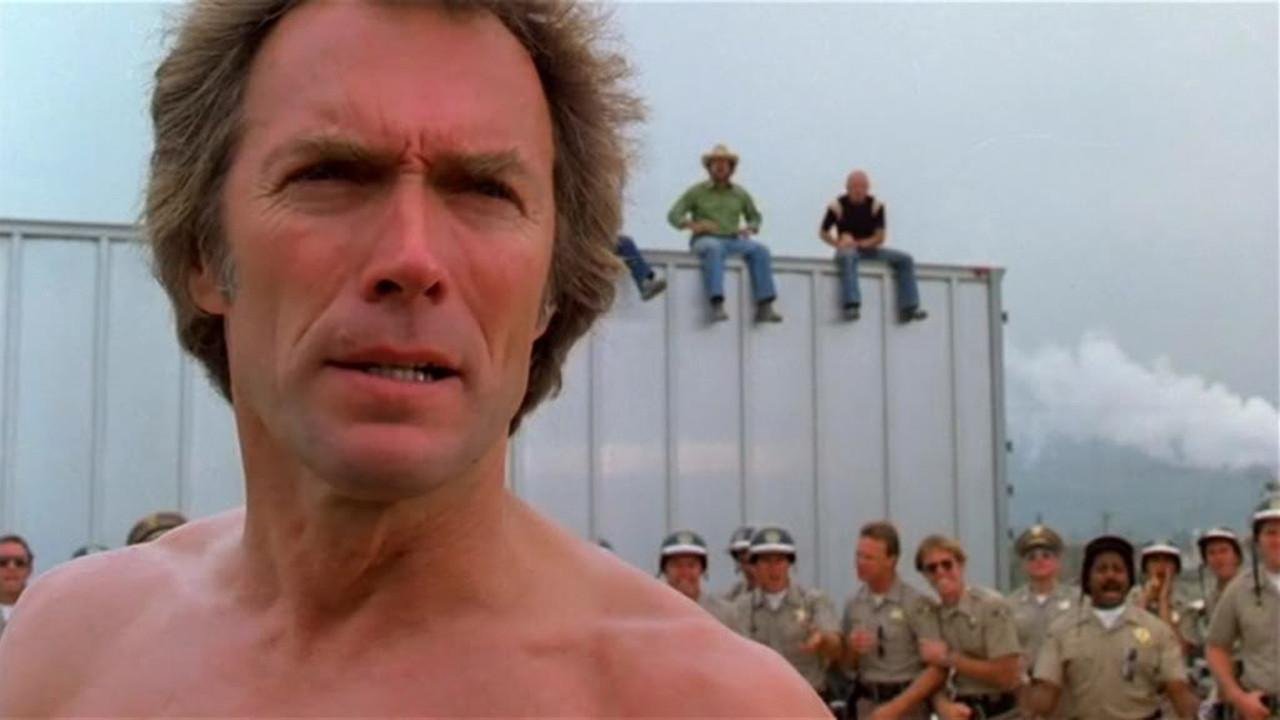
Let's be honest, the reason most of us rented this tape back then was for the final fight. And it doesn't disappoint. The showdown between Philo Beddoe and Jack Wilson is a masterpiece of old-school, practical stunt work and raw intensity. This wasn't actors pretending; it felt like two tough guys genuinely slugging it out under the Wyoming sky. Forget CGI blood spray – the sweat, the grimaces, the sheer exhaustion felt palpable through the fuzzy tracking lines on your CRT TV. William Smith, a veteran heavy, brought genuine menace and physicality to Wilson, making him a believable threat to Eastwood's seemingly invincible Philo. Didn't that final punch feel like it could crack concrete? The lack of quick cuts, letting the actors absorb and deliver blows within the frame, gave it a weight that modern action sometimes lacks. It’s brutal, prolonged, and strangely captivating, a throwback to a time when screen violence felt less polished and more impactful.
### Still Worth the Rental Fee?
Look, Any Which Way You Can isn't high art. The plot meanders, the humour is occasionally dated, and the central premise is inherently silly. But it possesses an undeniable charm and energy. It’s a product of its time, capturing that late 70s/early 80s vibe where genres blurred, and major movie stars weren't afraid to take weird chances. Eastwood is effortlessly charismatic, the supporting cast is game, Clyde steals his scenes, and the action, when it hits, hits hard and feels authentic. It’s like comfort food cinema – familiar, unpretentious, and surprisingly satisfying. My own well-worn VHS copy got plenty of play back in the day, usually late at night, and revisiting it now brings back that feeling of discovering something slightly offbeat but undeniably entertaining.
VHS Heaven Rating: 7/10
Justification: While undeniably goofy and episodic, the film delivers exactly what it promises: Eastwood's charisma, fun side characters (including Clyde!), a killer country soundtrack, and some genuinely hard-hitting, practically staged bare-knuckle brawls. The final fight alone elevates it, showcasing raw 80s action filmmaking. It loses points for the meandering plot and some dated elements, but its rewatchability and specific charm earn it a solid score.
Final Thought: It’s the kind of movie they just don't make anymore – a bizarre, charming cocktail of buddy comedy, road trip, and bone-jarring fistfights, served up with zero apologies and maximum 80s flavour. Pure, unadulterated Philo & Clyde.