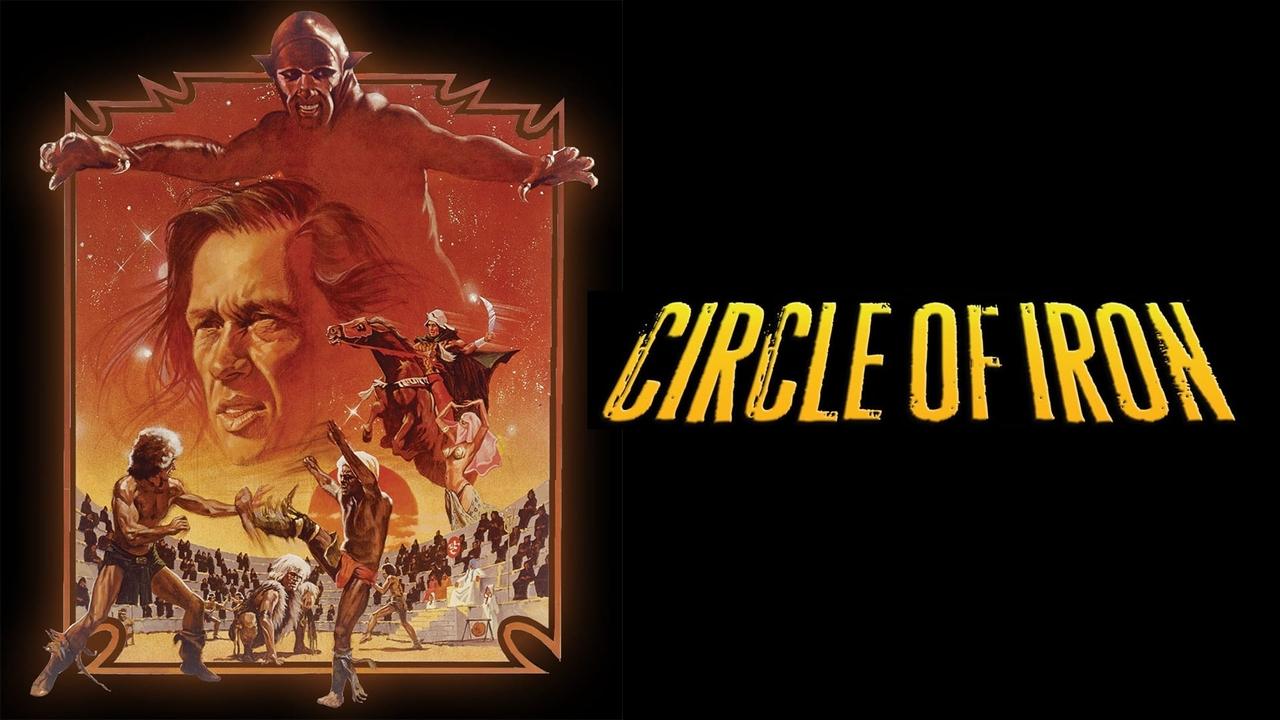
It begins not with a bang, but with a question – or rather, a yearning. A seeker, bold but perhaps naive, steps onto a path shrouded in myth, chasing whispers of enlightenment contained within a legendary book. This is the peculiar, philosophical landscape of Circle of Iron (also known as The Silent Flute), a film that feels less like a straightforward martial arts flick and more like a dreamlike wandering through parables, a cinematic curio that found its true home nestled amongst the action and fantasy tapes on video store shelves in the 80s. Watching it again now evokes that same sense of slightly baffled fascination I felt renting it years ago, drawn by the promise of action but discovering something altogether stranger.
The Shadow of the Dragon
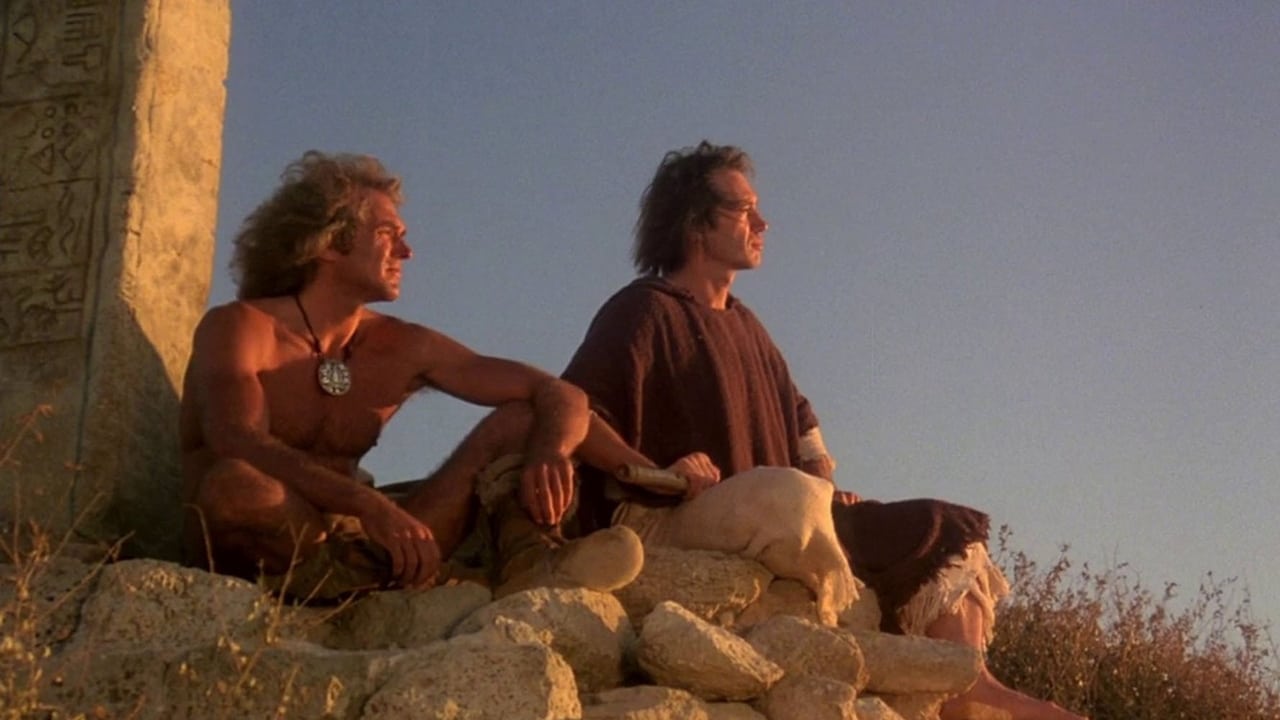
You can't really talk about Circle of Iron without acknowledging the giant shadow looming over it: Bruce Lee. This project was his brainchild, conceived years earlier with his student and friend, actor James Coburn, and screenwriter Sterling Silliphant (who penned classics like In the Heat of the Night). Their original script, The Silent Flute, was envisioned as a starring vehicle for Lee himself, a deeply personal exploration of martial arts philosophy wrapped in an adventurous quest narrative. Lee was meant to play the multiple, enigmatic figures who guide and test the protagonist. However, studio reluctance and Lee's tragic, untimely death in 1973 seemingly put an end to the dream. Seeing it finally reach the screen in 1978, directed by Richard Moore (a cinematographer known for films like The Reivers), carries a bittersweet weight. It's a fascinating "what if?" scenario made tangible, albeit filtered through different sensibilities.
Carradine's Many Faces
Stepping into the demanding multi-role performance originally intended for Bruce Lee is David Carradine, fresh off his iconic run as Kwai Chang Caine in the Kung Fu television series – a role Lee himself had been considered for, adding another layer of intriguing irony. Carradine portrays not one, but four distinct characters encountered by the seeker, Cord (Jeff Cooper): the blind, flute-playing sage; a mischievous monkey troop leader; a desert nomad chieftain; and Death himself. It’s a performance that anchors the film's episodic structure. Carradine doesn't try to mimic Lee; instead, he brings his own laconic, slightly detached charisma to the roles. There's a meditative quality to his presence, particularly as the Blind Man, that suits the film's philosophical bent, even if the physical dynamism Lee would have brought is inevitably absent. Does his performance fully capture the distinct personalities? Perhaps not always seamlessly, but the sheer audacity of the concept, and Carradine's commitment, remains compelling.
A Journey of Trials
Our hero, Cord, played with earnest intensity by Jeff Cooper, is a brash martial artist who wins the right to seek the Book of Enlightenment, held by the enigmatic Zetan (Christopher Lee, lending his usual gravitas to a brief but memorable role). Cord embodies raw potential hampered by ego and impatience. His journey becomes a series of trials, each encounter designed to strip away his preconceptions. He faces tests of humility (cleaning monkey cages), temptation (with Roddy McDowall as a hedonistic ruler), attachment (learning the cost of connection), and the nature of conflict itself. The structure feels deliberately allegorical, less concerned with plot mechanics than with presenting philosophical puzzles. It asks the viewer, alongside Cord: What is true strength? Where does enlightenment lie? Is the journey more important than the destination?

Retro Production Notes
Filmed primarily in Israel, the locations provide a dusty, otherworldly backdrop that enhances the film's fable-like quality, even if it doesn't always resemble traditional depictions of the East. The production, reportedly budgeted around $4 million, has a distinctly late-70s feel – the fight choreography, while functional, lacks the visceral impact of Lee's own work or the hyper-stylization that would define 80s action. Yet, there's a certain charm to its practical approach. One can't forget Eli Wallach's bizarre cameo as a man perpetually submerged in a barrel of oil, dispensing cryptic advice – a scene so strange it lodges itself in your memory. It’s these odd encounters, coupled with Carradine’s shifting personas, that give the film its unique, sometimes baffling, flavour. It wasn't a box office smash, but its blend of martial arts, philosophy, and sheer oddity ensured it developed a devoted cult following during the VHS boom. I remember friends debating its meaning, trying to unravel the symbolism – it was a tape that sparked conversation precisely because it wasn't straightforward.
Flawed Wisdom?
Does Circle of Iron fully succeed in its ambitious philosophical goals? Perhaps not entirely. The dialogue can occasionally drift into fortune-cookie pronouncements, and the pacing sometimes meanders. Cord's character arc feels a little abrupt in places. Yet, there's an undeniable sincerity to its questing spirit. It dares to ask big questions within a genre often focused purely on physical spectacle. It grapples with themes of self-discovery, the limitations of dogma, and the idea that true wisdom often lies in unexpected places – even within oneself. The film doesn't offer easy answers, culminating in a reveal that’s more koan than climax.
Final Thoughts
Circle of Iron is a fascinating artefact – a glimpse into a Bruce Lee passion project realized by others, a philosophical martial arts film that prioritizes metaphor over mayhem, and a staple of the weirder corners of the video store. It’s uneven, certainly dated in aspects, but possesses a strange, hypnotic quality thanks to David Carradine's central performance(s) and its earnest attempt to explore deeper themes. It doesn't always hit the mark, but its ambition and unique flavour make it memorable.
Rating: 6/10
Justification: The film earns points for its unique concept rooted in Bruce Lee's vision, David Carradine's committed multi-role performance, and its genuinely philosophical ambitions within the martial arts genre. Its cult status is deserved due to its distinctive, often bizarre, charm and memorable sequences (hello, oil barrel man!). However, it loses points for uneven pacing, sometimes clunky execution in action and dialogue, and the feeling that it doesn't quite live up to the full potential of its fascinating origins. It’s a flawed but intriguing journey.
Lingering Question: More than just a martial arts movie, Circle of Iron feels like a half-remembered dream about seeking answers – perhaps the most profound lesson it offers is that the search itself holds the real value, even if the ultimate prize remains elusive, reflected only in ourselves.