It arrived on screens not quite with the quiet stealth of its titular character sneaking into Whoville, but rather as a Day-Glo, fuzz-covered behemoth of holiday entertainment. Ron Howard's How the Grinch Stole Christmas from the year 2000 wasn't just a movie; it felt like an event. Taking the slender, perfect Dr. Seuss classic and blowing it up into a live-action spectacle was a risky proposition, one that could have easily crumbled under the weight of expectation. Yet, fueled by an absolutely volcanic performance from Jim Carrey, it carved out its own peculiar, and for many, cherished, spot in the festive film canon – a mainstay of those slightly-too-big VHS boxes that dominated rental shelves right at the cusp of the DVD era.
Welcome to Whoville (Hope You Like Green Fur)
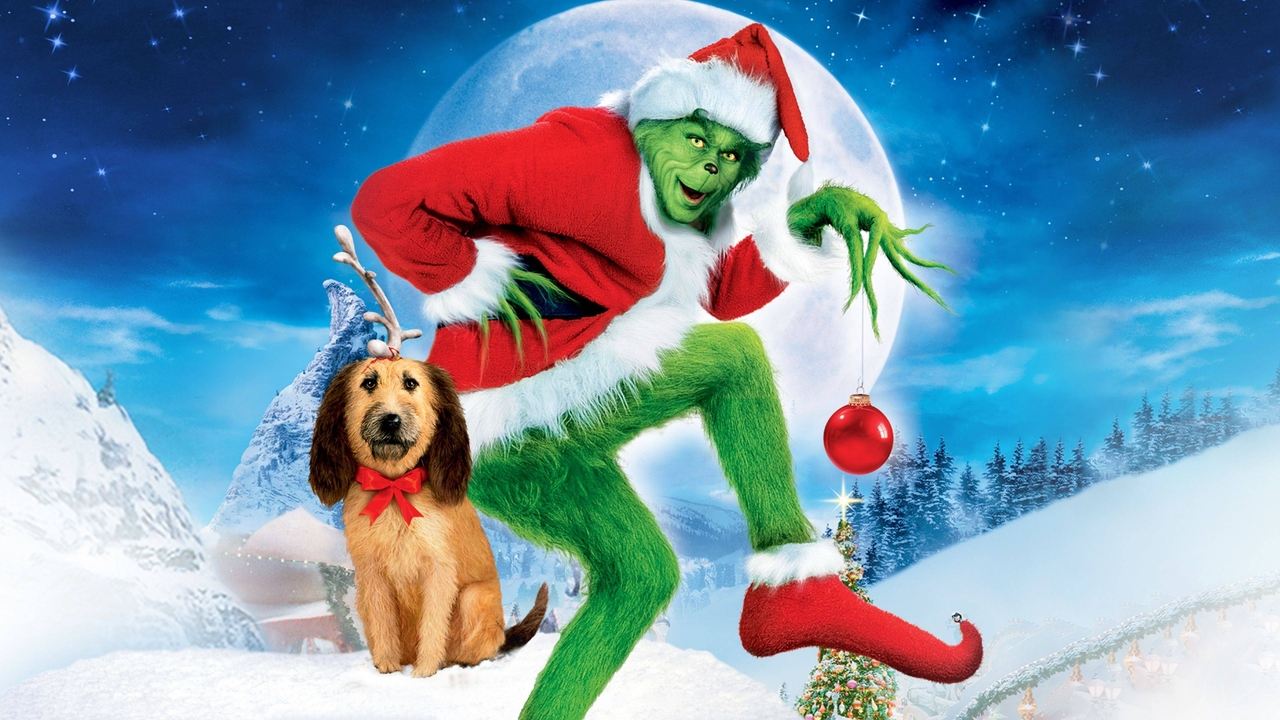
Let's be honest, the absolute look of this film is staggering. The production design is Seuss dialled up to eleven, a Wonka-esque explosion of curved lines, impossible architecture, and Rankin/Bass-inspired character design brought disconcertingly to life. You have to admire the sheer commitment. Whoville feels tangible, a chaotic, candy-coated world obsessed with the commercial trappings of Christmas – a point the film, written by Jeffrey Price and Peter S. Seaman (who previously tackled blending animation and live-action with Who Framed Roger Rabbit (1988)), perhaps hammers a little too insistently.
But the real visual triumph? Rick Baker's Oscar-winning makeup. The Whos, with their distinctive prosthetic noses and elaborate hairstyles, are memorable, but it's the Grinch himself who steals the show, visually and otherwise. Carrey reportedly endured hours upon hours in the makeup chair daily – a process so grueling he required counseling from a Navy SEAL expert in enduring torture techniques to get through the shoot. That dedication bleeds onto the screen; the Grinch isn't just a costume, he's a fully realized, physically expressive creation, from the flick of his wrist to the menacing curl of his lip.
Carrey Unleashed: A Force of Nature
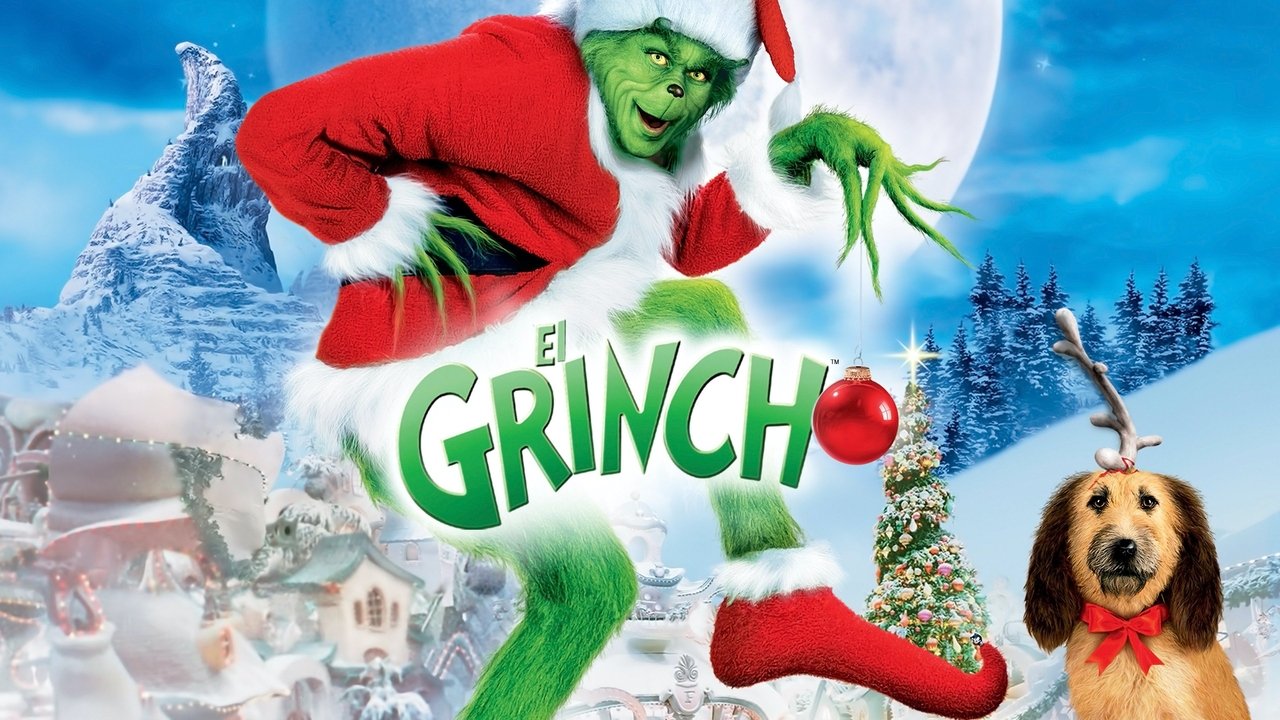
And what a performance it is. Jim Carrey doesn't just play the Grinch; he inhabits him with a manic energy that threatens to burst the seams of the film itself. It's a rubber-faced, physically demanding tour-de-force, filled with ad-libs (many of the best lines were reportedly his own) and moments of pure, unadulterated Carrey-isms. He snarls, he slithers, he gurns, he delivers monologues with theatrical flair – it's captivating, often hilarious, and occasionally... a bit much? There are times when his sheer force of personality almost overwhelms the narrative, shifting the focus entirely onto his improvisational genius rather than the story's heart. Still, it's hard to imagine anyone else pulling it off with such gusto. It cemented Carrey, already a megastar from hits like Ace Ventura (1994) and The Mask (1994), as capable of carrying a massive $123 million budget film almost single-handedly to a box office haul of over $345 million worldwide.
More is... More? Expanding Seuss
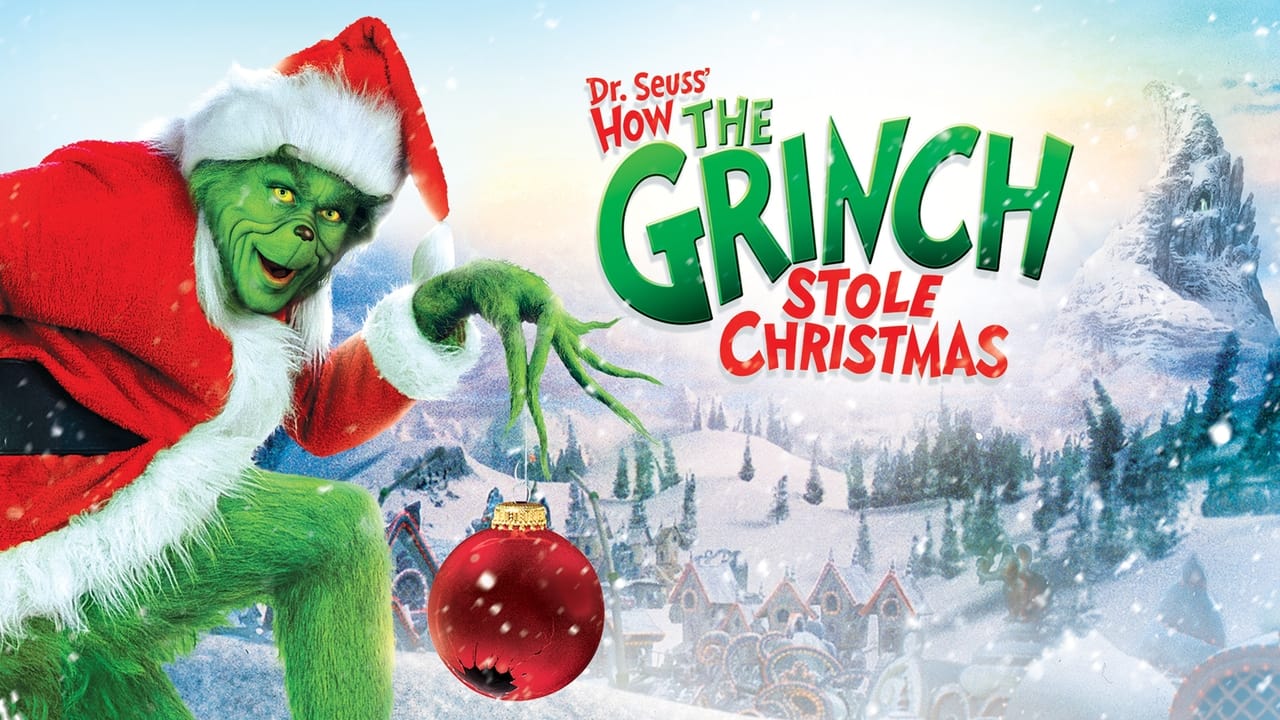
To justify its feature length, the film delves into the Grinch's backstory, giving him a childhood origin involving schoolyard humiliation and a crush on Martha May Whovier (Christine Baranski). It also significantly expands the role of Cindy Lou Who, played with wide-eyed sincerity by a very young Taylor Momsen. Cindy Lou becomes the film's moral compass, questioning the rampant consumerism of Whoville and seeking the good within the Grinch.
Does this expansion always work? It's debatable. The backstory adds some understandable motivation but also demystifies the Grinch slightly. Some of the added subplots and characters, like Jeffrey Tambor's buffoonish Mayor Augustus MayWho, feel more like padding than essential additions. The film occasionally struggles with tone, veering from slapstick comedy to moments of genuine sentimentality, and sometimes dipping into slightly darker, more adult humor that feels a tad incongruous with the Seuss source material. It's a balancing act Ron Howard, known for more grounded dramas like Apollo 13 (1995) and heartwarming tales like Cocoon (1985), doesn't always perfectly navigate.
Retro Fun Facts & Festive Feelings
Despite any narrative wobbles, the film possesses a strange, enduring charm. Part of it is the sheer spectacle – this was big-budget filmmaking aiming for sensory overload. The practical effects, elaborate sets, and detailed costumes felt substantial, especially on those cozy CRT TVs fed by a trusty VCR. Audrey Geisel, Dr. Seuss's widow, had significant creative input, famously nixing certain merchandising tie-ins she felt were inappropriate for the Seuss brand. And while Carrey was the final choice, other major talents like Jack Nicholson and Eddie Murphy were reportedly considered for the green meanie.
Watching it today, there's a distinct nostalgia factor. It captures a specific moment in blockbuster filmmaking – pre-MCU dominance, where a live-action Dr. Seuss adaptation felt like a genuinely unique cinematic event. The slightly unsettling character designs, the practical sets, Carrey's unrestrained performance – it all feels very of its time, in a way that’s strangely comforting. It reminds you of renting that hefty tape, maybe gathering the family around, and being simultaneously amazed and slightly bewildered by the sheer Grinchness of it all.
***

VHS Heaven Rating: 7/10
How the Grinch Stole Christmas is undeniably flawed. It’s overstuffed, tonally inconsistent, and sometimes lets its star run too wild. However, its visual ambition is spectacular, Rick Baker's makeup work is legendary, and Jim Carrey delivers an iconic, physically astonishing performance that’s impossible to ignore. It expands the simple story, sometimes clumsily, but retains just enough of the Seuss heart, particularly in Cindy Lou's earnestness and the Grinch's eventual redemption. For its sheer audacity, memorable design, and Carrey's powerhouse turn, it earns a solid place in the nostalgic holiday rotation.
It might not be perfect, but like that oversized sweater knitted by a well-meaning aunt, it’s strangely comforting and undeniably memorable – a big, green, furry piece of early 2000s holiday history.