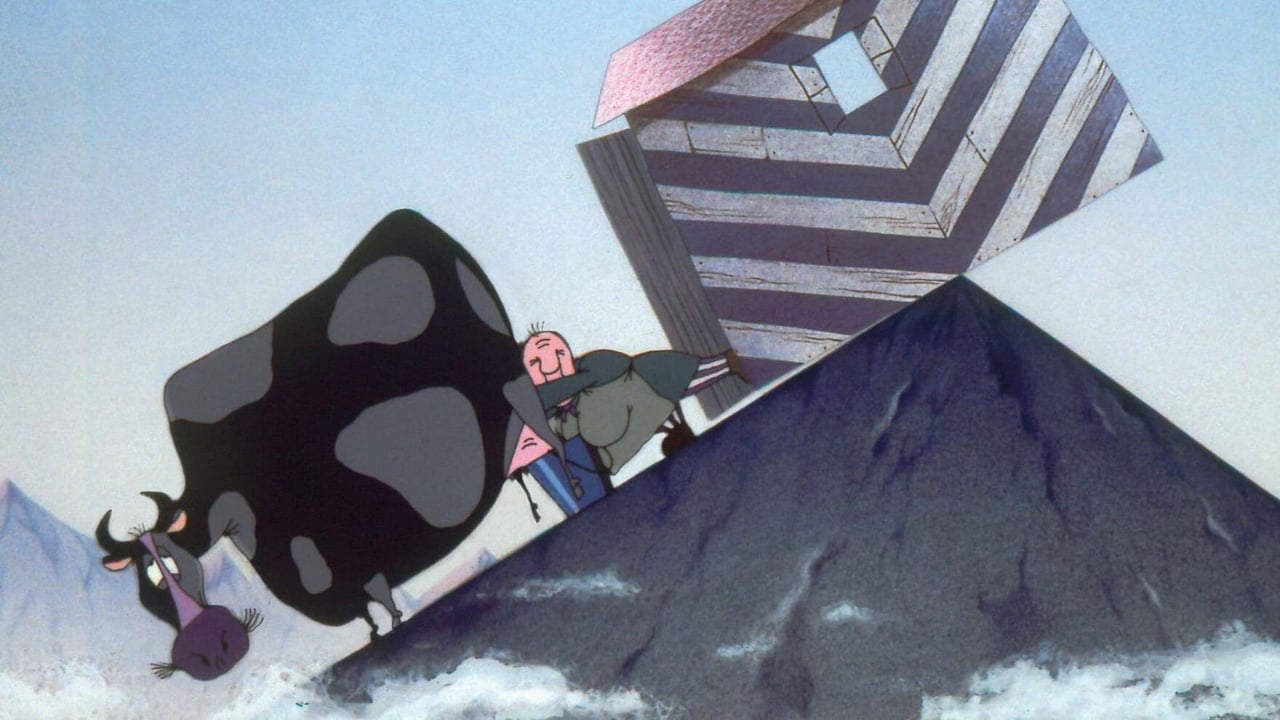
Some cinematic images lodge themselves in the mind with the stubbornness of a catchy tune. For me, one such image is that lone, slightly crooked little house, perched with absurd precarity atop the very peak of a snow-dusted mountain. It’s the central, unforgettable conceit of Konstantin Bronzit's brilliant 1999 animated short, At the Ends of the Earth (originally Au bout du monde), a film that achieves comedic perfection through the simplest of premises. Seeing it again recently, perhaps not on a flickering CRT this time but certainly with the same sense of wonder, reminded me just how potent masterful visual storytelling can be.
Life on the Edge
There’s barely a plot to speak of, and that’s precisely the point. We observe the daily, Sisyphean struggle of the house’s inhabitants – a stoic woman, a grumpy man, a bewildered cow, and a perpetually airborne cat – as their home teeters violently back and forth like a metronome gone mad. Every simple action, from pouring tea to milking the cow, becomes an exercise in gravitational chaos. The genius lies in Bronzit’s understanding of physics-based comedy, building gag upon gag with impeccable timing. The house tilts one way, the cat flies; it tilts the other, the cow slides; the poor woman tries to sweep, only to be flung across the room. It’s pure, unadulterated slapstick, elevated by the sheer absurdity of the situation and the deadpan reactions of its characters.
The Eloquence of Silence
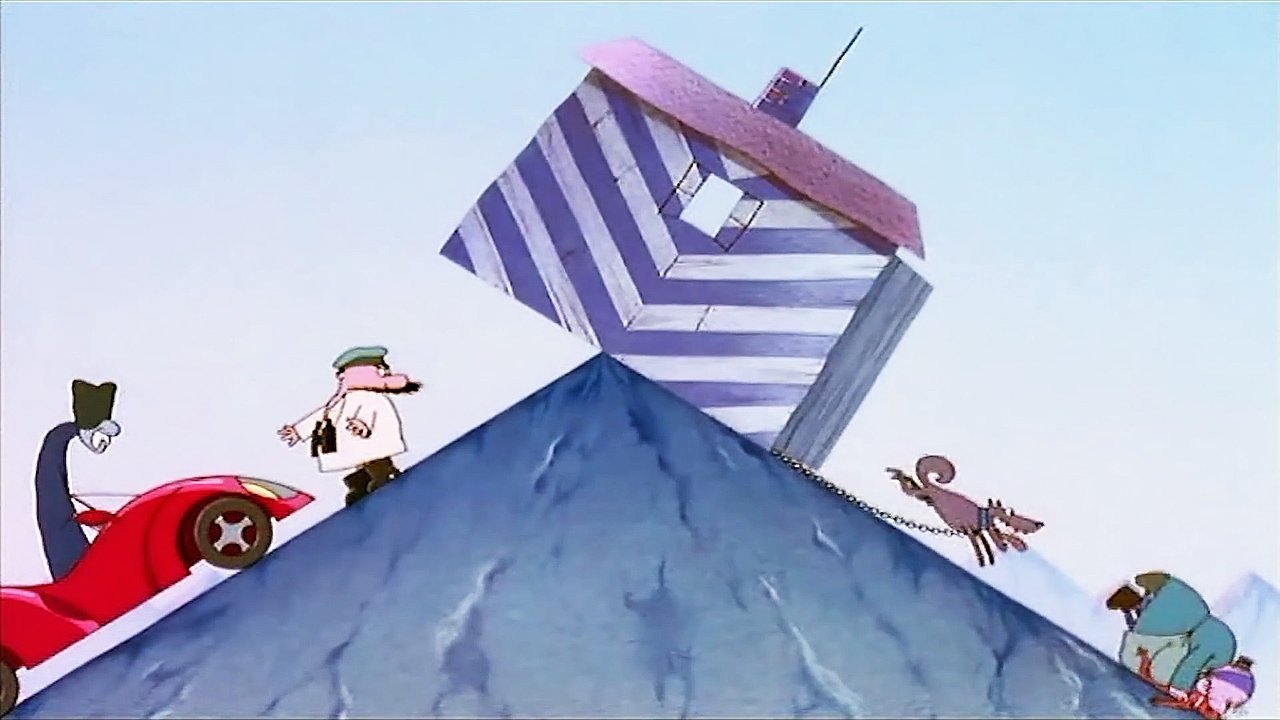
What truly elevates At the Ends of the Earth beyond a mere cartoon skit is its commitment to visual language. There’s no dialogue, only the rhythmic creaking of the house, the occasional exasperated sigh, or a startled "Moo!" The animation style itself is wonderfully unfussy – clean lines, expressive character designs that convey emotion through posture and subtle shifts in expression, and a colour palette that perfectly captures the stark, isolated beauty (and inherent danger) of their environment. It’s a testament to Bronzit’s skill that within minutes, we understand the dynamics of this bizarre household and feel a strange sort of empathy for their plight.
You might wonder how a Russian animated short from the tail end of the 90s found its way into the collective consciousness, or perhaps onto a cherished compilation VHS tape tucked away on a shelf. Its brilliance wasn't lost on the world; At the Ends of the Earth snagged numerous festival awards and, most notably, an Academy Award nomination for Best Animated Short Film in 2000. This recognition feels utterly deserved. It heralded the arrival of a major talent in Konstantin Bronzit, who would go on to receive further Oscar nominations for his later shorts Lavatory Lovestory (2007) and the profoundly moving We Can't Live Without Cosmos (2014). Seeing this early work, you can already sense the keen observational humour and the deep understanding of human (and animal) nature that defines his filmography.
Finding Joy in the Wobble
Rewatching it now, does the humour still land? Absolutely. The physical comedy is timeless, relying on universal principles of cause and effect pushed to their logical extremes. But perhaps there’s a deeper resonance, too. Isn't life itself often a precarious balancing act? We juggle responsibilities, navigate shifting circumstances, and try to maintain equilibrium against forces seemingly beyond our control. Maybe that little house on the peak isn't just a funny visual, but a subtle, poignant metaphor for the human condition – finding ways to cope, adapt, and even find routine amidst perpetual instability. Or maybe it's just sublimely executed cartoon physics. The beauty is, it works flawlessly on both levels.
I remember stumbling across this short years ago, possibly on a late-night animation showcase or sandwiched between features at a film festival screening shown on TV. It was one of those delightful discoveries, a perfectly crafted miniature that delivered more invention and pure joy in its brief runtime than many feature-length films. It didn’t need complex plotting or dazzling CGI; its power came from a simple, brilliantly executed idea.
Rating: 9/10
This score reflects the film's near-perfect execution of its premise. At the Ends of the Earth is a masterclass in visual comedy, timing, and minimalist storytelling. Its charm is infectious, its central gag unforgettable, and its Oscar nomination was thoroughly earned. It’s a reminder that sometimes, the most profound statements – or the biggest laughs – can come from the simplest setups.
It’s a small film with a surprisingly long shadow, a perfectly balanced piece of animation that continues to delight. What lingers most, perhaps, is the sheer inventiveness born from that single, teetering image – a testament to the power of a great concept flawlessly realised.