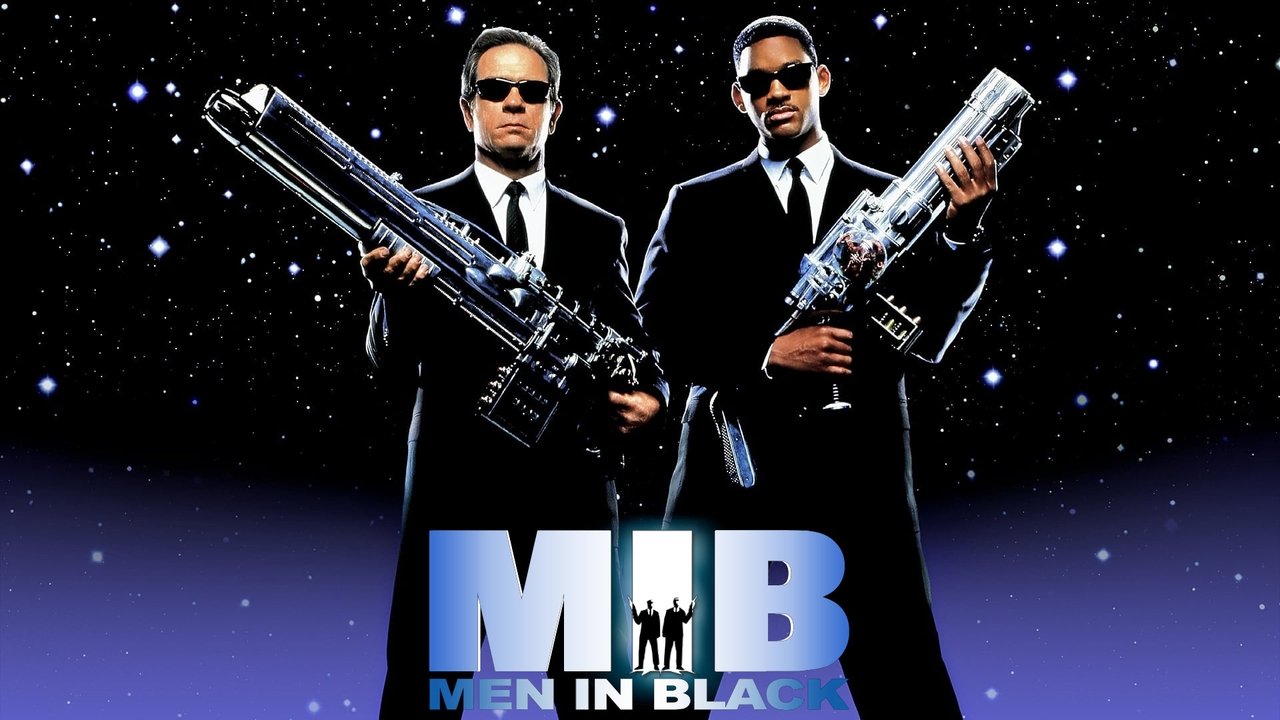
Alright, fellow tapeheads, dim the lights, maybe adjust the tracking just a smidge, and let's talk about a movie that practically flew off the rental shelves in '97. Remember that sleek black cover with the sunglasses? Men in Black wasn't just a movie; it felt like stumbling onto a hilarious, high-octane government secret right there in the New Releases section. It landed with the kind of confident swagger that defined the best blockbusters of the era – a pitch-perfect blend of sci-fi cool, buddy-cop comedy, and genuinely imaginative creature features.

### More Than Just Suits and Shades
From its opening moments, Men in Black throws you headfirst into its brilliantly simple premise: aliens live among us, and a clandestine agency polices their activity. Director Barry Sonnenfeld, who'd already shown his knack for stylish, slightly off-kilter visuals with The Addams Family (1991), brings a unique, almost comic-book energy to the proceedings. New York City becomes a playground for the bizarre, where a pawn shop owner might be packing alien heat, and a seemingly ordinary cat could hold the key to galactic peace. The script by Ed Solomon (who also co-wrote Bill & Ted's Excellent Adventure) crackles with wit, managing to world-build effortlessly while delivering genuinely funny dialogue. It's a far cry from the original Aircel Comics source material, which was reportedly much darker and more serious – a smart pivot that arguably made the concept accessible to a massive audience.
### The Perfect Odd Couple
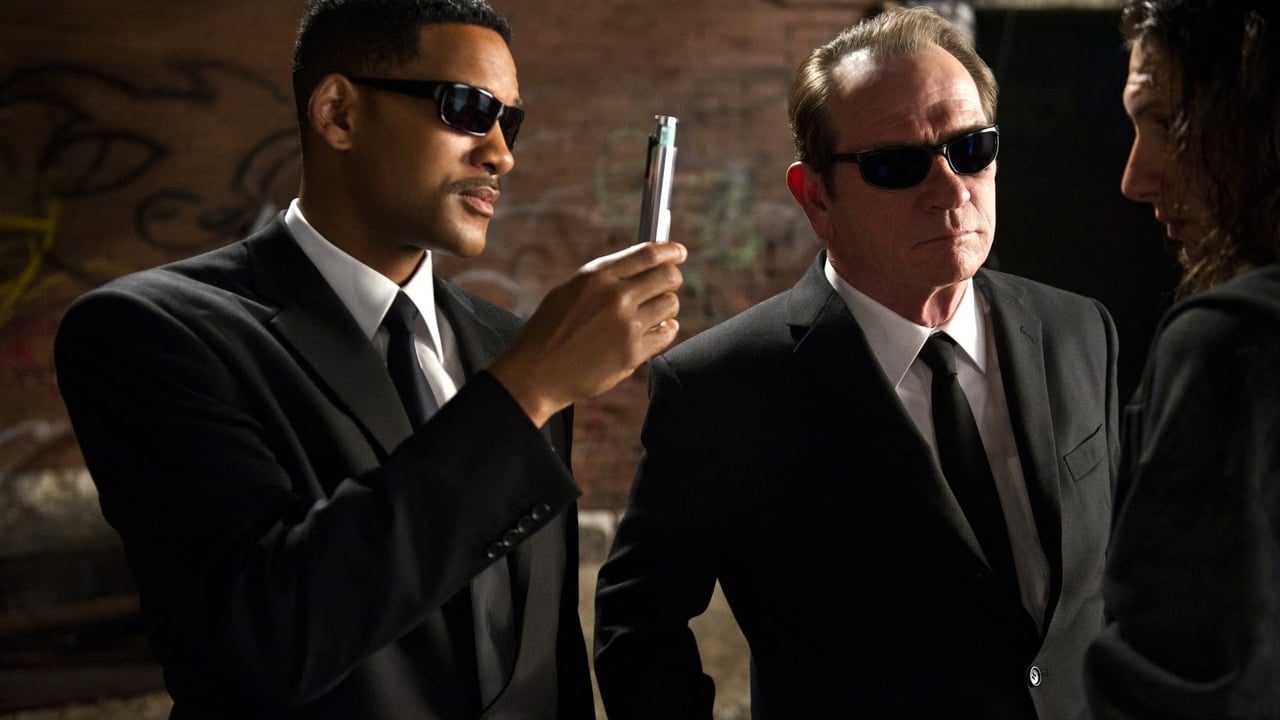
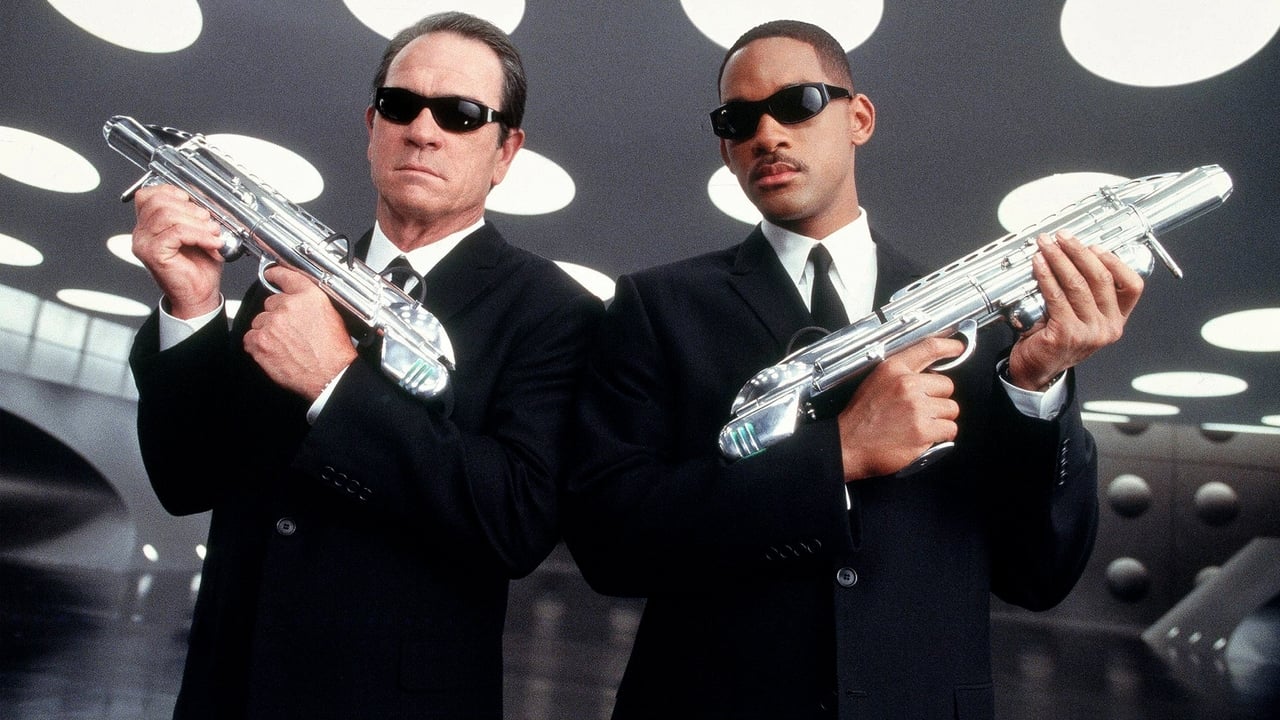
The absolute genius stroke, of course, was pairing the perpetually unimpressed Tommy Lee Jones as Agent K with the supernova charisma of Will Smith as Agent J. Jones, already a respected veteran (bold name drop: think The Fugitive just a few years prior), embodies the weary, seen-it-all mentor K with masterful deadpan delivery. Every raised eyebrow, every monotone instruction ("The flash enhances the neural synapses...") is gold. Then you have Will Smith, riding the wave from Independence Day (1996), bursting onto the scene as the street-smart NYPD cop recruited into this hidden world. His energy is infectious, his reactions mirroring our own disbelief and wonder. Reportedly, the studio initially favoured Chris O'Donnell or even David Schwimmer for the role of J, but Sonnenfeld championed Smith after his wife suggested him – a decision that feels absolutely essential to the film's success now. Their chemistry is immediate and electric, the classic straight-man/funny-man dynamic supercharged with sci-fi weirdness.
### Creatures That Felt Real
Let's talk effects, because this is where Men in Black truly shines in that glorious late-90s way. This was the golden age of Rick Baker, the legendary makeup and creature effects artist, and he earned every bit of his Oscar for this film. Forget perfectly smooth CGI renderings; these aliens had weight, texture, and often, a delightful layer of slime. Remember the Arquillian hiding inside the Rosenberg head? The sheer puppetry and mechanics involved were astounding. Or the reveal of Mikey, the towering, grumpy alien busted at the border? These weren't just digital ghosts; they felt like tangible beings interacting with the actors. Even the smaller touches, like the Worm Guys perpetually on a coffee break, had such personality thanks to brilliant practical design and puppeteering. Sure, there's some early CGI woven in, particularly with the bigger threats, but the heart and soul of the alien life feels incredibly physical. Wasn't it amazing how real those bullet hits looked ripping through alien flesh back then? It had a visceral punch that purely digital effects sometimes struggle to replicate.
### That Edgar Suit...
And who could forget Vincent D'Onofrio's incredible physical performance as Edgar the Bug? Encased in increasingly ill-fitting human skin, his lurching, disjointed movements are both menacing and darkly comedic. Apparently, D'Onofrio studied bug documentaries to nail the awkward, jerky physicality, and wore knee braces to help achieve that stiff-legged walk. It's a committed, almost grotesque performance that elevates the villain beyond a simple monster. It's the kind of practical effect challenge – making a giant cockroach convincingly wear a farmer – that feels delightfully ambitious and 'of its time'.
### More Than Just Jokes and Aliens
Beneath the cool Ray-Bans (which saw a massive sales spike thanks to the film, by the way) and the zappy Neuralyzers (a prop reportedly inspired by a dentist's tool!), Men in Black had a surprising amount of heart. Linda Fiorentino brings a sharp intelligence to Laurel Weaver, the medical examiner drawn into the MIB world, holding her own against the leads. The film zips along thanks to Sonnenfeld's energetic direction and a propulsive, quirky score by Danny Elfman that perfectly complements the otherworldly action. It cost around $90 million to make – a hefty sum in '97 – but became a global phenomenon, raking in over $589 million worldwide and cementing its place as a pop culture touchstone. It spawned sequels (Men in Black II, Men in Black 3, and the less connected Men in Black: International), cartoons, and video games, proving the core concept had serious legs (or tentacles?).
Overall Rating: 9/10
Why the high score? Men in Black is that rare beast: a blockbuster that felt effortlessly cool, genuinely funny, and visually inventive, all powered by perfect casting and groundbreaking practical effects. It nailed the tone, balancing spectacle with wit, and gave us an iconic cinematic duo. The script is tight, the pacing relentless, and the creature design remains a benchmark. It perfectly captured a late-90s optimism and pre-millennial weirdness.
Final Thought: Before everything went fully digital, Men in Black showed us how amazing practical alien goo, perfectly timed wisecracks, and a pair of killer shades could look on the big screen – a true VHS treasure that still feels remarkably fresh and fun today. Just don't stare too long at the flashy thing...