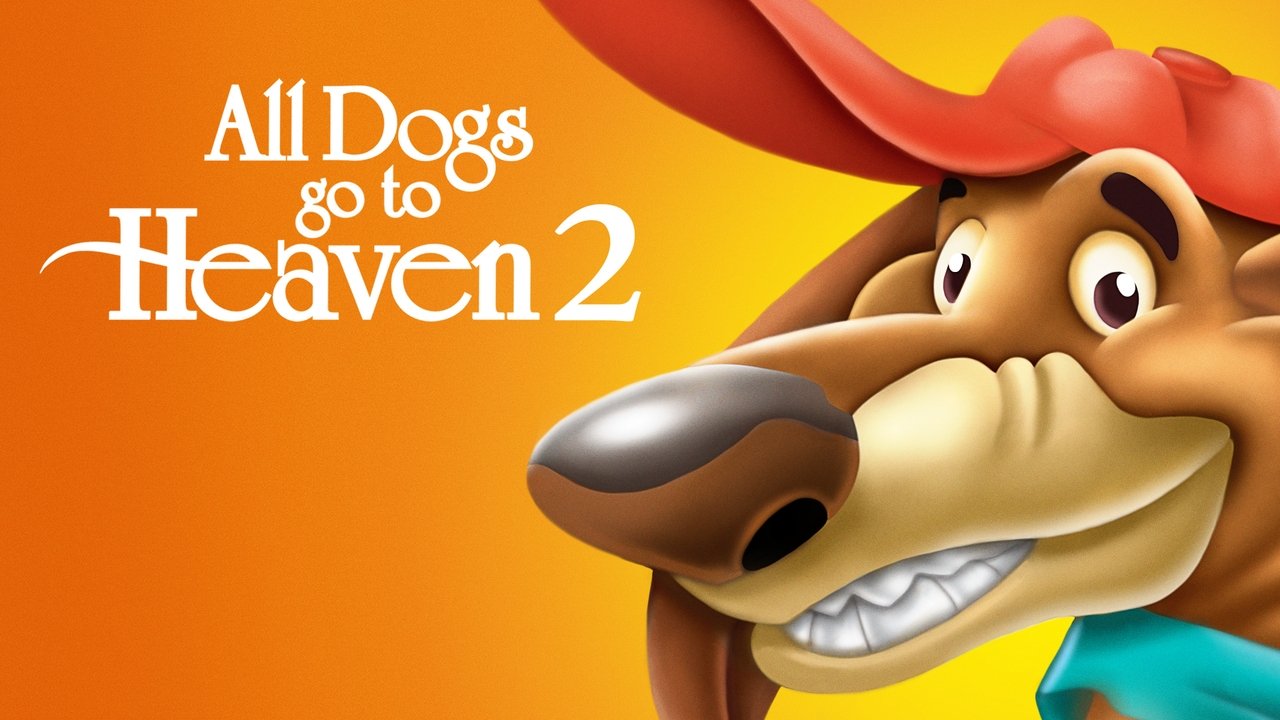
Okay, settle in and adjust the tracking on that mental VCR. Remember Don Bluth’s 1989 animated feature, All Dogs Go to Heaven? That film was… surprisingly heavy, wasn't it? It tackled themes of death, betrayal, and redemption with a gritty, almost smoky atmosphere, all wrapped up in a canine adventure. Then, seven years later, like a familiar but slightly off-key jingle, came All Dogs Go to Heaven 2. Landing in 1996, this sequel felt less like a continuation of Bluth’s shadowy New Orleans tale and more like stepping out of a dimly lit back alley into the bright sunshine of a Saturday morning cartoon. And honestly? Maybe that’s exactly what some younger viewers needed at the time, even if it left fans of the original scratching their heads.
Another Trip Earthbound
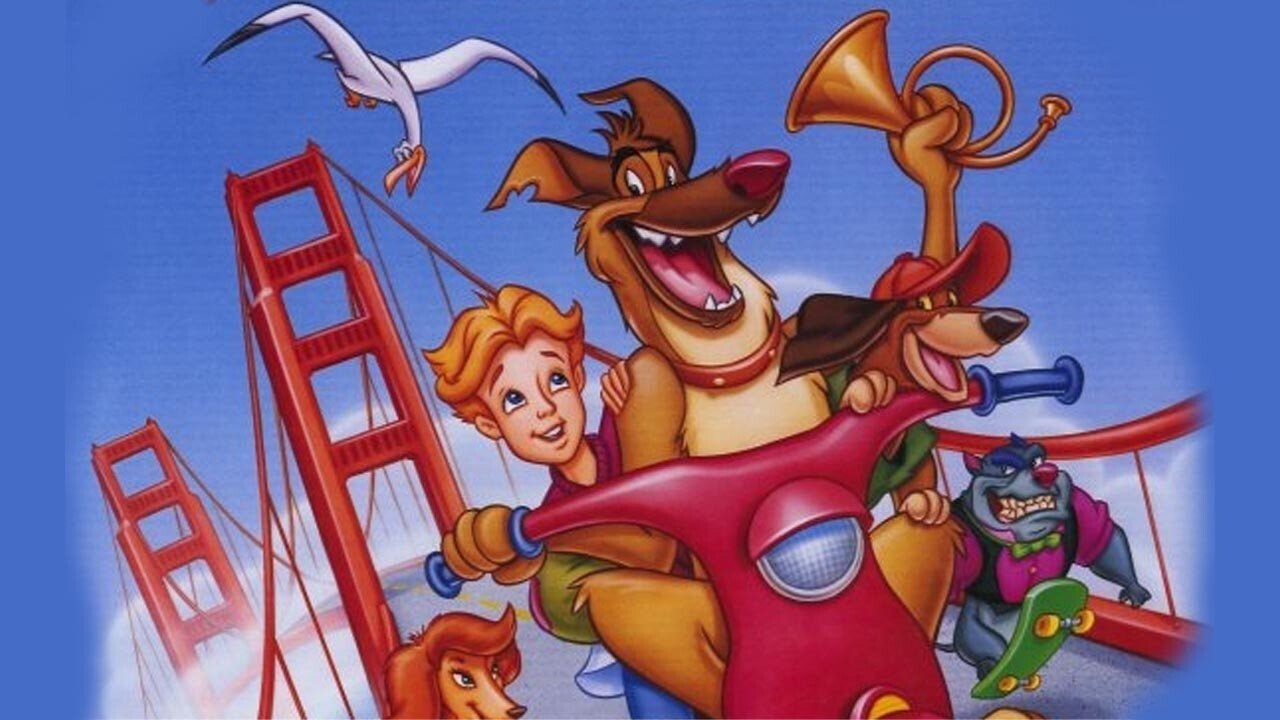
The premise sees Charlie B. Barkin, now comfortably residing in doggy heaven, getting supremely bored with paradise. His old pal Itchy Itchiford (Dom DeLuise, bless his returning voice work, a warm blanket of familiarity) is mostly content, but Charlie yearns for action. Luckily (or unluckily?), his old nemesis Carface Caruthers (voiced this time by Ernest Borgnine, replacing the original's Vic Tayback who had passed away) steals Gabriel's Horn, the pearly gates' essential instrument. When the horn plummets to Earth (specifically, San Francisco), Charlie sees his chance for adventure, dragging a reluctant Itchy along on a mission to retrieve it. This time, though, they encounter a runaway boy named David and a charming Irish Setter lounge singer named Sasha La Fleur, voiced rather memorably by pop star Sheena Easton. Oh, and there’s a new, more overtly demonic villain: Red (voiced with theatrical menace by George Hearn), a giant, devilish cat pulling the strings from below.
Right away, the tonal shift is palpable. Gone is the melancholy and moral ambiguity of the original. This sequel, directed by Larry Leker and Paul Sabella (who were more associated with TV animation like Tiny Toon Adventures and Animaniacs), opts for a lighter, more straightforward good-versus-evil narrative. The stakes feel lower, the colours brighter, and the overall mood significantly less complex. It’s aiming squarely for a younger demographic, sanding off the original’s rough edges.

A New Voice for an Old Dog
Perhaps the most jarring change for many was the recasting of Charlie. Burt Reynolds’ smooth, slightly cynical, yet ultimately endearing portrayal was iconic. In his place, we got Charlie Sheen, a massive star in the mid-90s thanks to films like Hot Shots! (1991) and Major League (1989). Sheen brings energy, certainly, but it’s a different flavour – less world-weary con artist, more eager hero. It's not a bad performance, just… different. Hearing Sheen's voice come out of Charlie felt like seeing a familiar friend who’d suddenly developed a completely new accent. Thankfully, Dom DeLuise returns as Itchy, providing that vital comedic and emotional link to the first film. His warmth and familiar frantic energy are a genuine highlight. Sheena Easton also does commendable work as Sasha, bringing life to the character and handling her musical numbers with professional ease ("Count Me Out" is arguably the film's catchiest tune).
Retro Fun Facts: From Theatrical Run to Home Video Staple

Here's a surprising detail many might misremember: All Dogs Go to Heaven 2 actually received a theatrical release! Unlike many animated sequels of the era that went straight-to-video, MGM/UA clearly had hopes for this one. However, saddled with a reported $10 million budget, its $8.6 million domestic gross meant it didn't exactly set the box office alight, facing stiff competition in a crowded animation market increasingly dominated by Disney's renaissance and the rise of Pixar. This likely explains why, for many of us, it feels more like a fixture of the video rental store shelves or Saturday afternoon TV broadcasts – its true afterlife found on VHS. Critics at the time weren't particularly kind either, often pointing out the simplified story and less distinctive animation compared to Bluth's original (it currently holds a frosty 21% on Rotten Tomatoes). It also paved the way for further adventures, spawning All Dogs Go to Heaven: The Series and the direct-to-video An All Dogs Christmas Carol (1998), solidifying the franchise's shift towards a younger audience.
Not Quite Heaven, But Maybe Purgatory with Perks?
The animation itself is perfectly competent 90s fare, though it lacks the unique character design quirks and atmospheric depth that made Don Bluth's work (like The Secret of NIMH or An American Tail) stand out. The villain, Red, is suitably over-the-top, a flamboyant devil-cat who feels more like a cartoon antagonist than the genuinely menacing Carface of the first film. The musical numbers are pleasant enough, typical of non-Disney animated features of the period, though perhaps lacking the staying power of the original's "Love Survives."
Does All Dogs Go to Heaven 2 hold up? Well, it depends on what you're looking for. As a sequel to the surprisingly dark and complex original, it falls short. It simplifies the themes, brightens the palette, and swaps nuanced characterisation for broader strokes. But judged on its own terms, as a piece of 90s animated entertainment often discovered via a worn-out VHS tape, it has a certain nostalgic charm. It’s harmless fun, with DeLuise providing reliable laughs and Easton delivering some decent songs. It might have been a rental your parents picked out thinking it was more like the first, or one you grabbed yourself purely because you recognised the characters on the cover.
VHS Heaven Rating: 4/10
Let's be honest, this sequel lacks the magic, depth, and unique artistic flair of its predecessor. The story is generic, the villain less compelling, and the absence of Burt Reynolds is keenly felt. However, Dom DeLuise's return is a joy, Sheena Easton adds some sparkle, and for a very young audience, it likely worked as intended – a simple, colourful adventure. The low score reflects its shortcomings as a follow-up and its overall mediocrity, but it avoids being truly bad, settling instead into the realm of the largely forgettable, yet harmlessly nostalgic.
It’s a curious footnote in animation history – a sequel that perhaps misunderstood the appeal of the original, but still found its way into countless VCRs. It might not reach heavenly heights, but catching it again might just trigger a faint memory of rainy afternoons and the familiar click-whirr of a tape being loaded.