Alright fellow tapeheads, let’s rewind to a time when comedy didn't need intricate plots or subtle character arcs. Sometimes, all it took was a simple, gloriously dumb premise and a star ready to commit 110% to the bit. Pop that well-worn cassette of Billy Madison (1995) into the VCR, adjust the tracking just so, and prepare for a blast of pure, unadulterated 90s absurdity that somehow still hits the spot. This wasn't just Adam Sandler's first big-screen starring role after leaving the Saturday Night Live nest; it was the loud, goofy declaration that a new kind of comedy king had arrived, whether the critics were ready for him or not.
### He's the Man-Child We Deserved
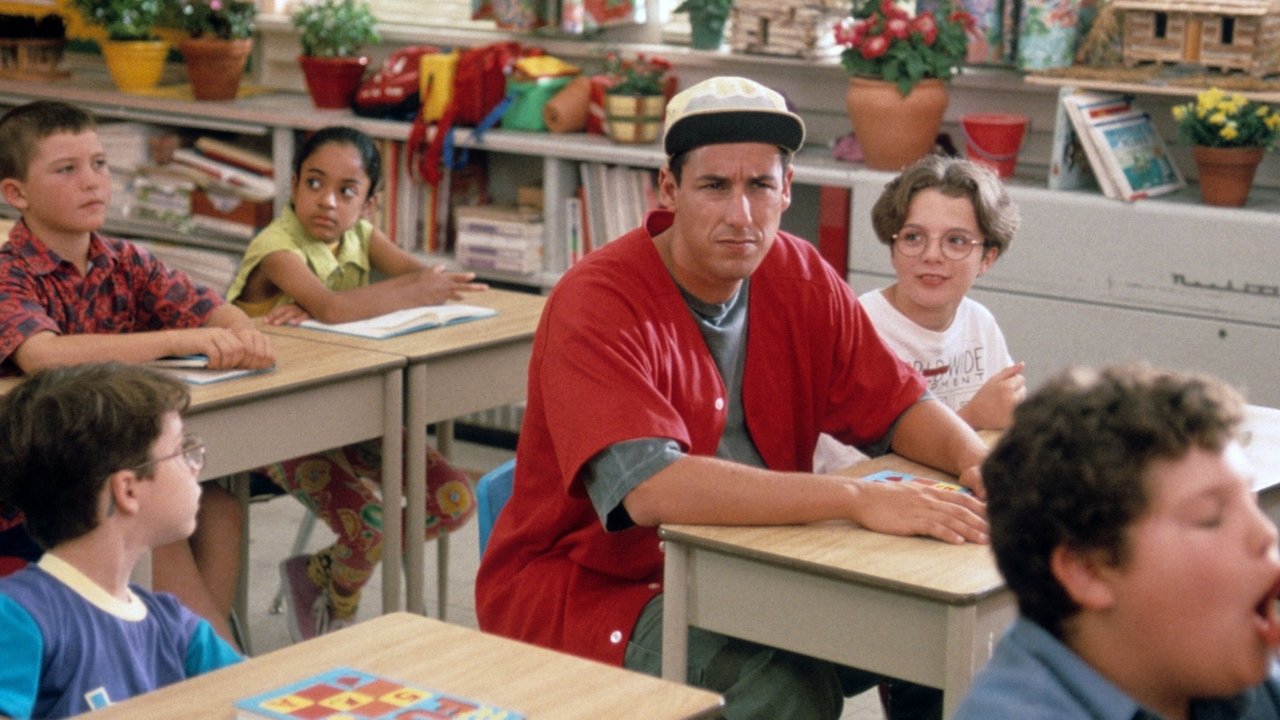
Let’s be honest, the plot is paper-thin: spoiled, immature heir Billy Madison (Sandler) must repeat grades 1 through 12 in 24 weeks to prove he's capable of inheriting his father's Fortune 500 hotel empire. It’s a setup so ludicrous it borders on genius, providing the perfect playground for Sandler’s unique brand of comedic energy. Fresh off SNL, Sandler wasn’t trying to be nuanced; he was Billy – a whirlwind of baffling non-sequiturs ("Stop looking at me, swan!"), sudden bursts of rage (often directed at children or imaginary penguins), and a weirdly endearing idiocy. It's a performance that feels less like acting and more like Sandler and co-writer Tim Herlihy (a partnership forged at SNL that would define early Happy Madison productions) just unleashed their id onto the screen. Universal Pictures reportedly had modest expectations for this $10 million film, but its eventual $26 million+ gross (solid for the time, especially considering the critical drubbing) and subsequent explosion on home video proved they’d tapped into something potent.
### School Daze Revisited

The episodic nature of Billy repeating each grade is where the movie truly finds its rhythm. Each school year becomes a vignette for specific gags, some landing harder than others, but all delivered with maximum silliness. Remember the sheer catharsis of that dodgeball scene? Or the bizarrely specific Valentine's Day card sequence ("You want to touch the hiney!")? These moments became instant playground and office cooler fodder. Director Tamra Davis, who had previously helmed the gritty indie Guncrazy and the hip-hop mockumentary CB4, might seem an odd choice, but her background in music videos perhaps lent itself to the film's punchy, gag-driven structure. She keeps things moving briskly, never letting the audience dwell too long on the inherent ridiculousness. Filming primarily around Oshawa and Toronto, Canada – with the opulent Parkwood Estate serving as the Madison mansion – gave the film a slightly generic North American backdrop that somehow made the specific brand of weirdness stand out even more.
### The Supporting Players in Billy's World
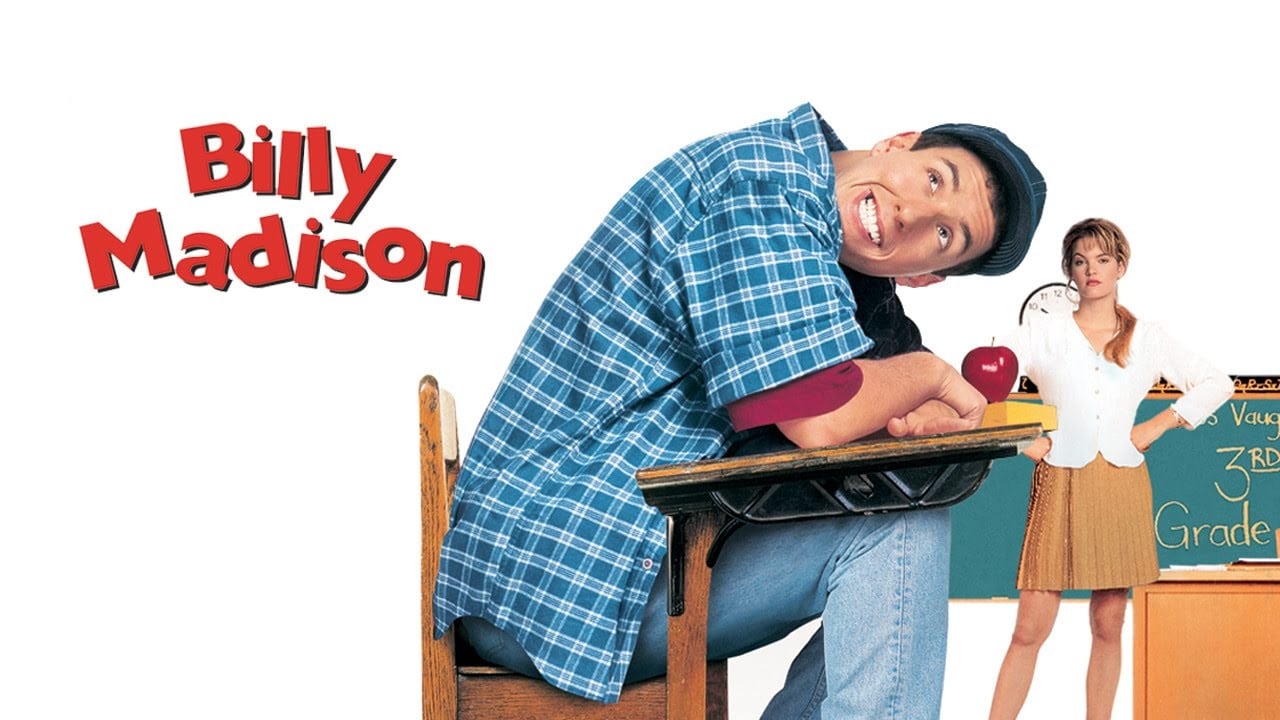
While Sandler dominates, the supporting cast is crucial. The legendary Darren McGavin (forever etched in our minds as the Old Man from A Christmas Story) brings a necessary gravitas and exasperation as Billy's father, Brian. His weariness grounds the film just enough. Bridgette Wilson (later Wilson-Sampras, fresh off Mortal Kombat) plays the third-grade teacher Veronica Vaughn, the surprisingly tolerant love interest. Their romance is pure 90s comedy formula, but Wilson plays it straight, providing a sensible counterpoint to Billy’s mania. And then there's Bradley Whitford as Eric Gordon, the quintessential smarmy corporate villain. It's almost jarring to see the future Josh Lyman playing such a sniveling yes-man, complete with an evil laugh that’s just perfect. Plus, keep your eyes peeled for classic Sandler pals like Chris Farley as the rage-fueled bus driver and Norm Macdonald as one of Billy’s slacker buddies – brief moments that add to the film's comfortable, hangout vibe.

### That Sweet, Sweet 90s Silliness
Billy Madison arrived at a perfect time. It tapped into a vein of Generation X slacker humor, cranked it up to 11, and laced it with quotable lines and moments of genuine absurdity (the imaginary penguin, anyone?). Critics mostly hated it, finding it juvenile and plotless – and they weren't entirely wrong. But what they missed was the film's guileless charm and its unapologetic commitment to being stupidly funny. This was comfort food comedy, the kind of movie you rented on a Friday night, maybe watched with friends, and quoted endlessly the next day. It wasn't trying to change the world; it was just trying to make you laugh with giant imaginary penguins and industrial-sized bottles of shampoo. The "O'Doyle Rules!" running gag became an instant classic, a testament to the film's weirdly specific ear for repeatable stupidity.
Watching it now is like opening a time capsule. The fashion, the music cues, the very texture of the humor feels distinctly mid-90s. It's not sophisticated, and some jokes definitely haven't aged gracefully, but the core appeal – Sandler's bizarre charisma and the film's sheer, unblinking dedication to its dumb premise – remains strangely potent.
Rating: 7/10
Justification: While undeniably low-brow and thin on plot, Billy Madison scores high on nostalgic charm, quotability, and Sandler's breakout comedic energy. It perfectly captured a specific moment in 90s comedy, delivering memorable gags and characters (McGavin, Whitford) that elevate the silly material. It knew exactly what it was and delivered, becoming a VHS staple despite critical pans. It loses points for some dated humor and overall simplicity, but its enduring fun factor keeps it a solid watch.
Final Thought: Forget nuanced satire; Billy Madison is the cinematic equivalent of finding an old mixtape filled with dumb inside jokes that still make you snort-laugh – a glorious relic of a time when going "back, back to school" on screen felt ridiculously fresh.