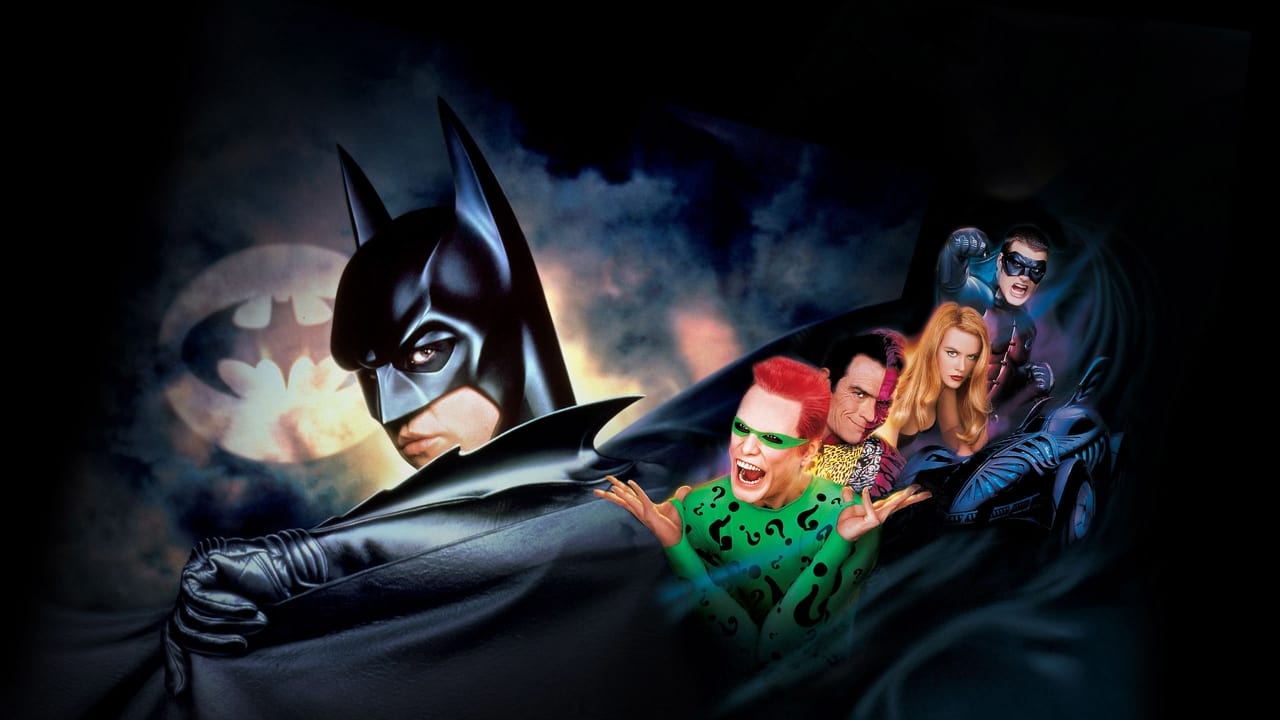
Alright, fellow tapeheads, let’s rewind to the summer of ’95. The Bat-Signal was up, but Gotham looked… different. Gone were the gothic shadows and brooding angst of Tim Burton’s vision. Instead, director Joel Schumacher (hot off hits like The Client) cranked up the neon, slapped Day-Glo paint on everything, and delivered Batman Forever, a film that felt less like a dark knight’s vigil and more like a hyperactive Saturday morning cartoon mainlined into a blockbuster budget. Popping this tape into the VCR back then felt like an event, a dizzying sugar rush compared to the darker flavour of Batman Returns (1992) just three years prior.
### Welcome to Neon Gotham
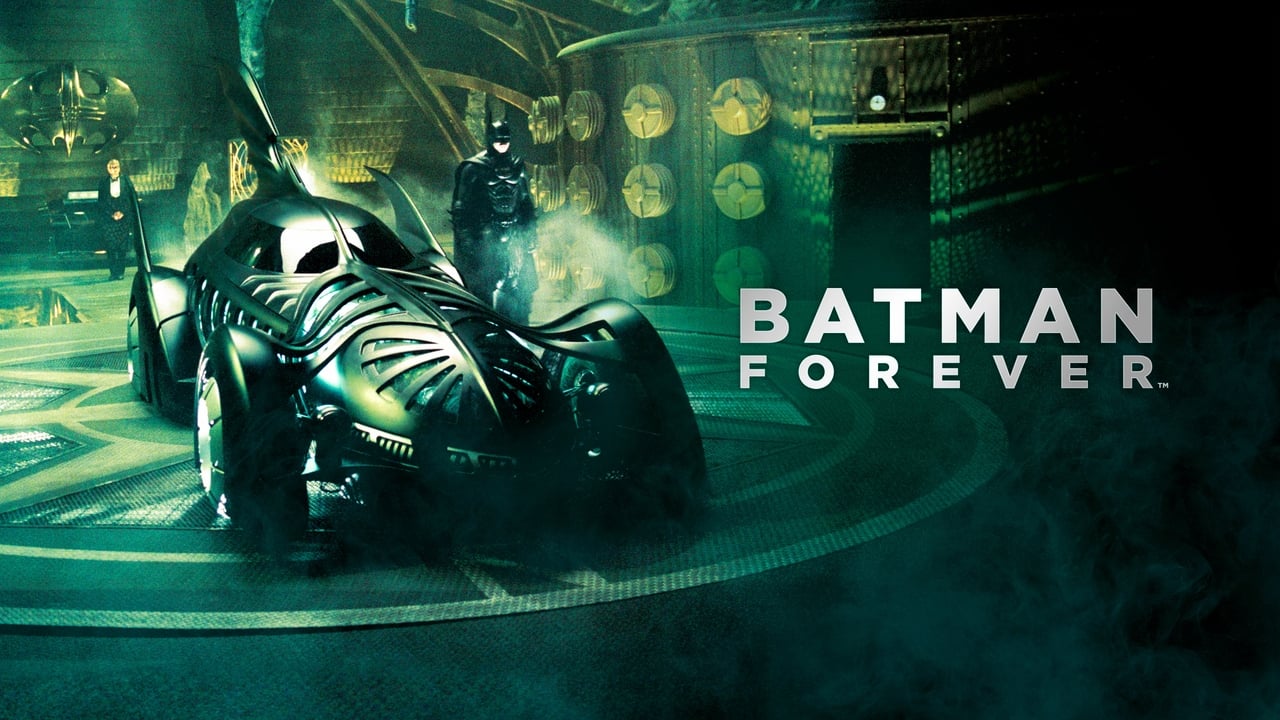
From the opening frames, you knew this wasn't your older sibling's Batman. Schumacher, responding to studio pressure (and parental complaints about Returns being too grim and, frankly, weird for the Happy Meal crowd), aimed for a lighter, more "toyetic" approach. And boy, did he deliver. Gotham City transformed into a towering, vibrant landscape of impossible architecture bathed in perpetual pinks, greens, and blues. It was less a city, more a colossal, stylish theme park ride. Even the Batmobile got a flashy, almost organic-looking makeover with glowing blue highlights. It was bold, it was loud, and honestly, peeling the plastic off that fresh VHS felt like unwrapping a piece of pure, concentrated mid-90s pop culture.
### A New Bat, A New Boy Wonder, and Double Trouble
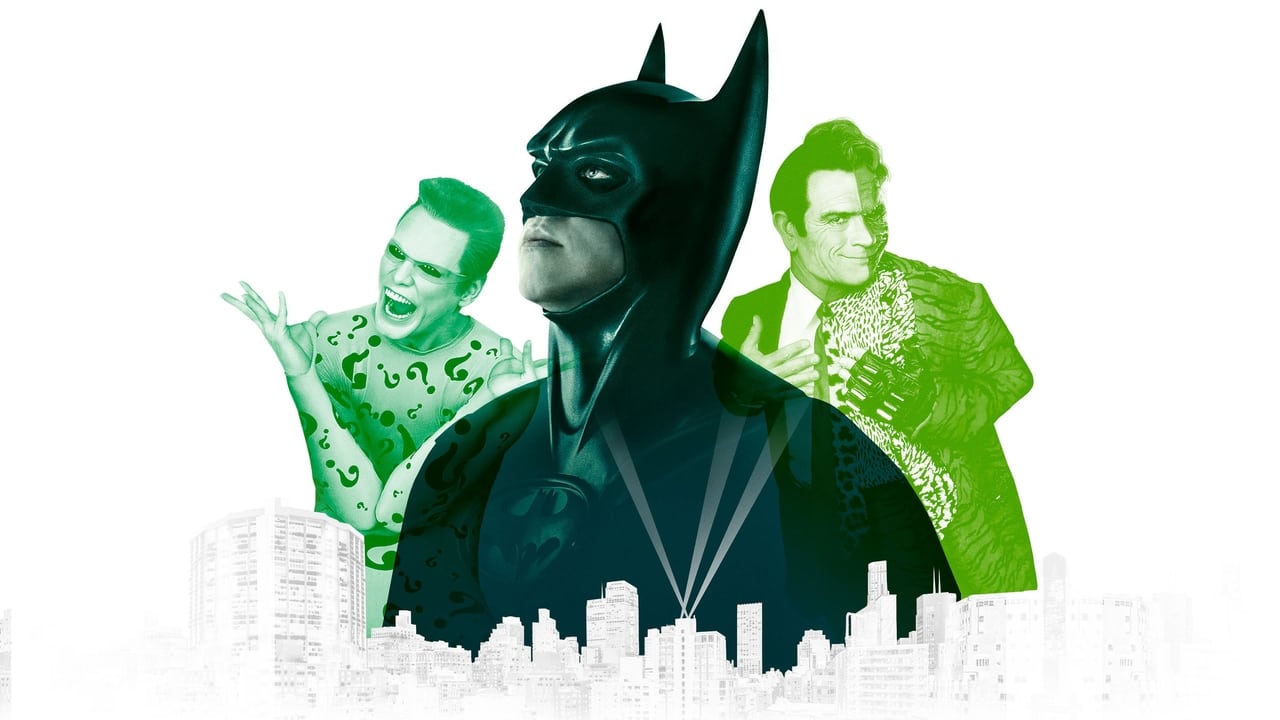
Stepping into the Batsuit was Val Kilmer, replacing Michael Keaton who reportedly walked away after reading the lighter-toned script. Kilmer brings a certain stoic presence to Bruce Wayne, hinting at the darkness beneath but never quite plumbing the depths Burton and Keaton explored. Interestingly, Kilmer apparently took the role without even reading the script or knowing who the new director was – talk about faith (or a hefty paycheck)! He’s… fine, serviceably heroic, though perhaps overshadowed by the sheer wattage of his villains.
And what villains! We get a double dose of Gotham’s unhinged here. Tommy Lee Jones, fresh off his Oscar win for The Fugitive (1993), tackles Harvey Dent/Two-Face. His portrayal is less tragic split-personality, more cackling maniac with a penchant for purple animal prints. It’s… a choice. Retro Fun Fact: Word on the street (and confirmed later by Jim Carrey) was that Jones wasn't exactly thrilled sharing the screen with the rubber-faced comedian, reportedly telling Carrey, "I cannot sanction your buffoonery." Ouch.
Speaking of buffoonery, Jim Carrey as Edward Nygma/The Riddler is arguably the film’s hyperactive heart. Riding high on the phenomenal success of Ace Ventura and The Mask (both 1994), Carrey unleashes his full comedic arsenal. He’s manic, flamboyant, and chews scenery like it’s bubblegum. While his Riddler might lack the sinister edge of Frank Gorshin’s iconic TV portrayal, Carrey’s sheer energy is infectious. It’s fascinating to think that Robin Williams was heavily considered for the part early on – what a different film that might have been!
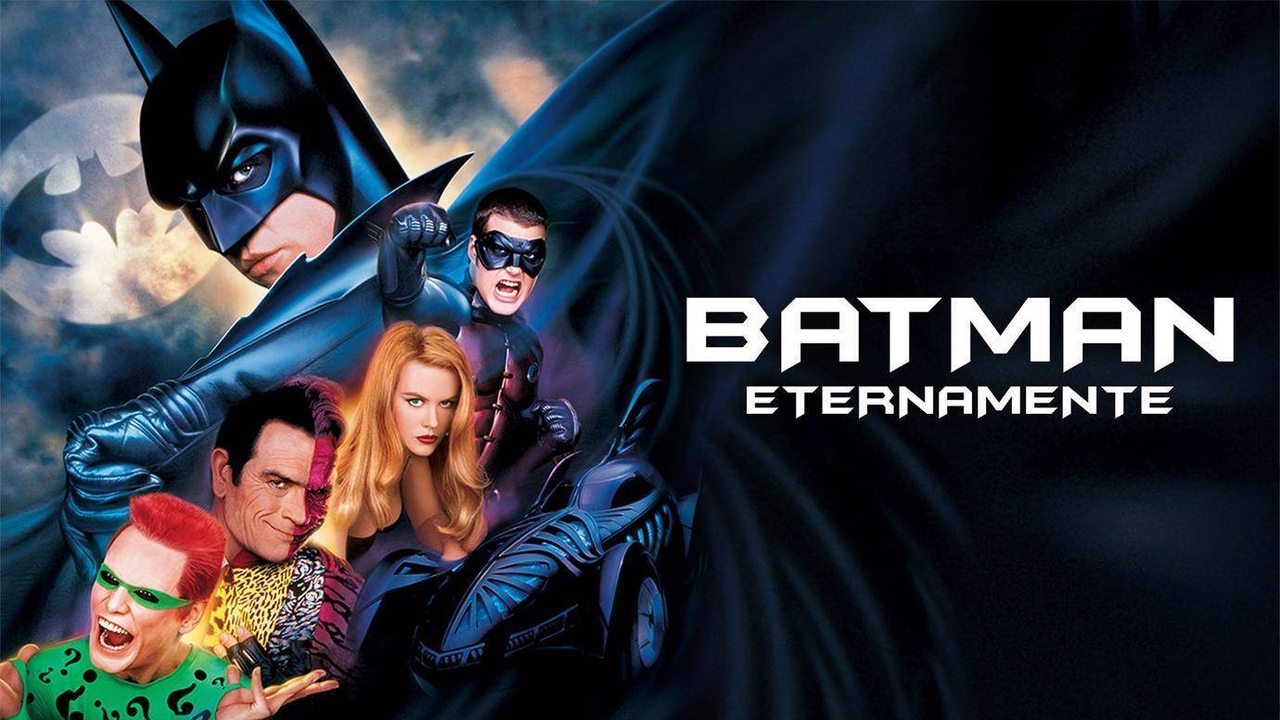
Rounding out the main cast is Nicole Kidman as the psychologist bombshell Dr. Chase Meridian, whose entire character seems built around being attracted to dangerous men (both Bruce Wayne and Batman – scandalous!), and Chris O’Donnell as Dick Grayson/Robin. O’Donnell brings youthful energy and angst, finally giving audiences the Boy Wonder in live-action film, albeit as a slightly older, vengeance-driven version than often depicted. His origin story gets woven into the main plot, adding another layer to the already busy narrative.
### Action, 90s Style
Okay, let's talk action. While Batman Forever leans heavily into its stylized visuals, the action sequences have that distinct mid-90s feel. There's a blend of practical stunt work – Robin's impressive laundry room fight sequence, for instance, feels grounded and kinetic – mixed with the burgeoning possibilities of CGI. Remember the Riddler’s giant brain-drain device? Those swirling green energy effects looked pretty cutting-edge beamed onto our CRT screens, even if they seem a bit rudimentary now. The helicopter chase culminating in Batman plunging into the Gotham harbor has a certain tangible weight, likely achieved with impressive miniature work alongside the digital enhancements. It lacked the raw, bone-crunching impact of some 80s actioners, favoring instead a more comic-book-panel-come-to-life aesthetic. It felt big, colourful, and designed for maximum visual pop, even if the physics were occasionally questionable.
The budget ballooned to a reported $100 million (a huge sum for the time), partly due to the elaborate sets and effects, but it paid off handsomely, grossing over $336 million worldwide. This thing was a commercial juggernaut, complete with a chart-topping soundtrack featuring Seal's "Kiss from a Rose" (which, let's be honest, became almost synonymous with the film) and U2's "Hold Me, Thrill Me, Kiss Me, Kill Me". The merchandising push was immense – those McDonald's glass mugs were everywhere!
### Too Much of a Good Thing?
While undeniably entertaining in its own bombastic way, Batman Forever often feels overstuffed. Trying to service two major villains, introduce Robin, give Batman a new love interest, and delve (however superficially) into Bruce Wayne's repressed memories leaves little room for nuance. Akiva Goldsman joined the Batchlers (Lee and Janet Scott) on writing duties, and while the dialogue has some zingers (mostly Carrey’s), the plot often feels like a series of loosely connected set pieces rather than a cohesive narrative. There were apparently significant deleted scenes, including a deeper exploration of Bruce’s psychological state involving a giant bat, which might have added some needed depth but were likely cut to keep things moving briskly.
Despite its flaws – the tonal whiplash, the sometimes cartoonish performances, and yes, those infamous Bat-nipples on the new suit designs by Jose Fernandez – there's an undeniable energy and sense of fun here. Schumacher went for broke, creating a spectacle that was undeniably of its time. It wasn't the Batman many expected, but it was the Batman that 1995 delivered: loud, flashy, and unashamedly commercial.
VHS Heaven Rating: 6/10
Justification: Batman Forever earns points for its sheer visual audacity, Jim Carrey's electrifying performance, and its status as a definitive mid-90s blockbuster artifact. The introduction of Robin is handled reasonably well, and there's nostalgic fun to be had. However, it loses points for its tonal inconsistencies, Tommy Lee Jones' baffling take on Two-Face, a somewhat shallow script, and moving the franchise into territory that ultimately led to its nadir.
Final Take: It's the cinematic equivalent of chugging a can of Surge while listening to Ace of Base in a blacklight-lit bowling alley. Over-the-top? Absolutely. Deep? Not really. But as a hyper-stylized, neon-soaked blast of 90s superheroics, Batman Forever remains a fascinating, flawed, and weirdly watchable time capsule. Just don't expect the Dark Knight – this is Batman at his most Day-Glo.