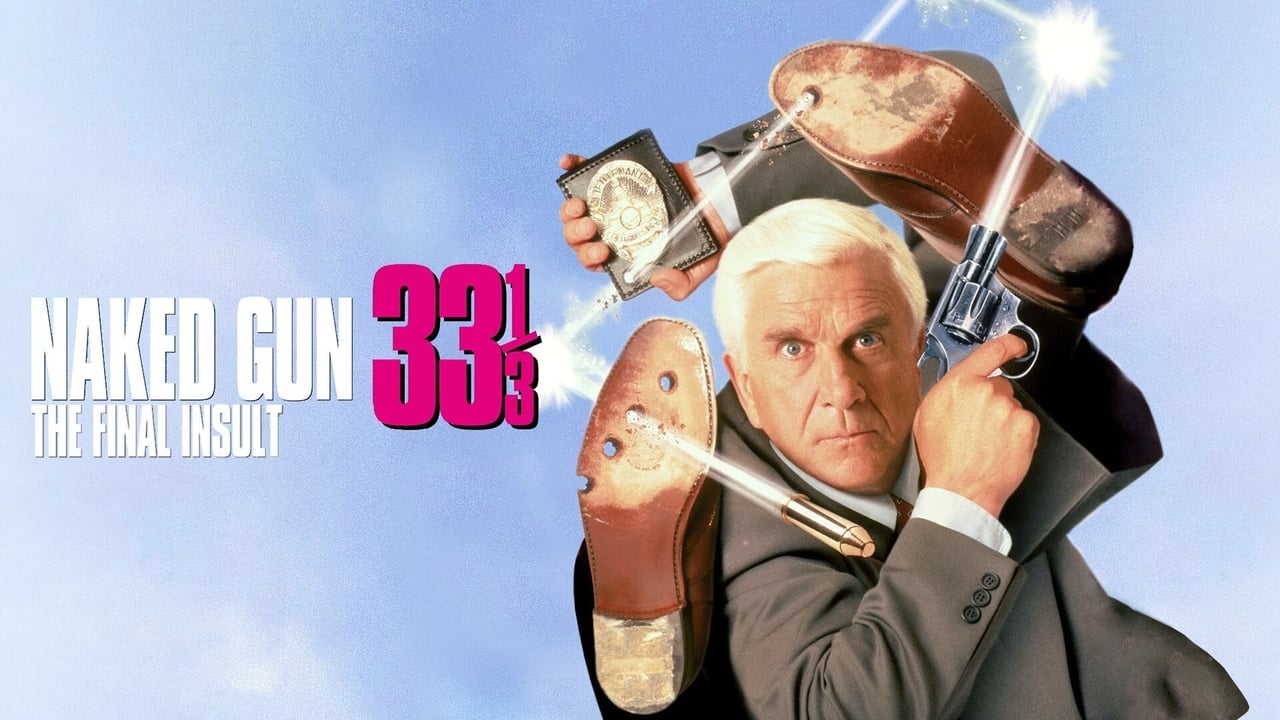
Okay, let's slide another well-worn cassette into the VCR. The tracking might need a little tweak, the corners of the picture might be soft, but the sheer, unadulterated silliness is about to hit you full force. We're talking about Naked Gun 33⅓: The Final Insult (1994), the swan song for one of cinema's most gloriously incompetent crime fighters, Lt. Frank Drebin. Finding this on the rental shelf often felt like settling in for a comfortable, if slightly less surprising, visit with an old friend – you knew the gags were coming, but you couldn't wait to see Leslie Nielsen deliver them with that magnificent deadpan stare one more time.
### One Last Case (Surely?)
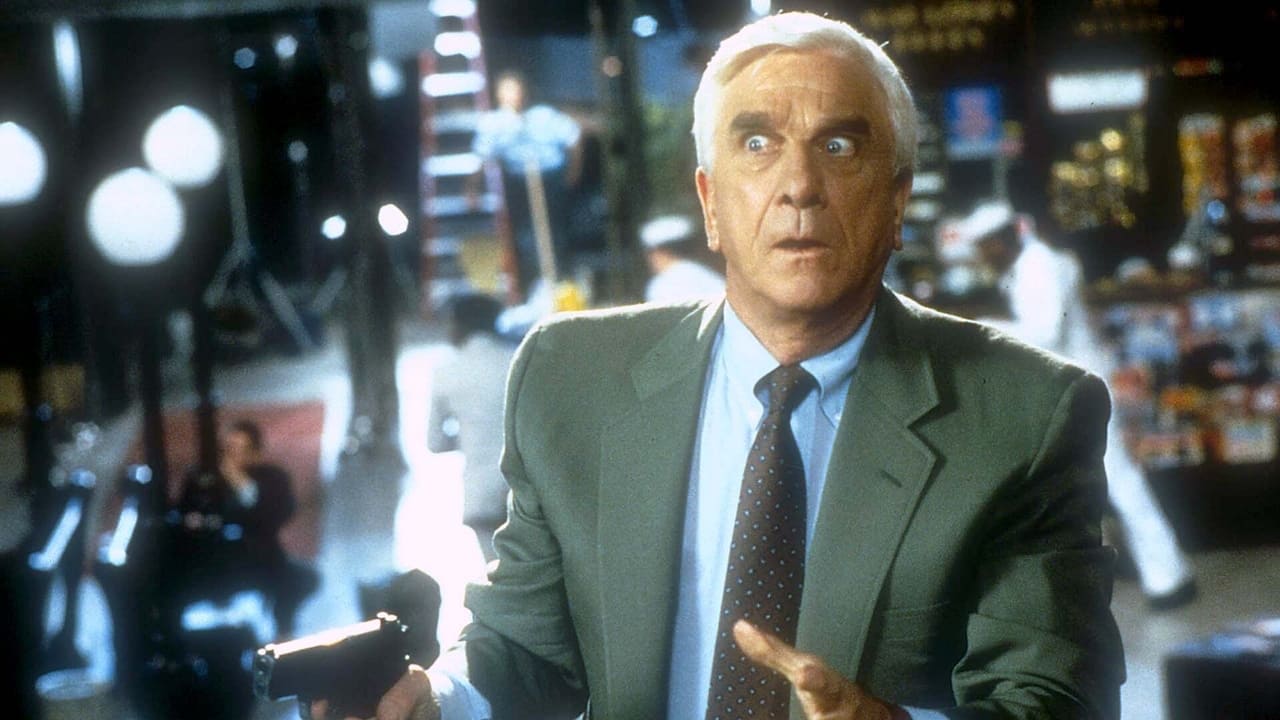
Pulling Frank Drebin out of retirement feels less like a plot necessity and more like an excuse to unleash another barrage of sight gags and groan-worthy puns upon an unsuspecting world. This time, Frank’s tranquil domestic life with Jane (Priscilla Presley, gamely returning to the absurdity) is shattered when Police Squad needs him back to foil a plot to bomb the Academy Awards, masterminded by the delightfully named Rocco Dillon (Fred Ward). It’s a setup ripe for Hollywood parody and exactly the kind of high-stakes, low-logic scenario where Drebin thrives… or at least, stumbles through spectacularly. Taking over the directorial reins from David Zucker was newcomer Peter Segal, who reportedly landed the gig after impressing Zucker by spoofing the ZAZ style itself – a fittingly meta origin story for this franchise closer. Segal, who would go on to direct comedies like Tommy Boy (1995), clearly understood the assignment: keep the gag rate impossibly high.
### The Relentless Gag Machine
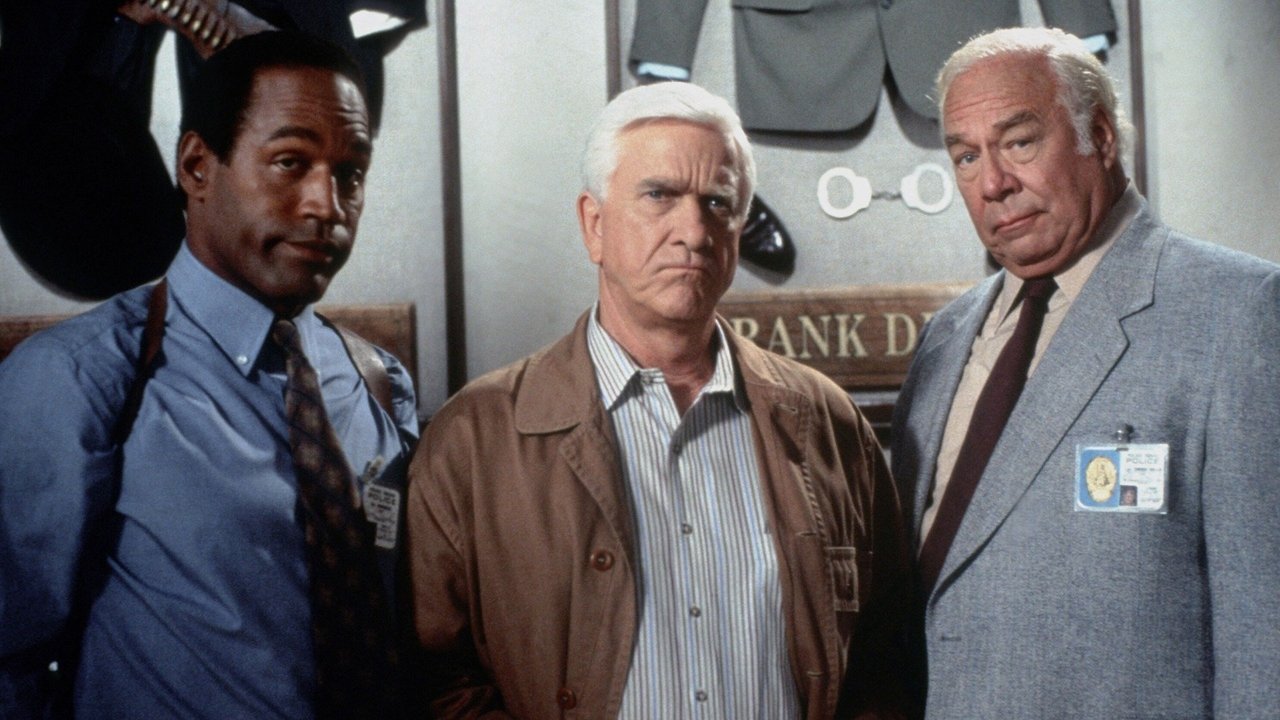
If the first Naked Gun was a precision-engineered comedy weapon and the second (The Smell of Fear) reloaded with similar ammunition, 33⅓ feels like they just decided to empty the entire armoury at once. The ZAZ-inspired formula, primarily penned here by Pat Proft, David Zucker, and Robert LoCash (with Jim Abrahams and Jerry Zucker retaining character credits), is firmly in place. Expect visual puns crammed into every corner of the frame, non-sequiturs that come out of nowhere, and parodies ranging from the obvious (the Untouchables pram sequence gets a hilarious Drebin-esque makeover in the opening) to the blink-and-you’ll-miss-it background jokes. Remember pausing the VHS tape just to catch everything happening behind the main action? This film demanded it.
The set pieces are memorable, if perhaps relying a little more on crude humour this time around. The infamous sperm bank sequence is pure, unadulterated slapstick chaos, relying entirely on Nielsen’s uncanny ability to remain utterly serious amidst escalating pandemonium. And the climactic sequence at the Academy Awards is a treasure trove of celebrity cameos (both real and impersonated) and opportunities for Drebin to cause maximum accidental destruction on live television. The sheer logistics of staging that chaos, filled with extras reacting to meticulously timed physical gags, feels like a testament to the kind of practical comedic filmmaking that’s harder to find today. No CGI touch-ups here; just pure, calculated, often dangerous-looking pratfalls performed with gusto.
### Familiar Faces and Questionable Cameos
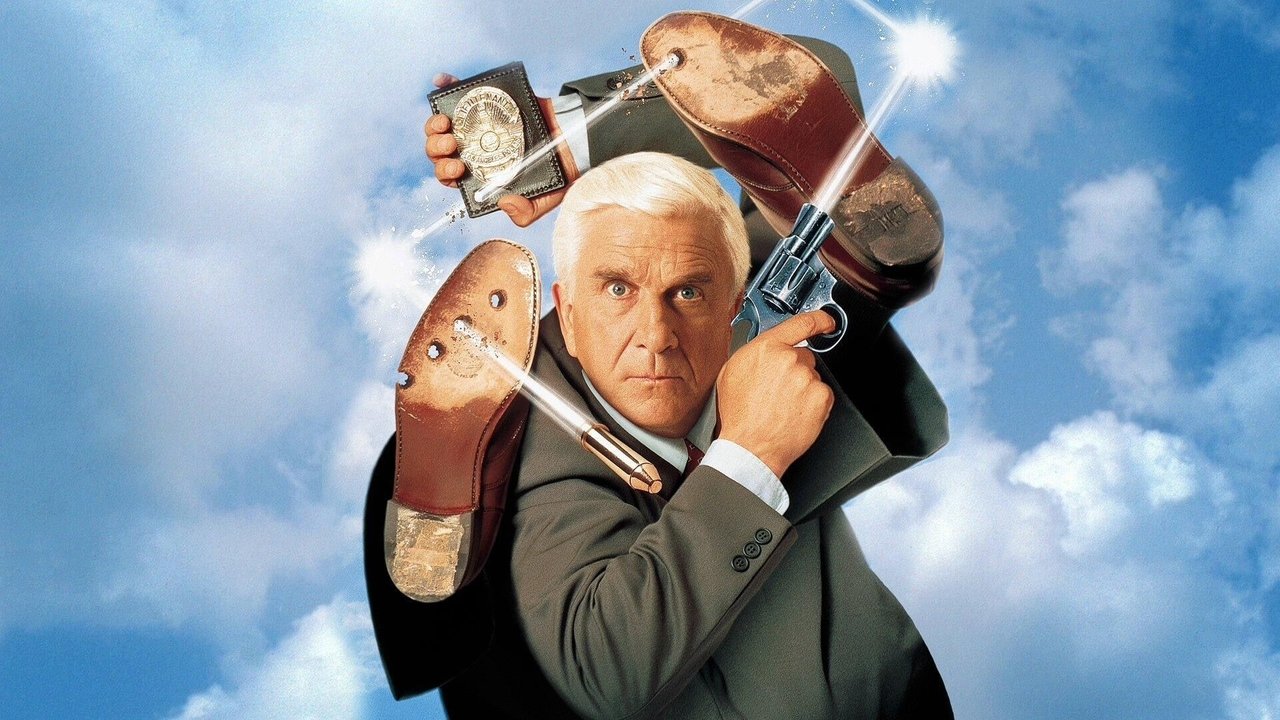
Leslie Nielsen, then approaching 70, is the undeniable anchor. His commitment to Frank Drebin's oblivious incompetence is unwavering, his timing as sharp as ever. He sells every ridiculous line and physical stunt with the gravitas of a Shakespearean actor, which is precisely why it works so well. Priscilla Presley continues to be the perfect straight woman to Nielsen's chaos, their bizarre chemistry somehow endearing. And George Kennedy as Captain Ed Hocken provides his reliable blend of exasperation and loyalty.
The supporting cast brings its own points of interest. Fred Ward, known for tougher roles in films like The Right Stuff (1983) and Tremors (1990), is surprisingly effective as the sneering villain, playing it relatively straight which makes the surrounding silliness even funnier. Then there’s Anna Nicole Smith, whose casting felt very much like a 90s publicity move, adding a layer of tabloid curiosity to the proceedings. And, in a circumstance nobody could have predicted, this marked the final appearance of O.J. Simpson as the perpetually injured Nordberg before his life took a drastically different, tragic turn just months after the film's March 1994 release. Watching his scenes now carries an unavoidable, uncomfortable weight completely separate from the film's intent.
### Running on Fumes, But Still Funny Fumes
Let's be honest, Naked Gun 33⅓ doesn't quite hit the comedic highs of the original. Some jokes feel recycled, the plot is even thinner, and the sheer relentless pace occasionally borders on exhausting rather than exhilarating. Critically, it received a more mixed reception than its predecessors, with some feeling the formula had run its course. Despite a healthy worldwide gross (turning its reported $30 million budget into over $120 million globally), it didn't quite capture the zeitgeist like the first film. The title itself, 33⅓, a nod to LP record speed (almost titled Just for the Record), felt like an admission that maybe this was the end of the track.
Yet, even a slightly diluted Naked Gun is funnier than most comedies. It’s packed with laugh-out-loud moments, ingenious sight gags, and Nielsen’s comedic genius. Renting this back in the day guaranteed an evening of easy laughs and quotable lines ("Like a midget at a urinal, I was going to have to stay on my toes."). It might be the lesser entry in the trilogy, but it’s still a worthy member of the Police Squad family.
VHS Heaven Rating: 7/10
Justification: While undeniably the weakest of the trilogy with some repetitive gags and slightly cruder humour, Naked Gun 33⅓ still delivers a high density of laughs thanks to Leslie Nielsen's peerless deadpan performance and the ZAZ team's relentless commitment to absurdity. The practical gags and sheer silliness hold up as prime examples of 90s spoof comedy, even if the freshness has faded slightly. It's a comfortable, funny, and fittingly ridiculous end to Drebin's career.
Final Thought: It may be the final insult, but it’s delivered with such unwavering, silly conviction that you can’t help but chuckle along – a perfect slice of that specific, glorious era of VHS comedy gold.