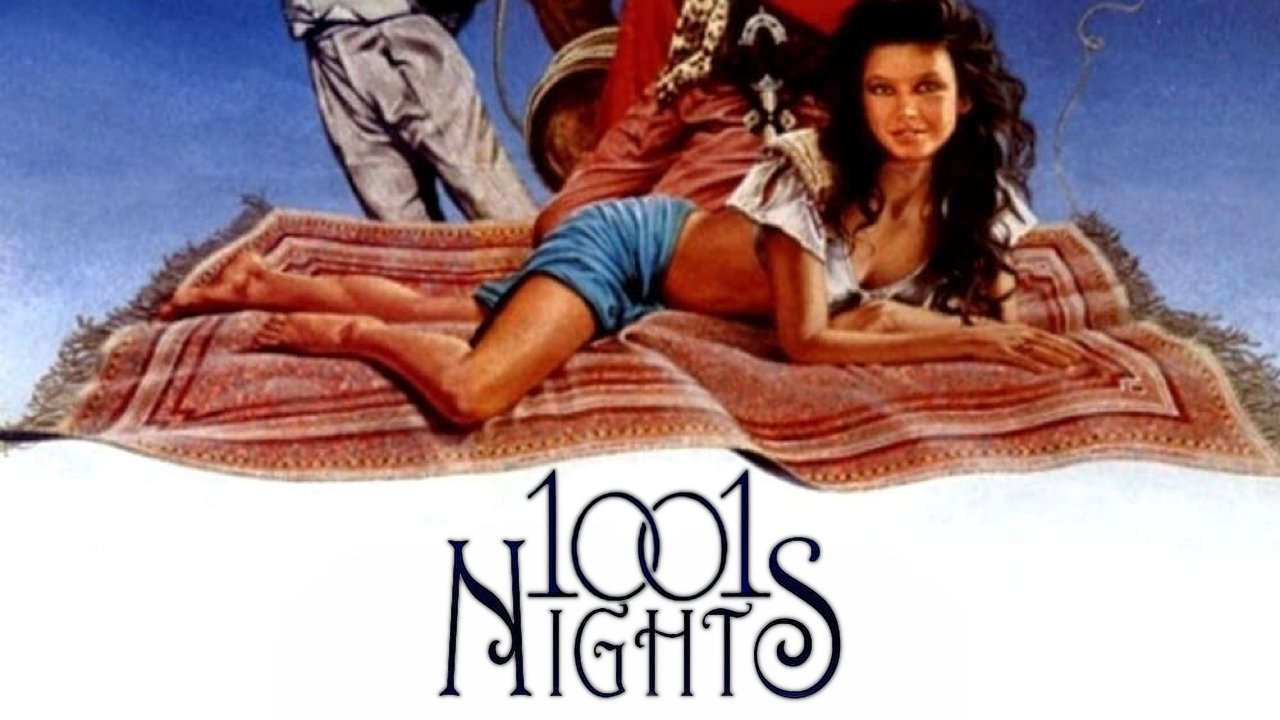
Alright fellow tape travelers, slide this one into the VCR, maybe adjust the tracking just so, and prepare for a journey back to 1990 that feels both familiar and strangely exotic. We're talking about Philippe de Broca’s ambitious, colourful, and frankly bonkers take on the Arabian Nights: Les 1001 Nuits, or 1001 Nights as most English-language sleeves had it. This wasn't the gritty action flick you might grab off the shelf next to Stallone or Schwarzenegger, oh no. This was a full-blown, Technicolor-dreamcoat fantasy adventure, the kind that perhaps only European cinema was still attempting with such earnest, wide-eyed gusto as the 90s dawned.
### A Magic Carpet Ride with… Modern Twists?
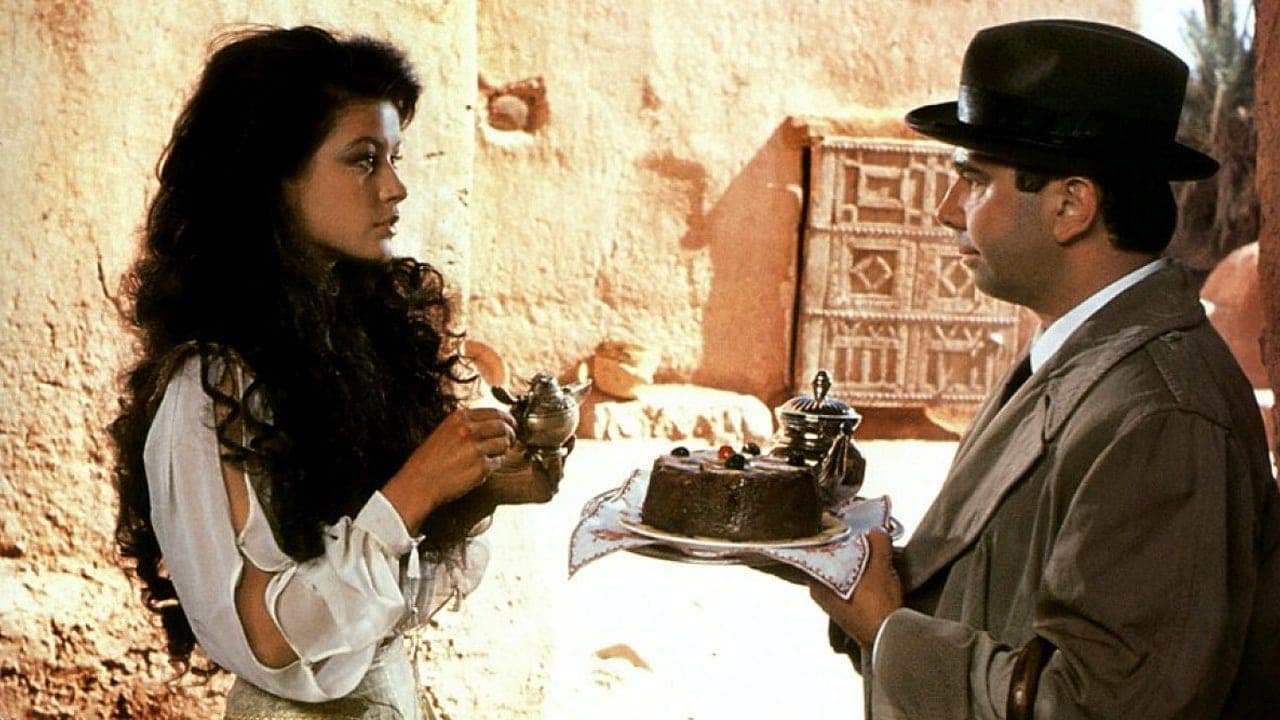
Let's get the weirdest part out of the way first. De Broca, the celebrated director behind rollicking adventures like That Man from Rio (1964) and the spy spoof Le Magnifique (1973), didn't just adapt the classic tales. He framed them with a bizarre modern storyline involving Jimmy Genious (Gérard Jugnot, a huge comedy star in France), a genie who pops out of a lamp found by an astronomer… in the present day (well, 1990). Jimmy recounts his past adventures, primarily involving Aladdin (Stéphane Freiss) and, crucially, Scheherazade. It’s an odd choice, adding a layer that doesn’t entirely mesh, feeling a bit like trying to force an ancient fable into ill-fitting contemporary clothes. But hey, it certainly sets it apart!
The real draw, especially looking back, isn't necessarily the somewhat muddled narrative or the framing device. It's the visual feast and, for film buffs, a truly fascinating debut.
### Before She Was Velma Kelly…
Yes, pop quiz hotshot: Who made her credited feature film debut here, looking absolutely radiant as Scheherazade? None other than Catherine Zeta-Jones! Seeing her here, young and already possessing that undeniable star quality, is perhaps the film's most enduring legacy. She’s captivating, bringing a grace and intelligence to the role that elevates the surrounding pageantry. Reportedly, de Broca spotted her in a stage musical in London and was immediately taken by her presence. It’s easy to see why. Even amidst the occasionally chaotic energy of the film, she commands the screen. It's a genuine "before they were famous" moment preserved on tape, a retro fun fact worth the rental price alone back in the day.
### Spectacle Over Substance, But What Spectacle!

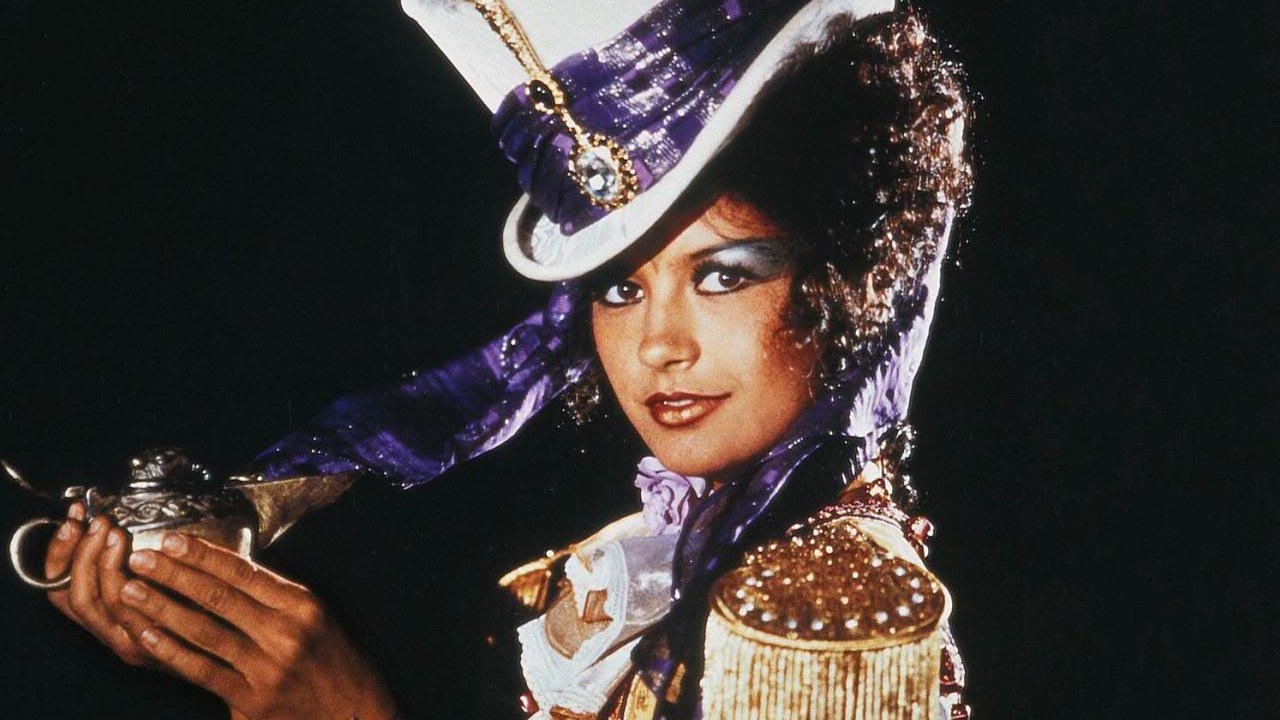
Forget gritty realism; 1001 Nights leans hard into lavish costumes, sprawling (if sometimes obviously set-bound) locations – much of it filmed beautifully in Morocco – and a sense of theatrical wonder. This wasn't ILM crafting seamless illusions; this was the tail-end of the practical and optical effects era for this kind of fantasy. Think colourful smoke bombs for genie appearances, some charmingly obvious wirework for flying carpets, and matte paintings stretching horizons. Does it look dated? Absolutely. But there's an undeniable, hand-crafted charm to it. You feel the effort, the attempt to conjure magic without the safety net of digital erasure. Remember how impressive even slightly clunky optical effects seemed on a fuzzy CRT? This film is brimming with that specific vibe.
De Broca directs with a light touch, aiming for enchantment and gentle humour rather than high stakes or visceral thrills. Gérard Jugnot plays the genie less as an all-powerful entity and more like a bumbling, slightly exasperated uncle, which fits the film’s generally whimsical tone. The score, often soaring and orchestral, tries its best to sell the epic scope, sometimes more successfully than the script manages.
### A Forgotten Fantasy Gem?
1001 Nights wasn't exactly a box office smash, nor was it universally loved by critics upon release. Its ambition perhaps outstripped its execution, and the tonal shifts between earnest fantasy and light comedy (plus that modern frame story) could be jarring. It cost a fair bit for a European production at the time, aiming for international appeal that never quite materialised. Yet, watching it now through the lens of VHS Heaven, it’s hard to dislike entirely. It’s so unabashedly itself – a colourful, slightly eccentric fairytale delivered with a sincerity that’s quite endearing.
It lacks the swashbuckling energy of Sinbad or the darker fantasy elements gaining traction elsewhere, opting instead for a storybook aesthetic. It's a film that feels like it belongs to a specific, fleeting moment in cinematic fantasy, before irony and hyper-realism took firmer hold.

Rating: 6/10
Justification: The score reflects the film's undeniable visual charm, the historical significance of Catherine Zeta-Jones's debut, and the sheer ambition of Philippe de Broca's vision. It's a visual treat in its own quirky way. However, it loses points for the somewhat uneven storytelling, the jarring modern frame, and effects that, while charmingly retro, don't always land. It’s more of a fascinating curiosity than a stone-cold classic.
Final Take: For fans of retro fantasy, especially those curious about early Zeta-Jones or de Broca's work outside his Belmondo collaborations, 1001 Nights is a worthwhile trip down a less-travelled path of the video store aisles. It’s a flawed, colourful, and occasionally dazzling reminder of a time when cinematic magic felt a little more handmade, even if the seams sometimes showed. Definitely one for the "remember this oddity?" pile.