Okay, pull up a comfy chair, maybe grab a beverage reminiscent of something you'd have sipped while browsing the aisles of Blockbuster back in the day. Let's talk about a film that might have caught your eye on the shelf, perhaps filed under "Foreign Comedy" or "Quirky Romance," possibly even sparking a flicker of recognition from its director's previous smash hit. I'm talking about 1989's Mama, There's a Man in Your Bed, or as it was known in its native France, the rather more evocative Romuald et Juliette. It’s one of those titles where the American renaming itself tells a story, doesn’t it? Shifting the focus squarely onto the comedic potential, perhaps slightly masking the surprisingly layered film beneath.

Worlds Apart, Unexpectedly Colliding
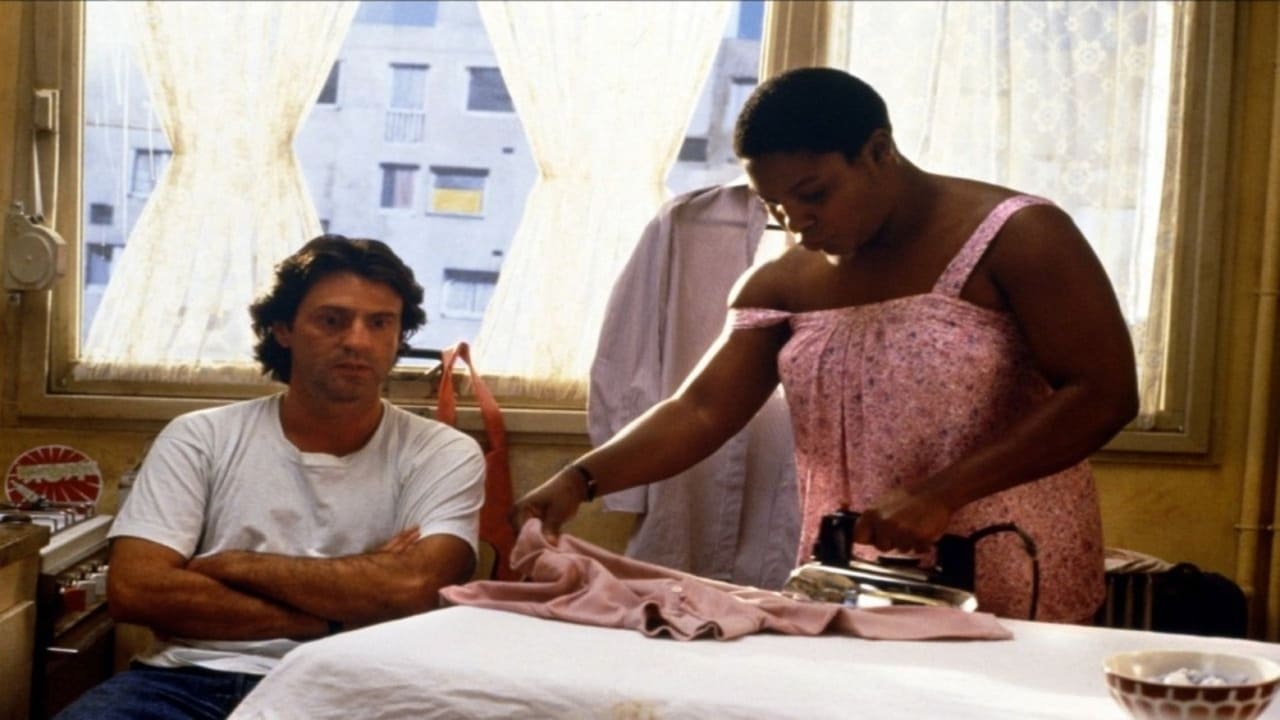
At its heart, this is a story born from collision – not of cars, but of social strata so distinct they might as well be different planets. We meet Romuald Blindet (Daniel Auteuil), the impeccably tailored, high-flying CEO of a yogurt empire ('Blanlait' - White Milk, a none-too-subtle nod, perhaps?). He lives in a world of sleek boardrooms, corporate intrigue, and casual privilege. Then there's Juliette Bonaventure (Firmine Richard), a pragmatic, no-nonsense cleaning woman who works the graveyard shift in Romuald's gleaming office tower. She's a single mother raising five children in a bustling, vibrant housing project, worlds away from Romuald's insulated existence. When Romuald finds himself spectacularly framed by his ambitious colleagues and suddenly stripped of everything – his job, his status, his fair-weather friends – where does he end up? Hiding out, utterly bewildered, in Juliette's crowded, chaotic, but fundamentally warm apartment.
Serreau's Savvy Social Lens
This setup comes courtesy of writer-director Coline Serreau, a name that likely rings a bell. She was riding high off the phenomenal success of Three Men and a Cradle (1985), the charming French comedy that Hollywood swiftly remade into Three Men and a Baby (1987). That earlier film showcased Serreau's talent for finding humor and humanity in unconventional domestic situations, often with a subtle commentary on societal roles woven in. Here, she applies that same lens, but sharpens the focus considerably onto the stark realities of class and race in late-80s France. The initial culture shock experienced by Romuald isn't just played for laughs (though there are some genuinely funny moments stemming from his utter ineptitude outside his corporate bubble); it's the bedrock upon which the film builds its exploration of prejudice, assumptions, and the possibility of connection across daunting divides.
The Performances That Ground the Premise
What truly elevates Romuald et Juliette beyond a potentially schematic "odd couple" tale are the central performances. Daniel Auteuil, already a celebrated actor in France thanks to powerhouse roles in films like Jean de Florette (1986), is pitch-perfect as Romuald. He expertly charts the character's journey from arrogant obliviousness to humbled awareness, never losing the essential believability of the man beneath the corporate armor. But the film arguably belongs to Firmine Richard. In what was a major breakout role for her, she embodies Juliette with immense dignity, warmth, and quiet strength. Juliette isn't just a plot device or a symbol; she's a fully realised person – practical, fiercely protective of her family, observant, and possessed of a wry humor that keeps Romuald (and the audience) grounded. The chemistry between Auteuil and Richard is crucial, and they sell the burgeoning, unlikely affection with a gentle authenticity that feels earned, not forced. You believe these two very different people could genuinely find something profound in each other.
A Fairytale with Teeth?
Let's be honest, watching it now, does the central romance feel a touch like a fairytale? Perhaps. The resolution might lean towards optimistic convenience. Yet, the film doesn't entirely shy away from the grit. The depiction of Juliette's life, the casual racism she encounters (even from a supposedly enlightened Romuald initially), and the systemic barriers she navigates feel pointed. Serreau uses the romantic comedy framework to smuggle in some fairly sharp observations about social inequality. It poses questions that still resonate: How much do we truly see the people who exist outside our immediate social bubbles? What does it take to bridge those gaps? The film suggests empathy, born from shared experience (even one as extreme as hiding from the police in a crowded flat), might be the key.
Retro Fun Facts: Behind the Yogurt Empire
While specific production anecdotes can be elusive for some French films of the era compared to Hollywood blockbusters, a few things stand out. Coline Serreau's success with Three Men and a Cradle undoubtedly gave her the leverage to make a film with such potentially challenging themes. Firmine Richard, born in Guadeloupe, brought an essential authenticity to Juliette, navigating the complexities of being a Black woman in France at that time, a perspective rarely centered in mainstream French cinema then. The contrast between the sterile, almost futuristic design of Romuald's corporate headquarters and the lived-in vibrancy of Juliette's housing project (reportedly filmed in the Parisian suburb of St. Denis) visually underscores the film's central dichotomy. And that American title, Mama, There's a Man in Your Bed? It certainly signals "comedy!" far more loudly than the original Romuald et Juliette, which deliberately evokes Shakespeare's star-crossed lovers, hinting at the social obstacles facing the pair. It's a fascinating example of how marketing can reframe a film for a different audience, perhaps simplifying its blend of romance, comedy, and social commentary for easier consumption.
Lasting Impressions
Rewatching Mama, There's a Man in Your Bed today is a charming experience. It feels distinctly of its time – the fashion, the corporate culture, the specific social tensions of late-80s France – yet its core message about looking beyond surfaces and finding connection in unexpected places retains a gentle power. It’s warmer and more thoughtful than its somewhat sitcom-esque US title might suggest. It doesn't offer easy answers, but it wraps its social critique in enough humor and genuine heart to make it incredibly watchable. It’s a reminder that sometimes, the most insightful stories arrive in unassuming packages, perhaps tucked away on a video store shelf, waiting to surprise you.
Rating: 7.5 / 10
Justification: The performances by Auteuil and especially Richard are superb, grounding the slightly fairytale premise in emotional truth. Serreau skillfully balances comedy, romance, and social commentary, creating a film that is both entertaining and thought-provoking, even if the resolution feels a bit neat. It’s a well-crafted, charming, and surprisingly layered film that deserves rediscovery beyond its slightly awkward English title.
Final Thought: It’s a film that asks us, gently but persistently, to consider who holds the real power, who possesses the real wisdom, and whether love truly can conquer the social chasms we create. A yogurt CEO and a cleaning lady? Maybe not so far-fetched after all.