Okay, fellow tapeheads, gather 'round the flickering glow of the imaginary CRT for this one. Sometimes, digging through those dusty cardboard boxes behind the counter at the video store unearthed... well, curiosities. And 1989's Going Overboard is absolutely one of those tapes you might have squinted at, wondering, "Is that...?" Yes, friends, it is. Before the SNL superstardom, before Happy Madison, before the multi-million dollar Netflix deals, a young, incredibly raw Adam Sandler made his feature film debut as Shecky Moskowitz, a struggling comedian working as a waiter on a cruise ship bound for the Miss Universe pageant. Strap in, because this voyage is anything but smooth sailing.
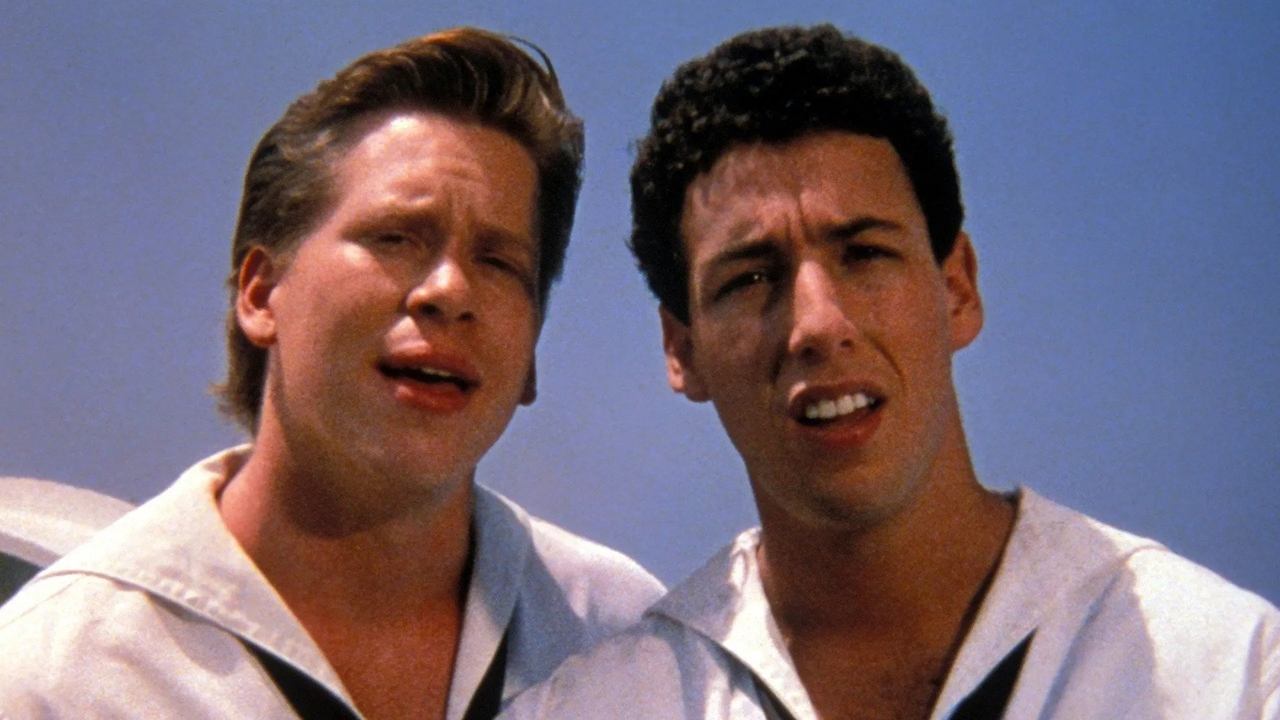
Shecky Wants the Mic
Let's be clear: Going Overboard isn't just a low-budget movie; it feels like it was financed with pocket lint and good intentions. The premise is wafer-thin: Shecky dreams of stand-up stardom, pines for the pageant queen (played by Lisa Collins), and navigates the awkward social strata of the ship, including his rival, the established ship comic Dickie Diamond (Peter Berg, yes, that Peter Berg, future director of films like Lone Survivor and Friday Night Lights). Oh, and then General Noriega-lookalike terrorists led by the always-gruff Burt Young (Pauli from Rocky!) hijack the ship. Because... comedy?
The plot, such as it is, mostly serves as flimsy connective tissue between scenes of Sandler doing proto-Sandler bits. You see the seeds of the persona here – the goofy voices, the awkward physicality, the sudden bursts of nonsensical rage – but it's untamed, unfocused energy. It's like watching a rough demo tape; the potential is vaguely discernible under layers of static and questionable mixing. Sandler, who also co-wrote the script with director Valerie Breiman, throws everything at the wall, and bless his heart, very little of it sticks in a genuinely funny way. Yet, there's a certain undeniable, frantic charm to seeing him try so hard.
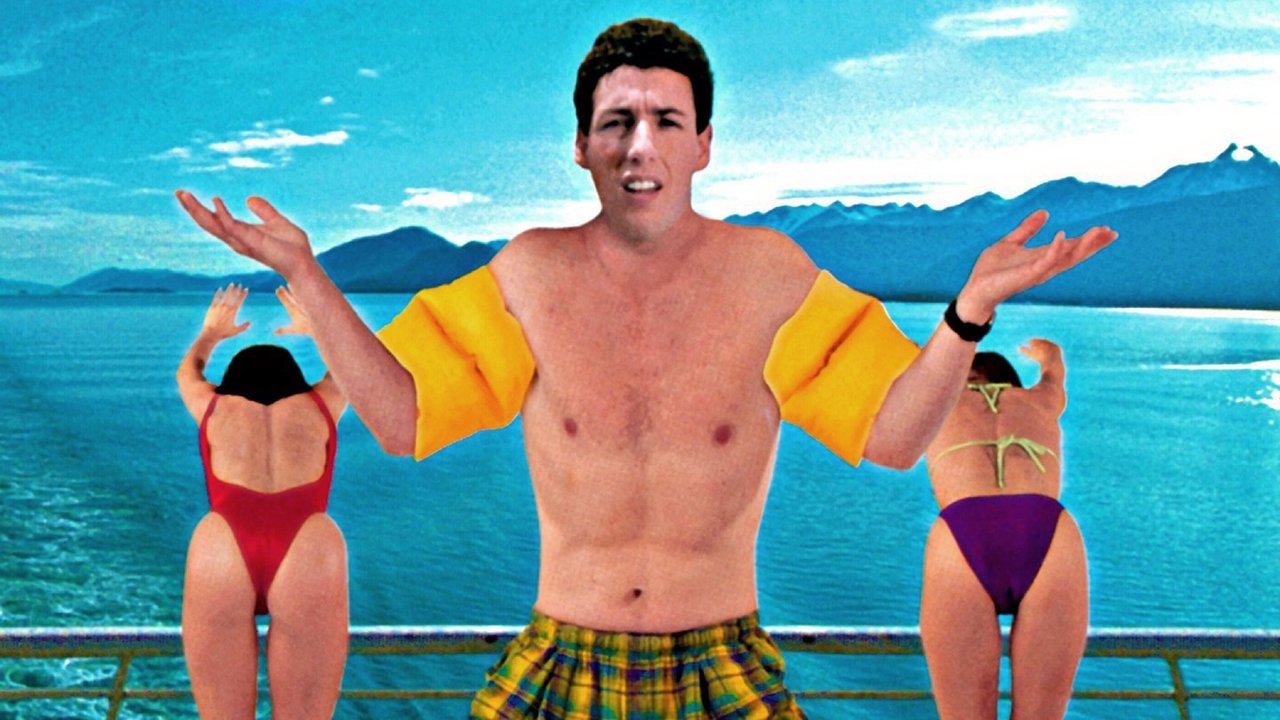
Cameo Chaos and Shoestring Cinema
What elevates Going Overboard from merely bad to fascinatingly bizarre is its constellation of "before they were famous" (or "why are they here?") cameos. Keep your eyes peeled, and you might spot Billy Zane looking impossibly cool as one of Shecky's musician friends, or a blink-and-you'll-miss-it appearance by Billy Bob Thornton. Even Adam Rifkin, director of cult items like The Dark Backward (1991), pops up. Retro Fun Fact: Apparently, many of these cameos came about because the production, partially filmed aboard the MS Caribe during an actual cruise, offered small parts in exchange for passage! It speaks volumes about the film's resources, or lack thereof.
The direction by Valerie Breiman feels understandably hampered. Scenes often feel static, the lighting is flat, and the editing is... functional, at best. There are no slick action sequences here, no elaborate set pieces. When the terrorists show up, it plays less like Die Hard on a boat and more like a community theatre troupe wandered onto the wrong set. The lack of polish is palpable; you can almost feel the humidity and the slight seasickness through the screen. It's filmmaking stripped bare, driven by sheer will more than budgetary might. This wasn't shot on carefully controlled soundstages; it feels like they grabbed a camera, hopped on a liner, and hoped for the best. Remember how some direct-to-video flicks just had that look? This is the epitome of it.
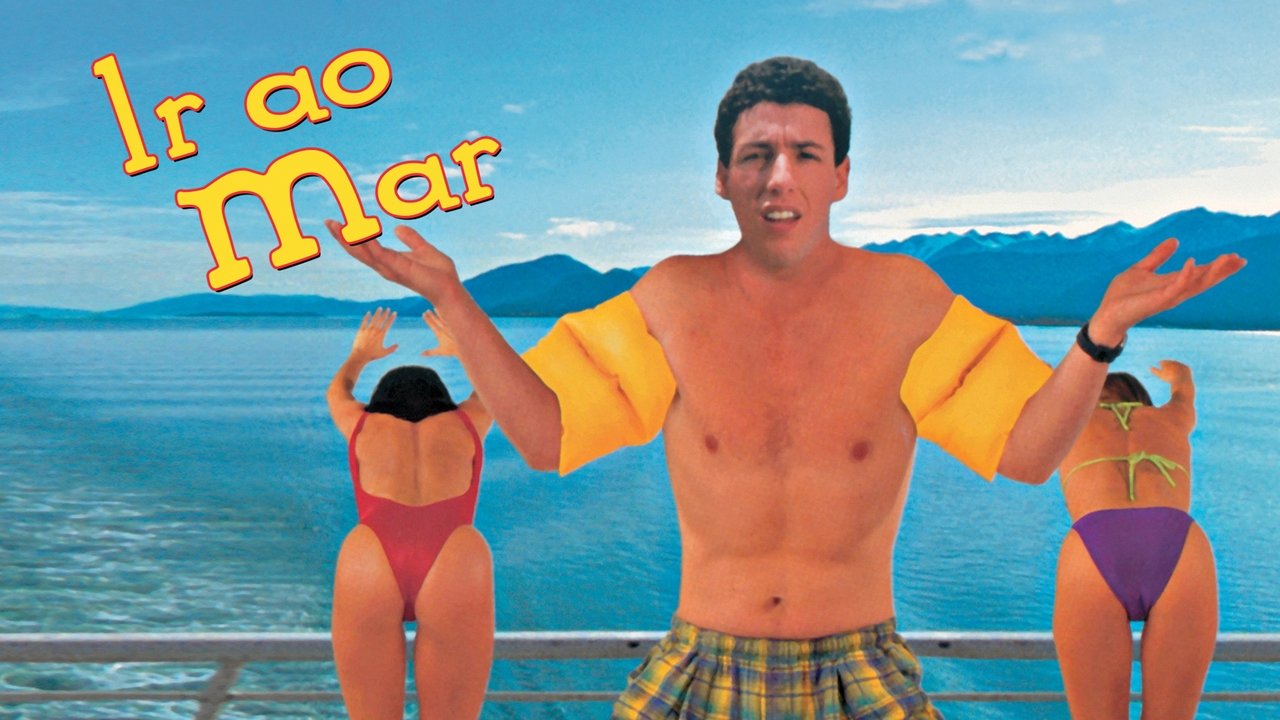
A Relic of Ambition
So, is Going Overboard good? Oh, heavens no. The jokes mostly misfire, the plot is nonsensical, and technically, it's rougher than a Brillo pad. It was barely released theatrically and vanished quickly, only resurfacing years later on home video (often with misleading packaging) after Sandler became a household name. Critics at the time (the few who saw it) were not kind, and audiences largely ignored it until Sandler's fame made it a retroactive curiosity.
But... is it watchable? For the right audience – Sandler completists, connoisseurs of cinematic oddities, or anyone fascinated by the humble beginnings of future stars – it holds a strange allure. It’s a time capsule, not just of Sandler's nascent talent, but of a certain kind of ultra-low-budget, hopeful filmmaking that barely exists anymore. You watch it with a mixture of cringe and a weird sort of affection. It's the cinematic equivalent of finding your awkward junior high school photo.
VHS Heaven Rating: 2/10
Justification: Look, this is objectively not a well-made film by almost any standard. The writing is weak, the production values are basement-level, and it's often painfully unfunny. However, it earns a couple of points purely as a historical artifact – seeing Sandler this raw is genuinely fascinating, the cameos are bafflingly wonderful, and its existence is a testament to the bizarre things that managed to get committed to videotape back in the day. It's essential viewing for the morbidly curious student of Sandlerology, but casual viewers should probably stay ashore.
Final Take: Going Overboard is the kind of movie you’d find hidden on the bottom shelf, its cover slightly sun-faded, promising laughs it rarely delivers but offering instead a unique, unforgettable glimpse into the primordial soup from which a comedy superstar emerged. It’s less a hidden gem, more a strange barnacle attached to the hull of 80s cinema.