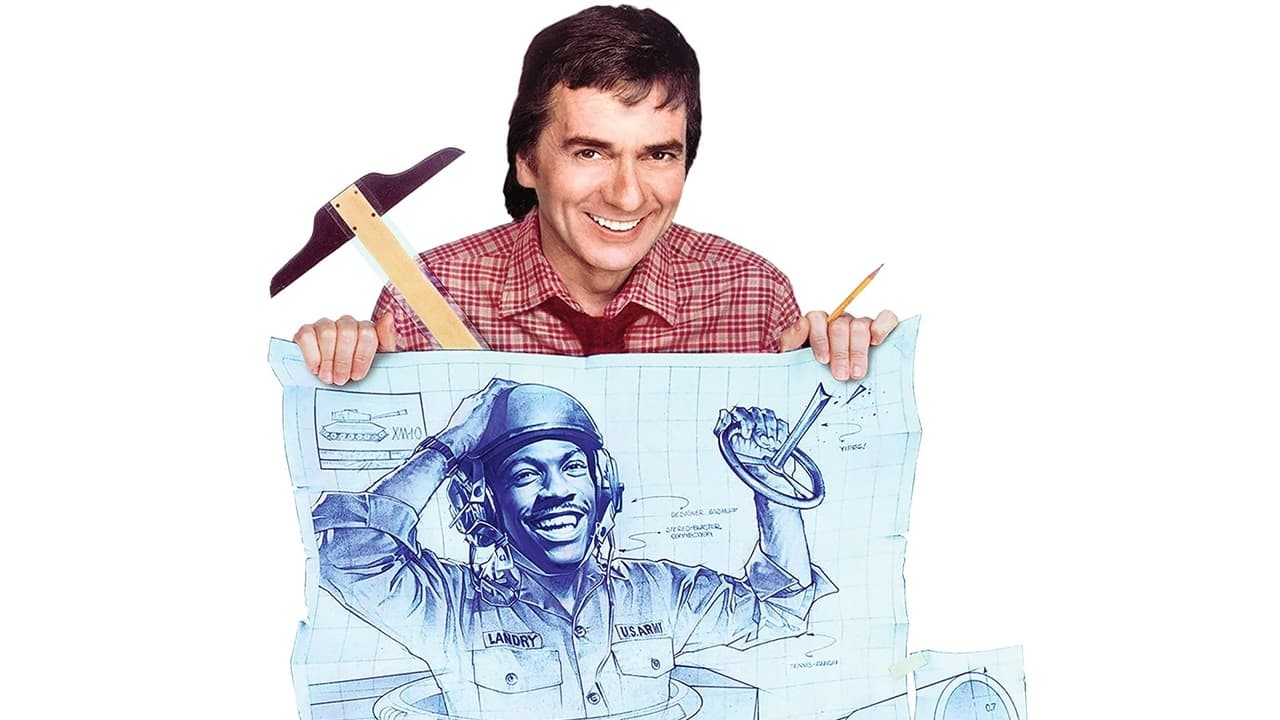
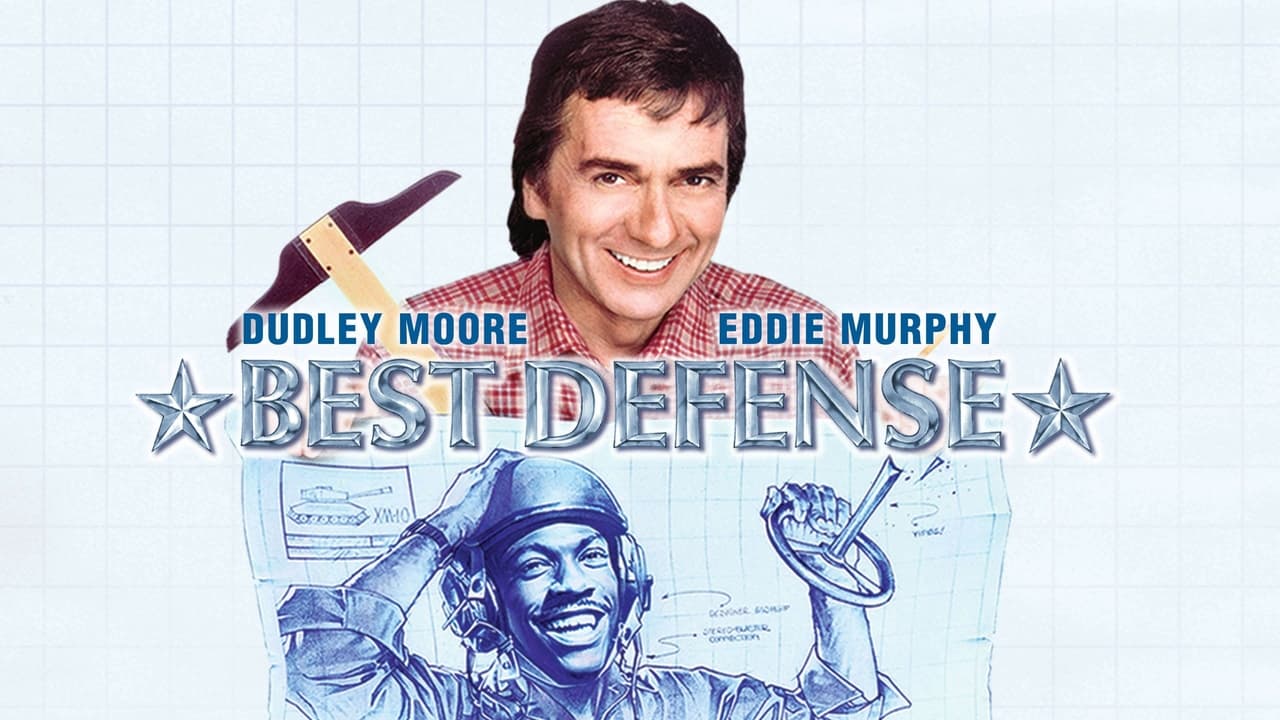
Okay, fellow tapeheads, let's rewind to 1984. The video store shelves were brimming with promise, and sometimes, just sometimes, a movie box sporting two of the biggest stars on the planet practically leapt into your hands. I remember seeing the VHS for Best Defense – Dudley Moore! Eddie Murphy! How could this possibly go wrong? Well, buckle up, because this isn't just a movie review; it's an archaeological dig into one of the strangest cinematic rescue missions of the decade.

A Tale of Two Tapes (Almost)
At its core, Best Defense tries to be a satirical comedy-thriller. We follow Wylie Cooper (Dudley Moore, riding high off Arthur), a profoundly mediocre engineer working on targeting systems for a new US Army super-tank. He’s stressed, underappreciated, and accidentally comes into possession of a crucial microchip design... that he didn’t create. His storyline, set in 1982, involves corporate bungling, relationship woes with fellow engineer Claire Lewis (Kate Capshaw, just before she swung into Indiana Jones and the Temple of Doom), and the general panic of a man in way over his head.
This part of the film was helmed by Willard Huyck and Gloria Katz, the husband-and-wife team who co-wrote American Graffiti and, perhaps more relevantly here, Temple of Doom. You can see faint glimmers of an intended dark comedy about military incompetence and flawed technology, but Moore, bless him, seems adrift. The pacing is sluggish, the jokes often misfire, and the overall tone feels uncertain, caught somewhere between goofy farce and serious espionage.
Emergency Ejection: Enter Eddie
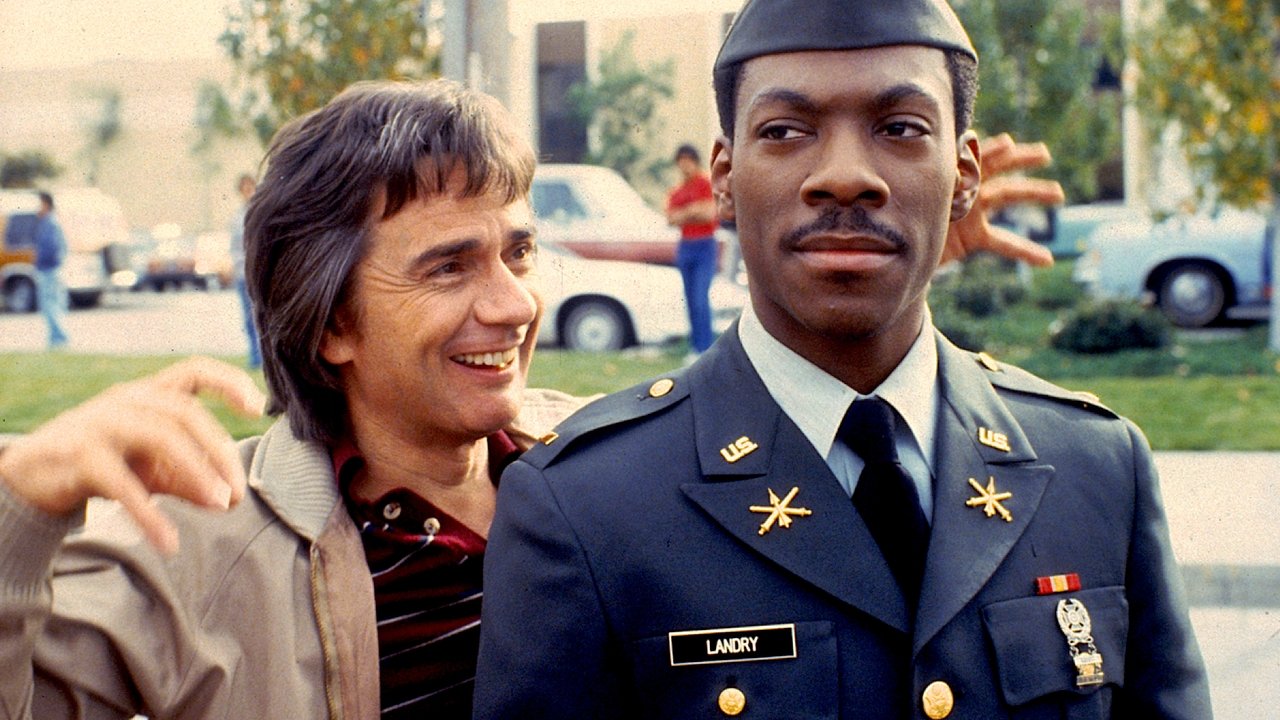
Now, here's where the VCR might start tracking strangely. Test audiences reportedly hated the original cut. Paramount Pictures panicked. Their solution? Call in the comedic cavalry, the hottest star of 1984: Eddie Murphy. Fresh off the explosive successes of 48 Hrs. and Trading Places, Murphy was pure box office gold. So, they filmed entirely new scenes featuring him as Lieutenant T.M. Landry, commanding one of these very tanks in a combat zone... two years in the future (bumped from 1984 to 1986 to make the timeline slightly less nonsensical).
The catch? Murphy's scenes have almost nothing to do with Moore's plot. He's essentially reacting to the malfunctioning tank (running on Wylie's flawed tech), delivering rapid-fire commentary and stand-up routines from the turret. It's a bizarre framing device, almost like watching a movie with an R-rated Mystery Science Theater 3000 commentary track built-in. A key "Retro Fun Fact": Eddie Murphy allegedly filmed his entire role in just two weeks, completely separate from the main production, and supposedly without ever reading the original script he was commenting on! His segments feel tacked-on because they literally were. It's less a cohesive narrative and more like two different, slightly disappointing movies awkwardly spliced together.
Where's the Bang for Your Buck?
For a film involving a super-tank and military stakes, the "action" feels surprisingly muted and often confusing. The sequences featuring Landry's tank crew under fire (filmed partly in Israel, adding a layer of production complexity) lack genuine tension. Remember those gritty, practical tank battles in films like The Beast of War a few years later? Best Defense doesn't come close. The explosions feel perfunctory, the danger abstract. You can sense the attempt at large-scale spectacle, but it's undercut by the jarring cuts back to Moore's comparatively low-stakes corporate anxieties. The practical effects, such as they are, don't leave much of an impression, certainly not in the way the raw stunt work of other 80s actioners did. Was this supposed to be exciting? Satirical? It ends up being mostly baffling.
A Strategic Withdrawal
The production woes are really the most interesting part of Best Defense. With a hefty budget for the time (around $18 million), the studio clearly hoped for a hit, leveraging its star power. Instead, the film crash-landed at the box office, barely recouping its costs (earning about $19 million worldwide), and was savaged by critics. It became a notorious example of studio meddling and a cautionary tale about trying to "fix" a fundamentally troubled film by injecting star power after the fact. You look at the talent involved – Moore's comedic timing, Murphy's raw energy, Huyck and Katz's track record – and wonder how the ingredients resulted in such a flavourless dish. It feels like a desperate attempt to salvage something, anything, resulting in a Frankenstein's monster of a movie. I distinctly remember the feeling after renting this one – not anger, just profound confusion. "Wait... that was it?"
Final Assessment
Best Defense is less a cohesive film and more a fascinating cinematic artifact. It’s a testament to studio panic, a bizarre structural experiment born of desperation, and a showcase for two huge stars operating in entirely different movies that just happen to share the same title. Watching it today is an exercise in spotting the seams and appreciating the sheer audacity of the salvage attempt.
Rating: 3/10 - The score reflects the film's fundamental failures: a disjointed narrative, wasted comedic talent, lack of engaging action, and tonal inconsistency. It earns a couple of points purely as a historical curiosity and for the sheer WTF factor of the Eddie Murphy segments existing at all.
Ultimately, Best Defense is a prime example of a VHS tape whose cover promised so much more than the magnetic ribbon inside could deliver; a curious relic best viewed as a lesson in how not to build a blockbuster.