Alright, settle back into that comfy armchair, maybe pop some corn, because we're digging deep into the rental store archives for this one. Picture it: Friday night, fluorescent lights buzzing overhead, the smell of plastic cases and possibility in the air. You stumble across a battered VHS box, slightly faded, featuring a bewildered-looking Beatle in animal skins surrounded by goofy dinosaurs. You glance at the back – prehistoric slapstick? Stop-motion creatures? Starring Ringo Starr?! You had to rent it. That, my friends, was the magnetic, slightly baffling pull of 1981's Caveman.
### One Zillion B.C. (Before Comedy Got Complicated)
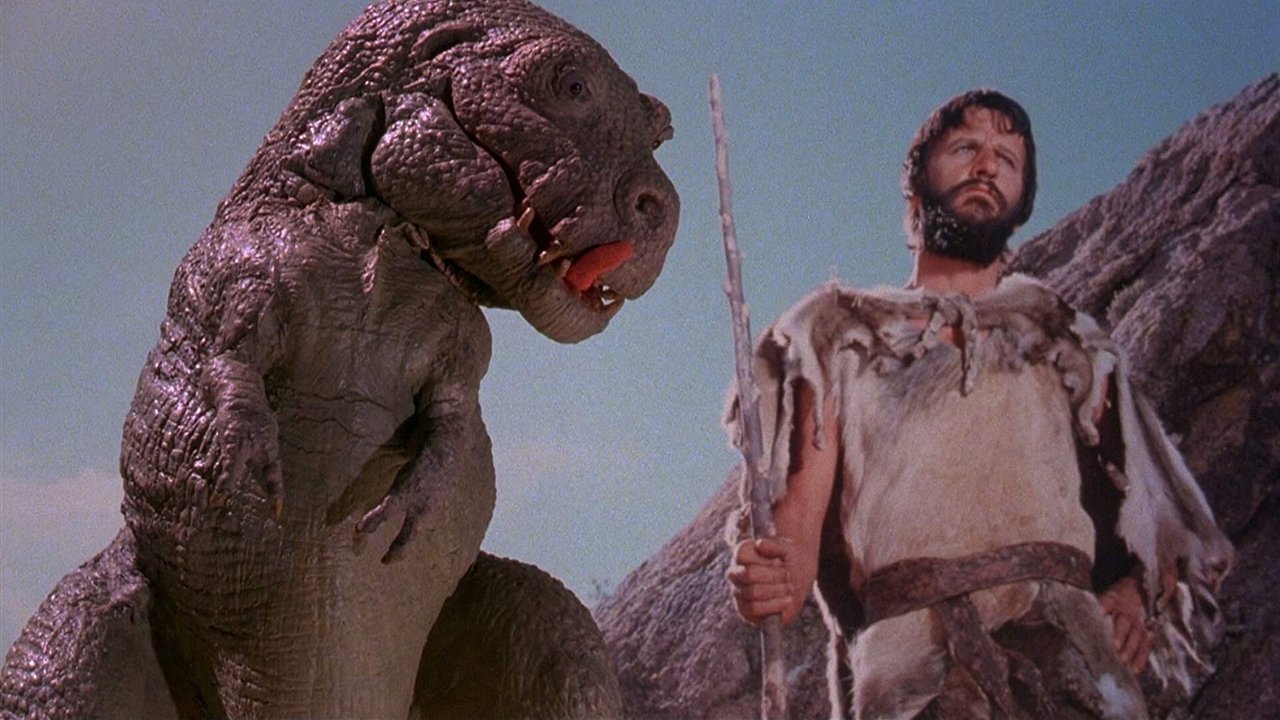
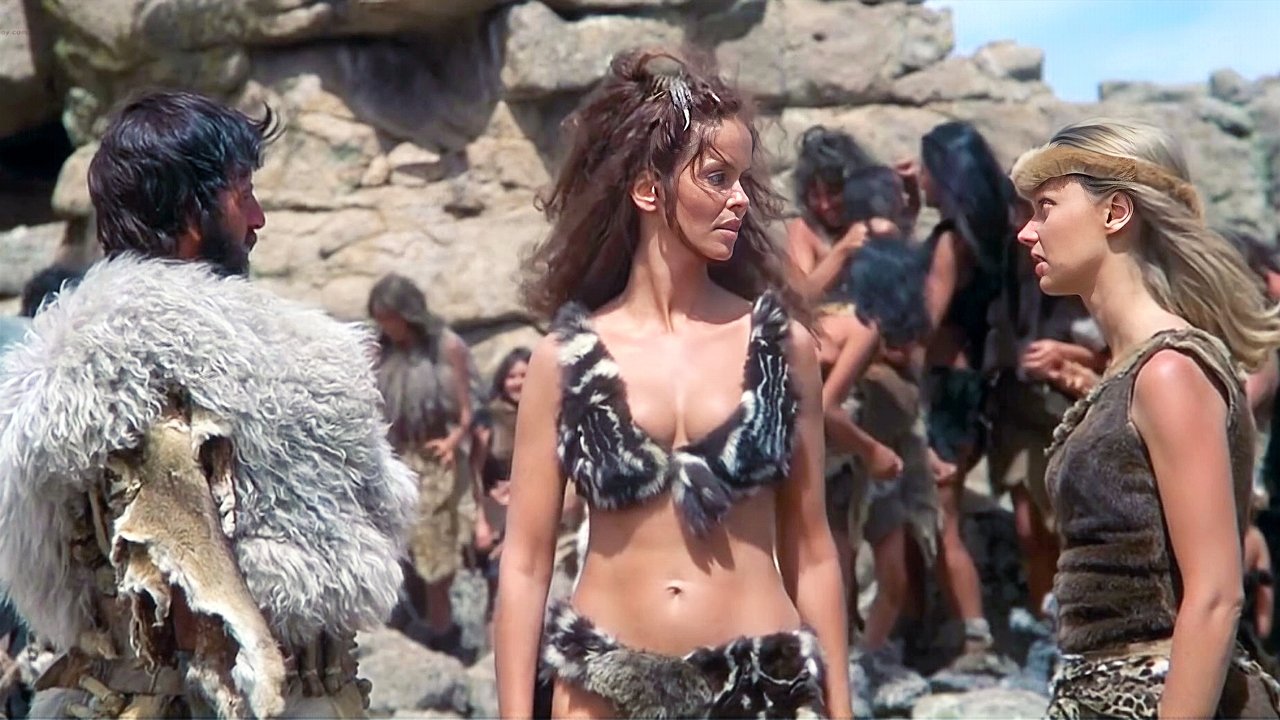
Let's be honest, the premise is brilliantly simple, bordering on the absurd. We follow Atouk (Ringo Starr), the smallest and least respected member of a particularly unpleasant cave-dwelling tribe led by the bullying Tonda (John Matuszak, instantly recognizable to fellow 80s kids as Sloth from The Goonies a few years later). Tonda has the biggest club, the best cave, and the most desirable mate, Lana (Barbara Bach). Atouk, smitten with Lana but constantly put down, gets kicked out of the tribe. He gathers his own band of misfits, including the loyal and slightly smarter Lar (Dennis Quaid, radiating early movie star charm) and the genuinely sweet Tala (Shelley Long, pre-Cheers fame and utterly endearing here). Together, they stumble upon discoveries like fire, walking upright (mostly), and rudimentary music, all while trying to survive hostile neighbouring tribes and, crucially, dinosaurs.
### Grunts, Groans, and Genius Slapstick
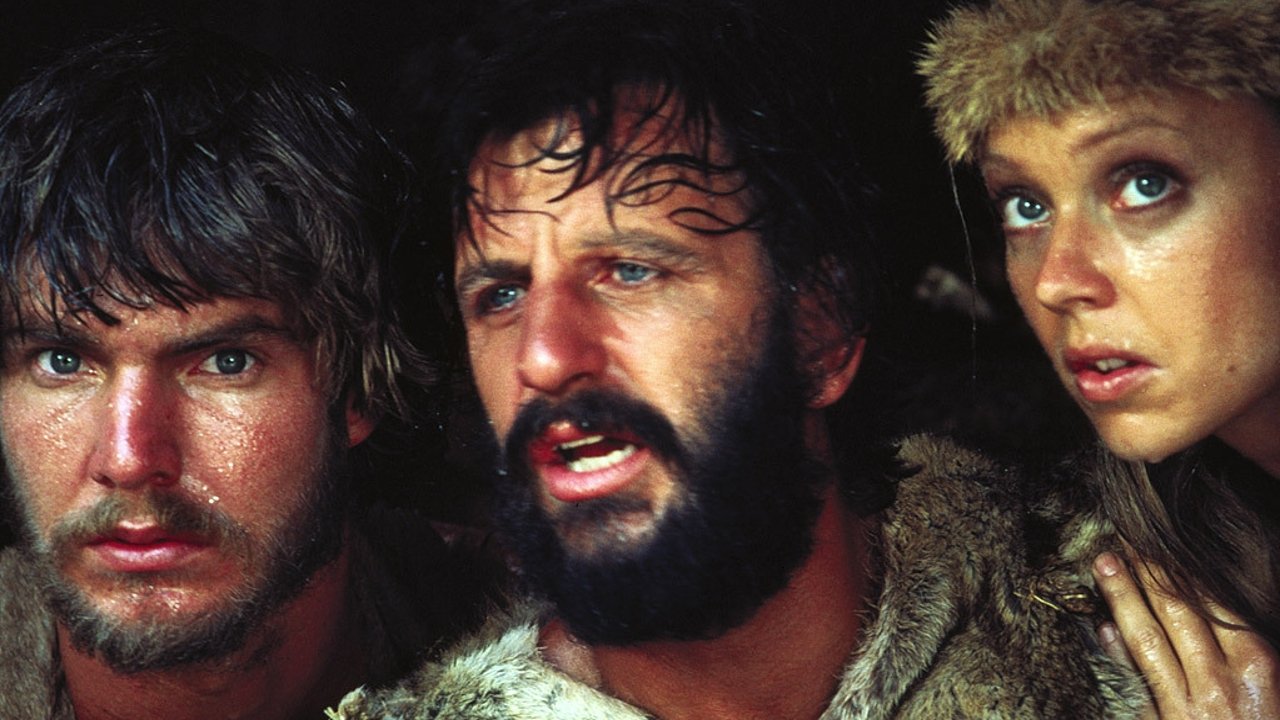
What truly sets Caveman apart is its bold commitment to its own invented prehistoric language. Forget subtitles; the dialogue consists almost entirely of grunts, gestures, and a handful of made-up words ("ool" for food, "macha" for monster, "alunda" for love – you pick it up surprisingly fast). It forces the film to rely almost entirely on physical comedy and visual storytelling, a move masterminded by director/co-writer Carl Gottlieb (who, incredibly, co-penned the screenplay for Jaws! Talk about range) and his writing partner Rudy De Luca, a frequent collaborator with Mel Brooks. This wasn't just a gimmick; it was the core engine of the humour. Seeing Ringo accidentally invent roast chicken or figure out how to use a slingshot becomes genuinely funny through pure visual gags and expressive performances. Ringo himself, often overshadowed musically, proves surprisingly adept as a physical comedian, his hangdog expression perfect for the put-upon Atouk. It’s a performance full of heart, even if mostly conveyed through wide eyes and exaggerated pratfalls.
### Monsters Made by Hand
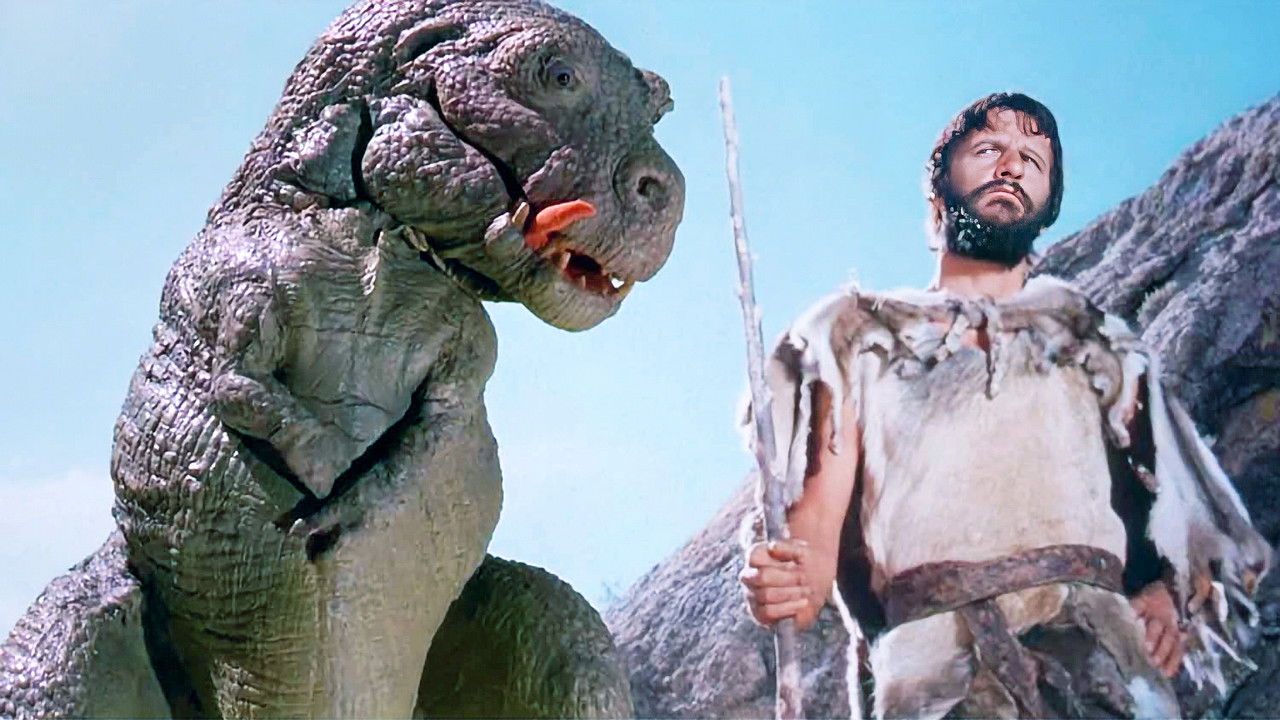
Now, let's talk about those "machas." In an era just before CGI started its slow takeover, Caveman offered some truly delightful stop-motion dinosaurs, brought to life by legends Jim Danforth (whose credits include When Dinosaurs Ruled the Earth) and David W. Allen (The Howling, Puppet Master). Watching it now, yes, the animation has that slightly jerky quality inherent to the technique, worlds away from the slick digital creatures of today. But wasn't there something magical about knowing those were physical models, painstakingly moved frame by frame? Remember how real that T-Rex looked menacing Ringo on that cliff edge, even if its movements weren't perfectly fluid? There’s a tactile charm, a sense of artistry in that old-school stop-motion that digital effects often lack. They even managed to inject personality into the creatures – the dopey-looking dinosaur Atouk accidentally gets high on laughing gas is a highlight. Filmed largely on location in the dramatic landscapes of Durango, Mexico, the film uses its scenery well, making the world feel vast and genuinely prehistoric, adding scale to the miniature monster magic.
### A Cave Full of Characters (and Trivia)
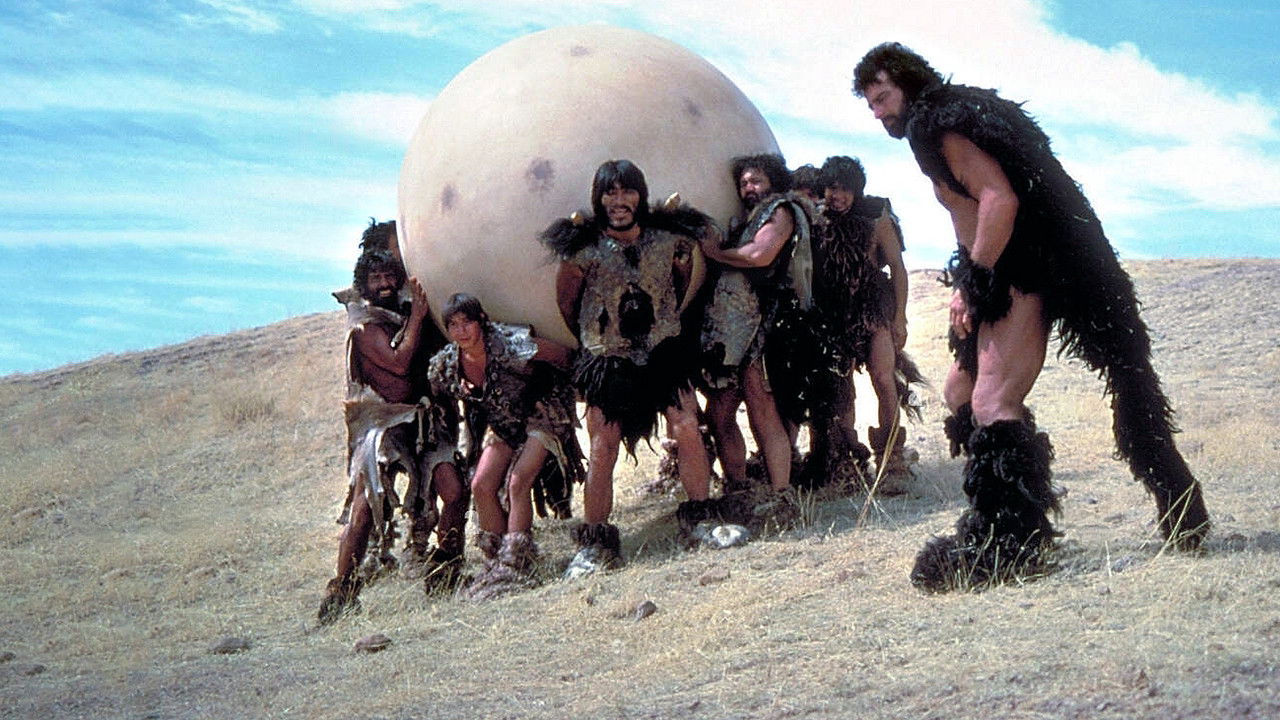
Beyond Ringo's surprisingly game performance, the supporting cast adds immensely to the fun. Dennis Quaid brings a goofy energy as Lar, Atouk's best friend, and Shelley Long provides the film's heart as Tala, the overlooked cavewoman who truly cares for Atouk. And John Matuszak is perfectly cast as the hulking, dim-witted Tonda. Fun fact: The chemistry between Ringo Starr and Barbara Bach as Lana was clearly real – the two met on the set of Caveman and married the same year the film was released! Reportedly, the minimal dialogue wasn't just a creative choice but also helped bridge language barriers amongst the international cast during the shoot. While not a box office smash (grossing around $15 million domestically on a $6 million budget), its unique premise and Starr's involvement ensured it found a comfortable life on home video, becoming a fondly remembered oddity for many who grew up browsing those rental shelves. Critics at the time were somewhat baffled, unsure what to make of a dialogue-light slapstick comedy starring a Beatle fighting stop-motion dinosaurs, but audiences seeking pure, uncomplicated fun often found it hit the spot.
### Final Verdict
Caveman is undeniably a product of its time – silly, slightly crude, and relying on visual gags that might feel broad today. Yet, it possesses an infectious charm, driven by Ringo Starr's likable lead performance, a game supporting cast, and those wonderful, hand-crafted stop-motion dinosaurs. It’s a testament to a time when filmmakers weren't afraid to try something genuinely weird, relying on pure physical comedy and practical effects wizardry.
Rating: 6.5 / 10
Justification: The rating reflects the film's undeniable charm, memorable practical effects, and unique comedic approach, balanced against its simplistic plot and humour that hasn't universally aged well. It's goofy fun, elevated by nostalgia and a winning central performance, but not quite a lost masterpiece.
Final Thought: It might not be high art, but Caveman is pure, unadulterated VHS-era comfort food – a reminder that sometimes, all you need for a good movie night is a Beatle, a loincloth, and a rubber dinosaur moved one frame at a time. Ool!