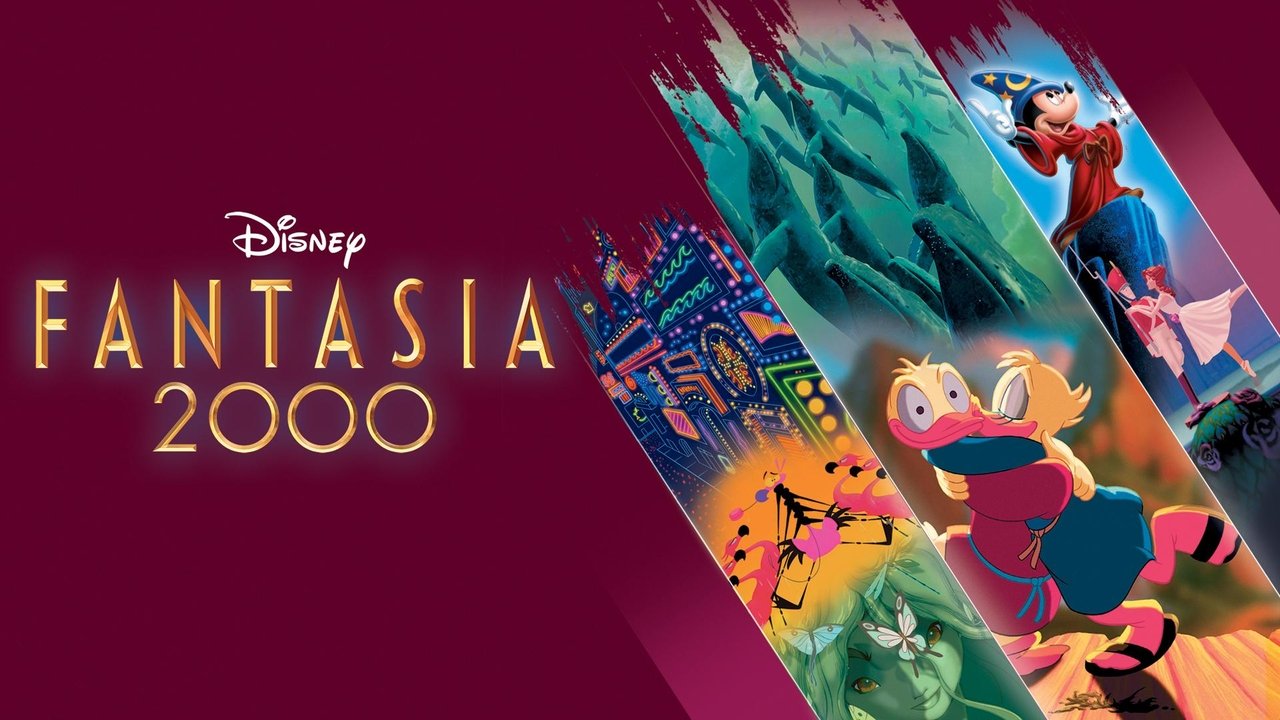
Okay, rewind your minds with me for a moment. Not all the way back to the fuzzy tracking lines and chunky plastic cases of the peak 80s, but just nudge the dial forward a bit, right to the cusp of a new millennium. Remember the buzz? The year 2000 felt like the future had arrived, complete with dial-up modems screeching us onto the information superhighway and a collective (if slightly misplaced) worry about computers forgetting how to count past '99. It was into this atmosphere of grand anticipation and digital dawn that Disney unveiled something truly ambitious: Fantasia 2000. Sixty years after Walt Disney's groundbreaking original symphony of sight and sound, his nephew Roy E. Disney finally realized a long-held dream, bringing a new iteration of this audacious experiment to life, initially splashed across gigantic IMAX screens.

### A Bold Echo Across Decades
Following up on the 1940 Fantasia is, let's be honest, a bit like trying to add a new wing onto the Taj Mahal. The original wasn't just a film; it was an event, a statement, a piece of cinematic art that felt both timeless and wildly ahead of its time. Seeing it on a worn VHS tape years later still held a certain magic, a quiet reverence for its artistry. So, the very idea of Fantasia 2000 felt both exciting and fraught with peril. Could it possibly capture that same lightning in a bottle? The answer, like the film itself, is a beautiful kaleidoscope – dazzling in moments, perhaps not quite coalescing into the same singular masterpiece, but utterly fascinating nonetheless.
Spearheaded by producer Don Hahn (whose touch graced beauties like Beauty and the Beast and The Lion King) and featuring segments helmed by a team of directors including Hendel Butoy and Eric Goldberg (the genius behind the Genie in Aladdin!), Fantasia 2000 sticks to the original's structure: visually stunning animated sequences interpreting classical music masterpieces, linked by introductions from various luminaries. The hosts this time around felt like a grab-bag of Y2K-era cool: think Steve Martin attempting comedy bits with Mickey Mouse, the legendary Quincy Jones talking about Gershwin, violinist Itzhak Perlman introducing the majesty of Elgar, and even Penn & Teller adding their unique brand of magic. It was a different vibe from Deems Taylor's more professorial presence in the original, aiming for accessibility, maybe sometimes hitting slight awkwardness, but always brimming with enthusiasm.
### Symphony of Pixels and Paint
What truly makes Fantasia 2000 sing, however, are the animated segments themselves. It felt like a bridge between eras, showcasing both the enduring power of traditional hand-drawn animation and the burgeoning potential of CGI. Who could forget the breathtaking flight of the humpback whales in Ottorino Respighi's "Pines of Rome"? Seeing those gentle giants soar through clouds and arctic waters, rendered with a then-pioneering blend of CG and traditional techniques, felt genuinely awe-inspiring, especially on that colossal IMAX screen if you were lucky enough to catch it that way. It was pure, unadulterated visual poetry.
Then there was the segment set to George Gershwin's "Rhapsody in Blue," a complete stylistic departure. Animated in the distinct, angular, and vibrant style of legendary caricaturist Al Hirschfeld, it told multiple interwoven stories of New Yorkers striving for connection during the Great Depression. It felt kinetic, jazzy, and deeply human – a standout piece that perfectly captured the music's urban energy. Directed by Eric Goldberg, it remains one of the film's most beloved and unique contributions.
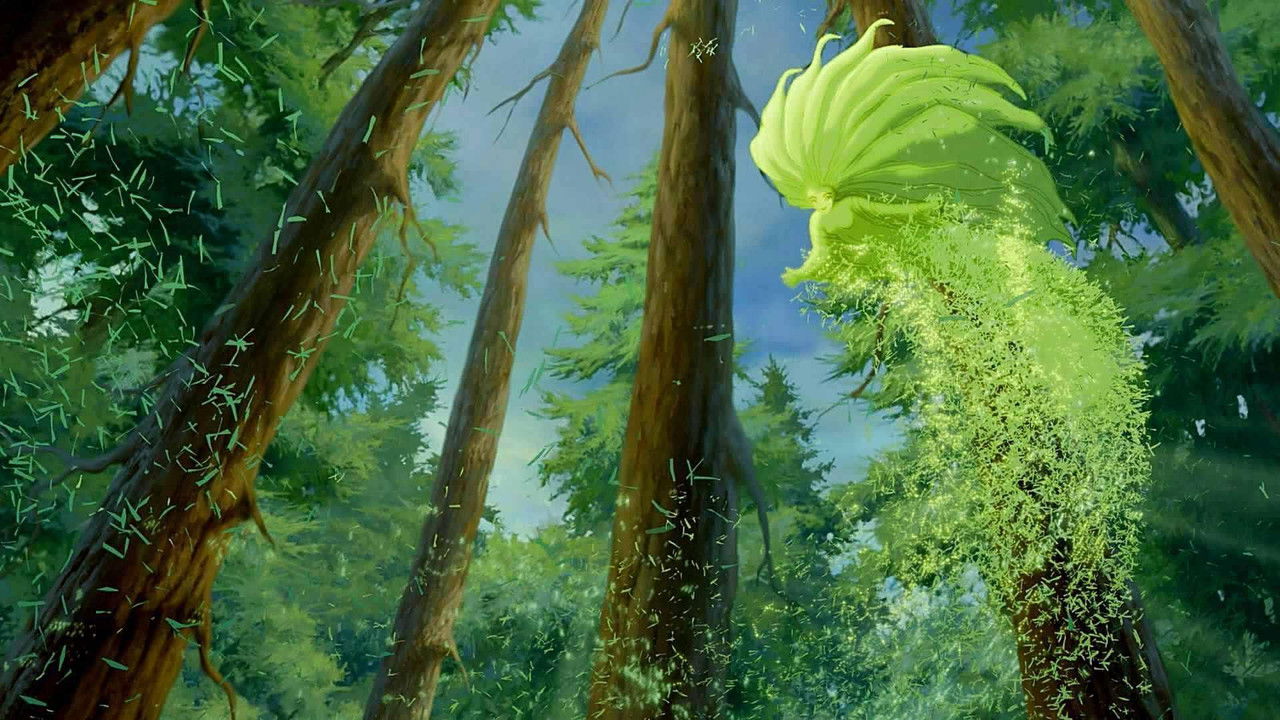
We also got the charmingly bittersweet tale of the steadfast tin soldier, set to Dmitri Shostakovich's Piano Concerto No. 2, rendered with a clean, almost toy-like CGI aesthetic that was quite novel for Disney feature animation at the time. And, of course, the explosive finale: Igor Stravinsky's "Firebird Suite." Here, the personification of nature – a graceful sprite – confronts a terrifying volcanic spirit of destruction. The animation is powerful, primal, evoking the sheer elemental force of the music with spectacular visual effects and character work. It felt suitably epic, a worthy successor to "Night on Bald Mountain" from the original.
### Echoes of the Past, Visions of the Future
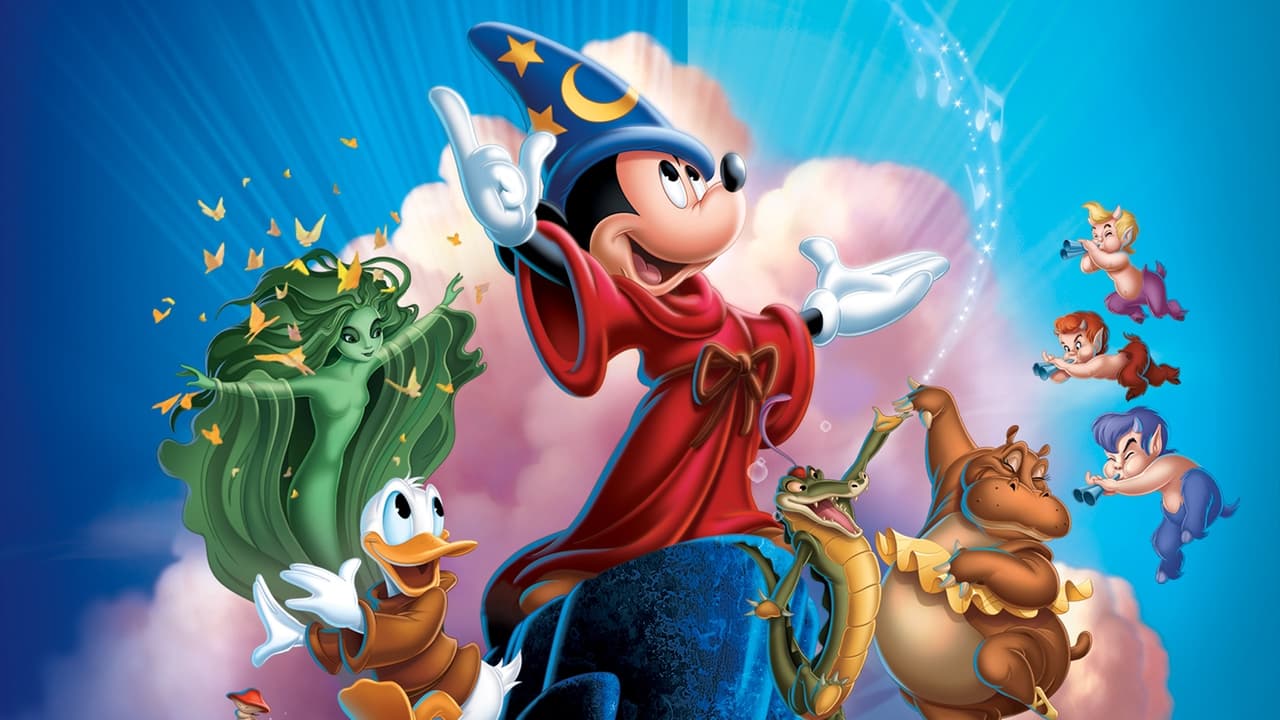
Wisely, the film includes the one segment Walt Disney originally intended for sequels: the iconic "The Sorcerer's Apprentice" starring Mickey Mouse himself. Fully restored and looking better than ever, its inclusion felt like a respectful nod to the past, grounding the new venture in the legacy of the original. It’s still delightful, isn't it? That feeling of magic spiraling gloriously out of control.
Making Fantasia 2000 was a monumental undertaking. Roy E. Disney had championed the project for years, finally getting the green light in the early 90s. The budget reportedly ballooned to around $80 million, a significant investment, especially for a film without a traditional narrative. Its initial exclusive release in IMAX theaters was a bold move – creating a must-see event but limiting accessibility. While it performed respectably, pulling in about $90.8 million worldwide, it didn't quite achieve the ubiquitous cultural impact of its predecessor, likely hampered by the release strategy and the inherent challenge of following such an iconic film. For many of us, the wider release on VHS and DVD later in 2000 was our first chance to bring this updated dose of symphonic wonder home.
### Final Fade Out
Fantasia 2000 might not possess the same revolutionary shock-of-the-new that the 1940 original delivered, and the celebrity intros occasionally feel a little dated now. But judged on its own terms, it’s a gorgeous, often breathtaking, and lovingly crafted tribute to the power of music and animation. It captured a moment of technological transition and turn-of-the-millennium optimism, daring to dream big just like Walt did sixty years prior. It gave us genuinely unforgettable sequences ("Pines of Rome," "Rhapsody in Blue," "Firebird Suite") that stand tall within the Disney canon. It was a reminder that animation could be fine art, capable of evoking deep emotion and wonder without uttering a single word of dialogue.

Rating: 8/10
This score reflects the film's stunning visual artistry, its ambitious spirit, and several truly outstanding animated segments that achieve greatness. While perhaps not quite reaching the iconic, unified perfection of the original Fantasia, and with some slightly uneven linking segments, its high points are incredibly high, representing a beautiful bridge between animation's past and future.
For fans of classic animation and orchestral music, Fantasia 2000 remains a vibrant spectacle, a worthy addition to the shelf right next to its legendary older sibling. It’s a beautiful postcard from the dawn of the 21st century, reminding us of the magic that happens when sight and sound dance together.