Okay, pop that tape in the VCR, adjust the tracking if you need to, and let's journey back to a time when dinosaurs weren't just terrifyingly realistic CGI nightmares, but could also be... well, rather polite, intelligent, and eager to hang out with kids in New York City. I'm talking, of course, about the charmingly quirky animated adventure from 1993, We're Back! A Dinosaur's Story. Released in the shadow of that other dinosaur blockbuster from the same year (Jurassic Park, anyone?), this gentle offering from Steven Spielberg's Amblimation studio often gets overlooked, but it holds a special, slightly peculiar place in the hearts of many who discovered it nestled on the video store shelf.
### Brain Grain and Big Apple Dreams
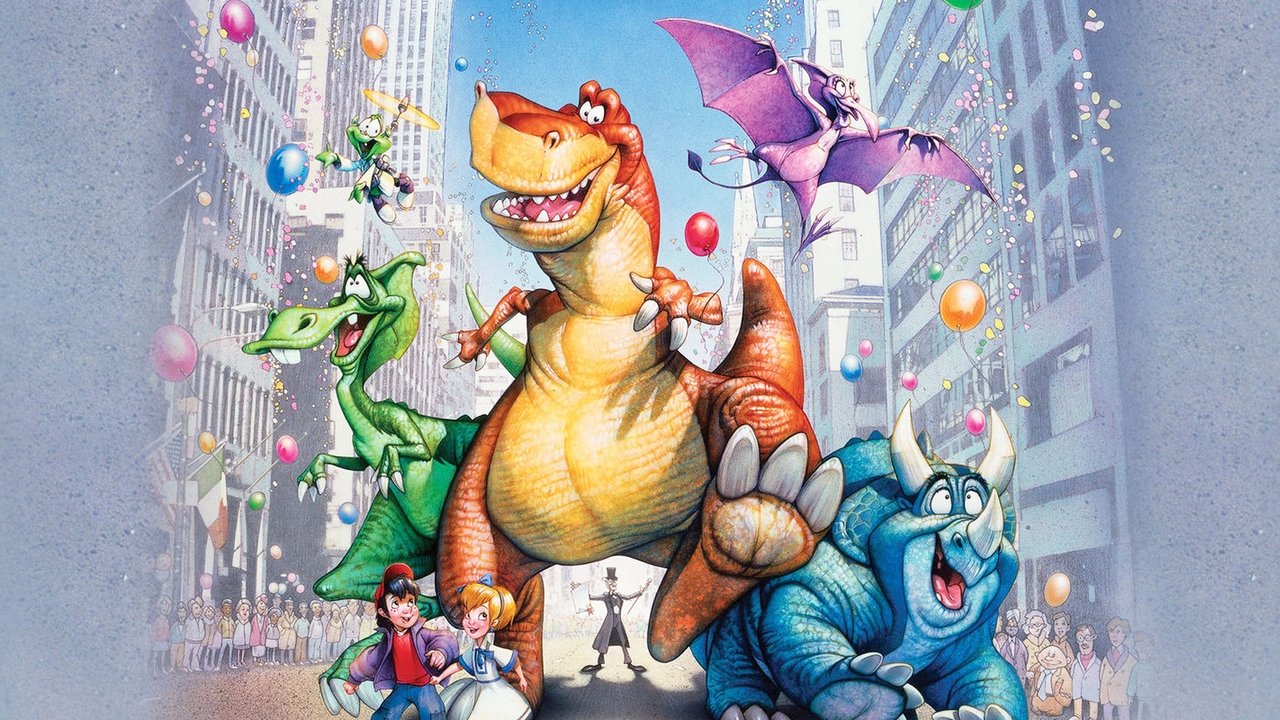
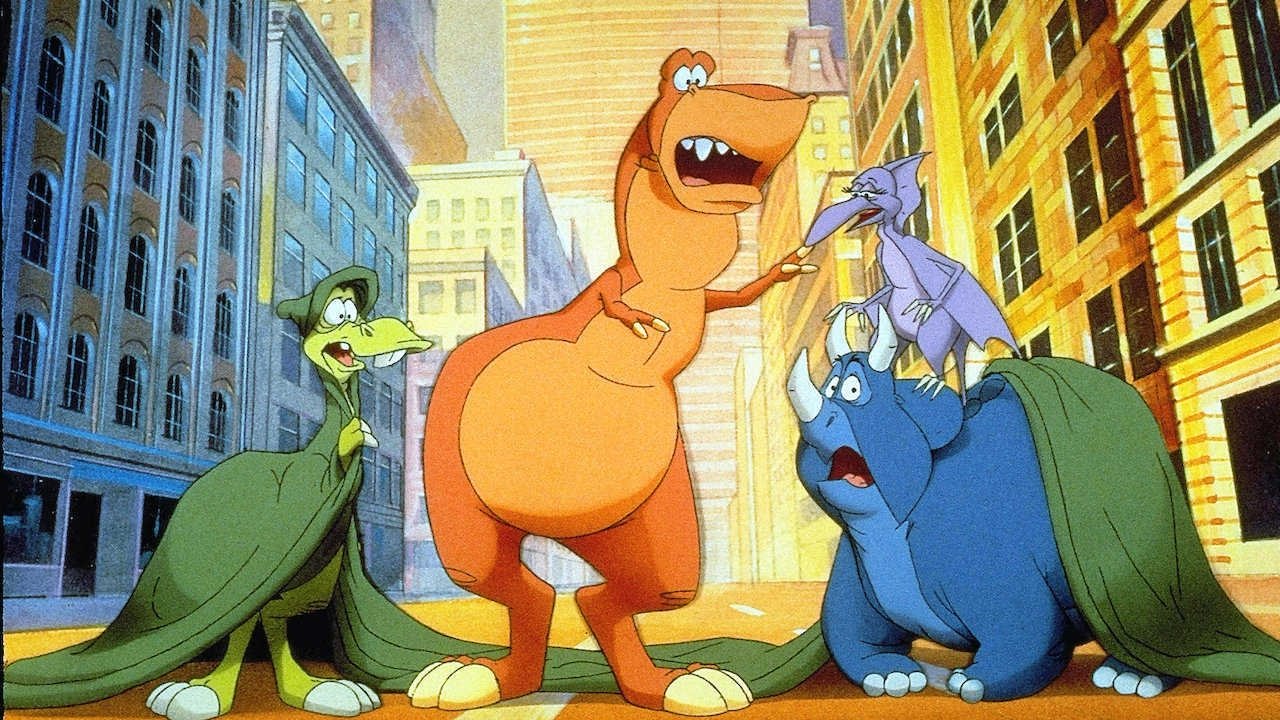
The premise alone is wonderfully bizarre, feeling like something dreamed up after a particularly vivid sugar rush. Kindly alien inventor Captain NewEyes (voiced with avuncular warmth by Walter Cronkite, believe it or not!) travels back in time to feed four dinosaurs – Rex the T-Rex, Elsa the Pterodactyl, Woog the Triceratops, and Dweeb the Oviraptor – his patented "Brain Grain" cereal. This miracle breakfast food not only grants them intelligence and the ability to speak but also tempers their predatory instincts, making them positively cuddly. Their mission? To travel to the present day (well, 1993) and fulfill the wishes of children by visiting the Museum of Natural History. It’s a delightful setup, brimming with wide-eyed innocence, even if the plot mechanics feel a little... convenient.
Helmed by a quartet of directors (Phil Nibbelink, Simon Wells – who also co-directed An American Tail: Fievel Goes West, Dick Zondag, and Ralph Zondag), the film definitely feels like a product of Amblimation, Spielberg’s short-lived but ambitious animation house aiming to compete with Disney. There's a certain earnestness and visual flair, even if it lacks the smooth polish of the House of Mouse's contemporary hits like Aladdin or The Lion King. The character designs are appealing, particularly the dinosaurs themselves, who manage to be expressive and distinct. Rex, voiced with booming friendliness by the indispensable John Goodman (hot off Roseanne and perfectly cast), is the heart of the group – big, initially intimidating, but ultimately just a gentle giant wanting to make kids happy.
### A Tale of Two Tones (and One Creepy Circus)
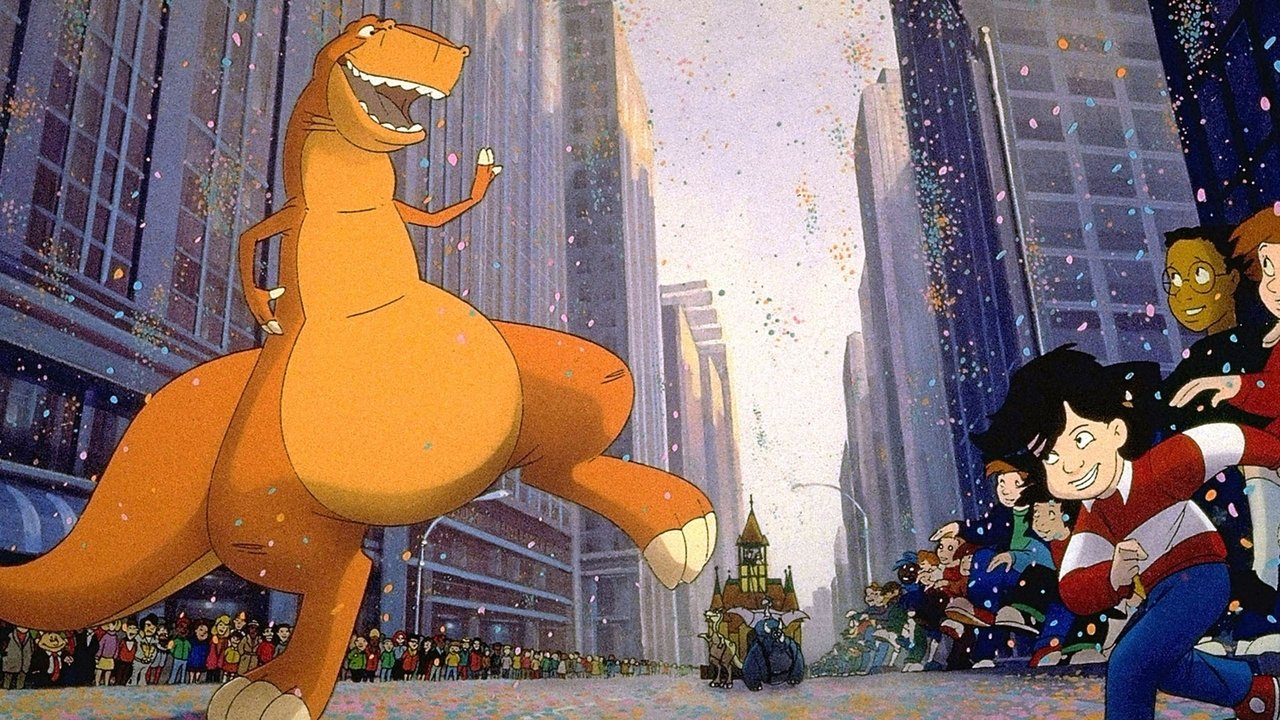
Where We're Back! gets particularly interesting, and perhaps a bit uneven, is its tone. For much of its runtime, it’s a sweet, straightforward adventure about lonely kids Louie and Cecilia finding friendship with these time-displaced dinos against the vibrant backdrop of Manhattan. Louie, a streetwise runaway, and Cecilia, a neglected rich girl, provide the human element, their longing for connection mirroring the dinosaurs' own displacement. Their journey, featuring a memorable sequence during the Macy's Thanksgiving Day Parade, captures a certain kind of urban childhood fantasy.
But then there's Professor Screweyes. Voiced with sinister relish by Kenneth Mars, Captain NewEyes's twisted brother runs the "Eccentric Circus," a terrifying sideshow exploiting fear. When the dinosaurs fall under his influence, signing contracts in blood (yes, really!) and reverting to their fearsome primal states via his "Brain Drain" pills, the film takes a surprisingly dark turn. This shift, while providing genuine stakes, can feel a bit jarring compared to the lighthearted beginning. It’s perhaps a reflection of the screenplay penned by John Patrick Shanley, the Oscar-winning writer of the decidedly more adult Moonstruck (1987) – an intriguing choice that might explain some of the film’s thematic depth and tonal swings. These darker elements, especially Screweyes's genuinely unsettling demise surrounded by crows, might have been a bit intense for very young viewers back in the day, adding to the film’s slightly cult, "remember how weird that got?" status.

### Retro Fun Facts: From Cereal to Celluloid
Digging into the production offers some fascinating tidbits. Based on the 1987 children's book by Hudson Talbott, the journey to screen wasn't entirely smooth, reflected in the credited team of four directors – often a sign of production challenges in animation. Despite the Spielberg executive producer credit and the voice talents of stars like John Goodman, Charles Fleischer (bringing his manic energy, familiar from Who Framed Roger Rabbit, to the role of Dweeb), and UK television favourite Felicity Kendal as Elsa, the film struggled at the box office. Released just five months after Jurassic Park redefined cinematic dinosaurs, We're Back! felt decidedly old-fashioned. It grossed a mere $9.3 million domestically, falling short of recouping its budget (estimates vary, but likely around $12-15 million).
Yet, box office isn't everything in VHS Heaven, is it? The film found a second life on home video, becoming a staple rental for many kids drawn in by the promise of talking dinosaurs. The score by the legendary James Horner (whose iconic work includes Aliens, Braveheart, and Titanic) adds a layer of epic sweep and emotional resonance, particularly during the more adventurous sequences and the catchy, if slightly cheesy, signature song "Roll Back the Rock (To the Dawn of Time)". And let's be honest, who didn't get that song stuck in their head after watching?
### A Flawed Gem Worth Revisiting
We're Back! A Dinosaur's Story isn't a perfect film. The plot feels rushed in places, some character arcs are thin, and the tonal shifts between whimsical adventure and gothic horror can be abrupt. It doesn't quite reach the heights of the best animated features of its era. But its charm is undeniable. There’s a sweetness to its core message about friendship, wish fulfillment, and overcoming fear. The voice acting is strong across the board, the animation has moments of real beauty, and the central concept remains uniquely memorable.
It’s a film that embodies a specific kind of early 90s animated feature – ambitious, slightly strange, full of heart, and perhaps not quite sure exactly what it wants to be, but endearing nonetheless. Watching it again evokes that feeling of discovering a less-hyped title at the video store, something a bit different from the usual fare, and finding unexpected joy in its quirks.
Rating: 6.5/10
This score reflects the film's genuine nostalgic charm, strong voice cast, and appealing central concept, balanced against its narrative inconsistencies and sometimes jarring tonal shifts. It might not be a masterpiece, but it’s a unique and fondly remembered piece of 90s animation.
It remains a curious, good-natured time capsule – a reminder that sometimes, all it takes is a little Brain Grain and a trip to the Big Apple to make wishes come true, even if you have to face down a creepy circus master along the way.