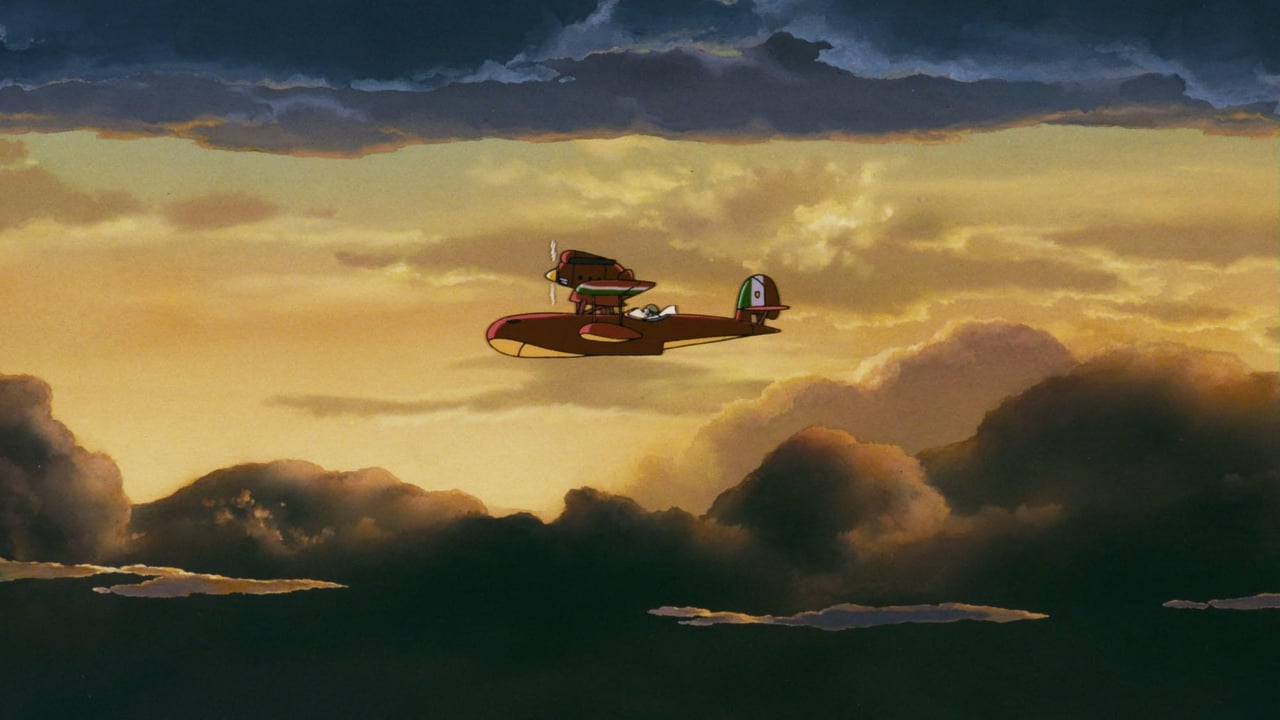
Imagine the sun glinting off the impossibly blue waters of the Adriatic Sea, sometime between the World Wars. The air shimmers with heat, dotted with picturesque islands. Then, a defiant roar splits the tranquility – not a seabird, but the engine of a brilliant crimson Savoia S.21 seaplane. And at the controls? Marco Pagot, a world-weary Italian flying ace cursed to live life as an anthropomorphic pig. Welcome to the uniquely charming world of Porco Rosso, a 1992 gem from the legendary Studio Ghibli and maestro Hayao Miyazaki (My Neighbor Totoro, Spirited Away). This isn't your typical Ghibli fare of wide-eyed children discovering magic; this is a tale steeped in bittersweet nostalgia, aerial adventure, and grown-up melancholy, all wrapped in that breathtaking Ghibli artistry.
### A Different Breed of Hero
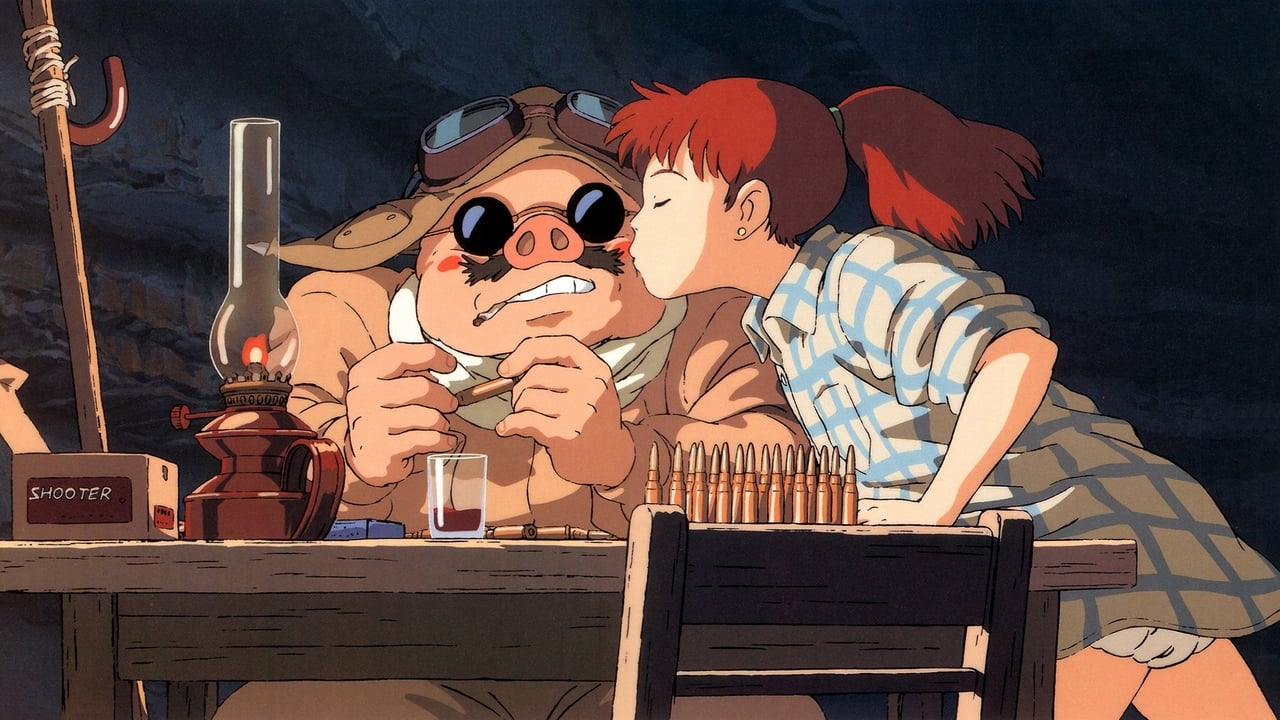
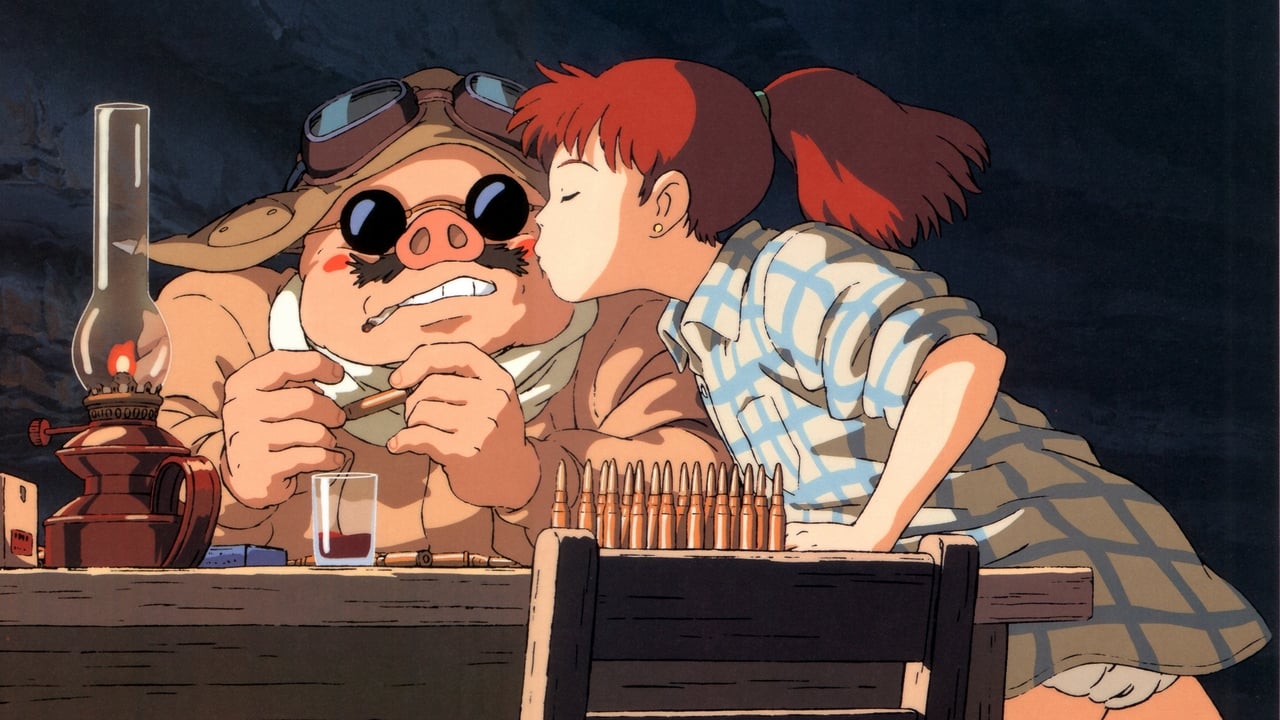
Porco Rosso (or Kurenai no Buta in Japanese) centers on our porcine protagonist, a bounty hunter who makes his living chasing down airborne pirates preying on shipping lanes. Voiced with gruff charisma by Shūichirō Moriyama, Porco is cynical, fiercely independent, and haunted by his past experiences in World War I. He’s withdrawn from human society, preferring his isolated island hideaway and the company of his beloved plane. Yet, beneath the bristly exterior lies a core of honour and a surprisingly romantic heart, mostly reserved for the elegant Gina (Tokiko Kato), owner of the Hotel Adriano, a neutral haven for pilots of all stripes.
The beauty of Porco Rosso lies in this blend. It’s a film filled with thrilling dogfights and genuinely funny moments (often involving the boisterous sky pirates or Porco’s interactions with the resourceful young aircraft designer Fio, voiced by Akemi Okamura), yet underscored by a palpable sense of longing and disillusionment. Miyazaki never explicitly explains the curse that transformed Marco into Porco – was it self-inflicted guilt, a magical mishap? – leaving it as a potent symbol of his detachment from a world sliding towards fascism and another war. It’s a surprisingly mature theme handled with characteristic Ghibli grace.
### Romance of the Skies
If there's one thing Hayao Miyazaki adores almost as much as resonant storytelling, it's aviation. And oh boy, does it show here. The aerial sequences in Porco Rosso are simply magnificent. Every bank, dive, and chase is rendered with meticulous detail and a palpable sense of weight and speed. You can almost feel the wind whipping past the cockpit, smell the oil and fuel. The various seaplanes, from Porco’s iconic red Savoia to the sleek Curtis R3C-0 flown by his swaggering American rival, Donald Curtis, are characters in their own right, designed with an enthusiast’s loving eye. It’s pure aeronautical poetry, capturing the bygone romance of early flight in a way few films, animated or otherwise, ever have.
These thrilling sequences aren’t just spectacle; they’re integral to the film’s charm and character development. Porco’s skill as a pilot defines him, his plane an extension of his very being. The dogfights are less about outright violence and more about skill, bravado, and an almost chivalrous code among these pilots, even the pirates.


### From In-Flight Short to Feature Film Fun Facts
Digging into the history of Porco Rosso only adds to its unique appeal. It’s fascinating to learn this feature-length marvel actually began life as a much shorter project, intended as an in-flight movie for Japan Airlines! Miyazaki, drawing inspiration from his own manga Hikōtei Jidai (The Age of the Flying Boat), expanded the concept when production coincided with the outbreak of conflict in Yugoslavia, the real-world setting of the film's Adriatic backdrop. This added a layer of sombre relevance that deepened the narrative considerably.
The film was a huge hit in its native Japan, becoming the highest-grossing domestic film of 1992. It’s a testament to how Miyazaki could weave together action, romance, history, and that touch of Ghibli magic into something that resonated deeply. There’s even persistent, hopeful talk amongst fans (and occasionally fuelled by Miyazaki himself) about a potential sequel, though nothing concrete has ever materialised. Perhaps some legends are best left soaring in our memories. Another fun tidbit: the character of Gina was voiced by singer Tokiko Kato, who also performs the beautiful closing song, "Toki ni wa Mukashi no Hanashi o" ("Once in a While, Talk of the Old Days"), perfectly capturing the film's wistful mood.
### A Ghibli Film That Aged Like Fine Wine (or Cured Ham?)
Watching Porco Rosso today, perhaps on a well-loved DVD or a streaming service rather than a chunky VHS tape, it feels both timeless and wonderfully specific to its Ghibli roots. It stands apart from some of the studio's more overtly fantastical or child-focused adventures, offering a narrative that resonates differently with adult viewers. The themes of regret, lost love, and clinging to ideals in a changing world feel particularly poignant. It’s a film that wears its heart on its sleeve, or perhaps, its wing.
The blend of rollicking adventure with quiet moments of reflection is masterful. One minute you're chuckling at the pirates trying to cram themselves into Porco's tiny cockpit, the next you're captivated by a quiet conversation between Porco and Gina under the stars, heavy with unspoken history. It’s this emotional depth, combined with the sheer beauty of the animation and the thrill of the aerial action, that makes Porco Rosso such an enduring favourite for many Ghibli aficionados and fans of classic animation.
VHS Heaven Rating: 9/10
Porco Rosso earns a stellar 9 out of 10. It's a beautifully animated, uniquely charming adventure with surprising emotional depth. The aerial combat is breathtaking, the characters are memorable (especially our grumpy porcine hero), and the blend of humour, action, and melancholy is perfectly balanced. It might lack the wide-eyed wonder of Totoro or the epic scope of Princess Mononoke, but it offers something equally valuable: a mature, wistful, and utterly captivating story told with Ghibli's unparalleled artistry. Minor points are deducted only because the slightly episodic feel might not grip absolutely everyone from start to finish, but its highs are incredibly high.
It’s a film that reminds us that even when faced with cynicism and disillusionment, there’s still beauty to be found, honour to be upheld, and skies waiting to be explored. Better a pig than a fascist, indeed.