Remember those video store shelves, crammed floor to ceiling with promises of adventure, terror, and laughs? Sometimes a cover just grabbed you, not with explosive action, but with something… off. The box for Parents (1989) was like that. A seemingly perfect 1950s family portrait, but with a shadow lurking behind the smiles. It promised something strange, something unsettling beneath the Formica countertops and manicured lawns, and boy, did it deliver. This wasn't your typical slasher or creature feature; this was a different kind of chill, one that crawled right under your skin and stayed there long after the VCR clicked off.
Beneath the Perfect Veneer
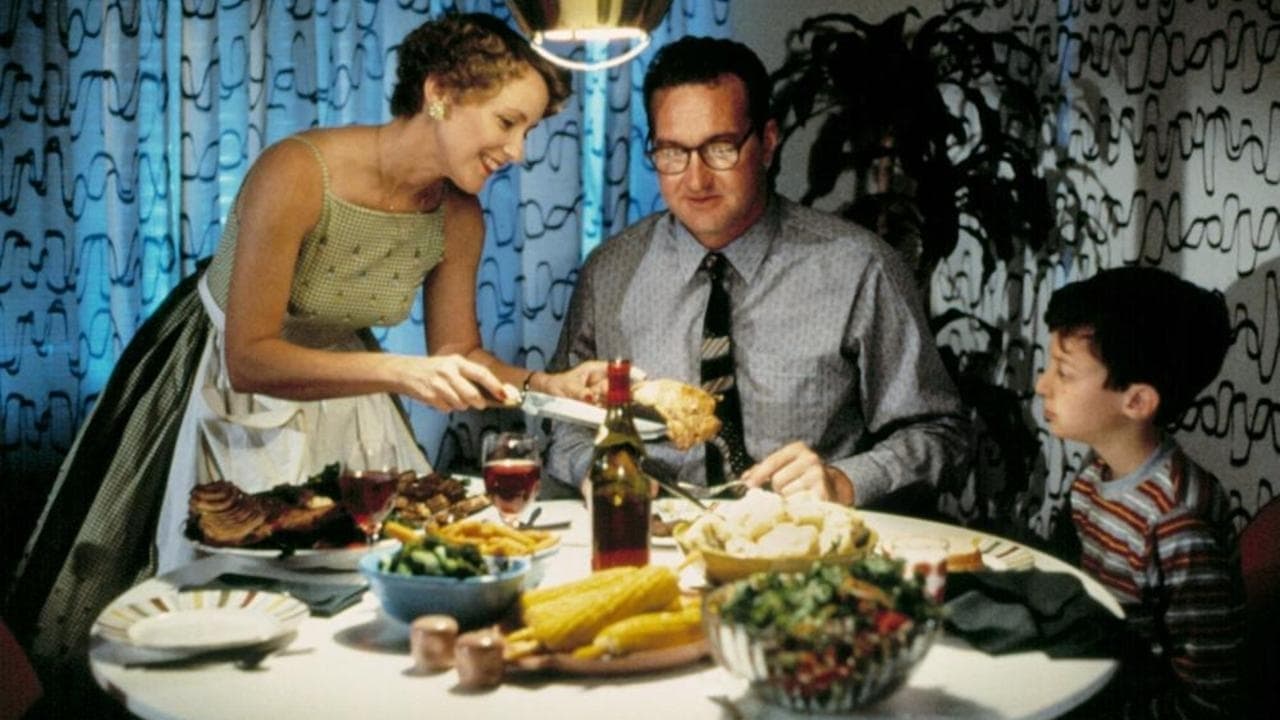
Set in the squeaky-clean suburbs of 1958, Parents introduces us to young Michael Laemle (Bryan Madorsky), a quiet, observant boy who has recently moved to a new town with his seemingly idyllic parents, Nick (Randy Quaid) and Lily (Mary Beth Hurt). Everything looks perfect – the immaculate house, Dad’s important job at Toxico, Mom’s flawless hostess skills. But Michael is plagued by nightmares and a growing suspicion about his parents' nocturnal activities and, more pointedly, the mysterious "leftovers" they seem to relish. Is it just childhood imagination running wild, or is something truly monstrous happening behind the closed doors of the Laemle household?
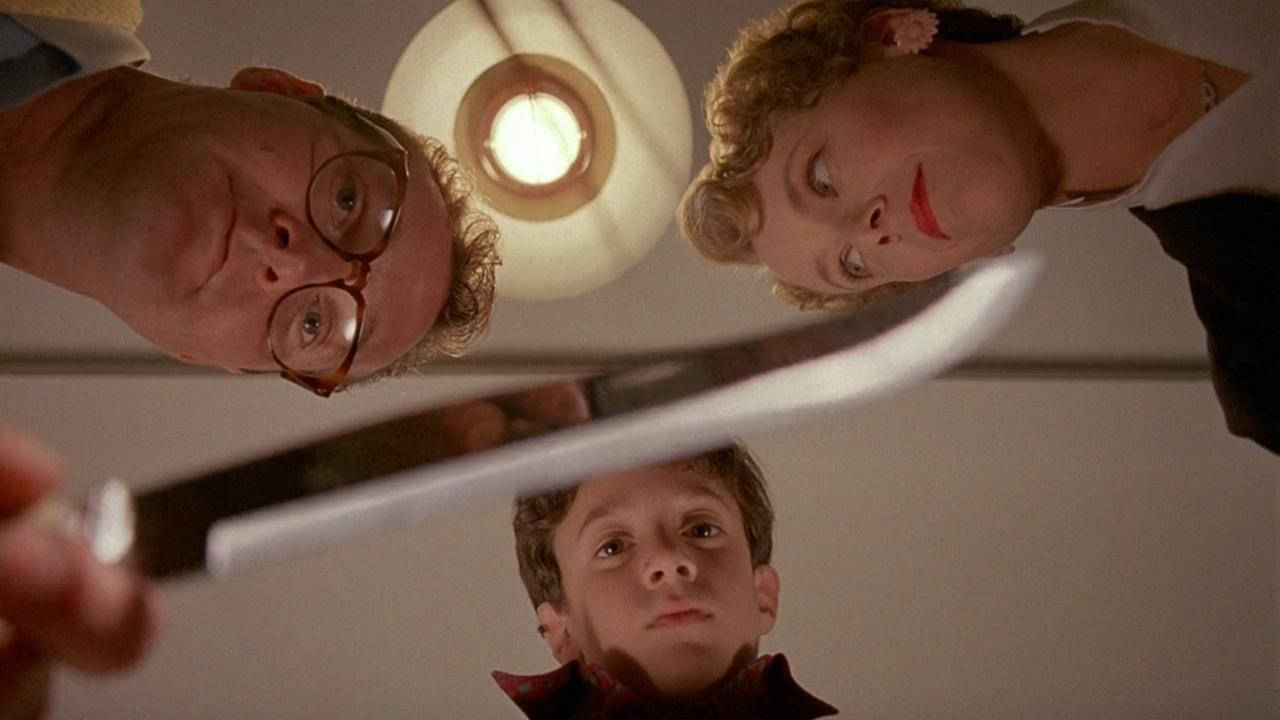
The film masterfully taps into that primal childhood fear: what if the people meant to protect you are the source of danger? What if the comforting routines of home are just a facade for something terrifying? Director Bob Balaban, in his feature debut (yes, the Bob Balaban we knew and loved as an actor in films like Close Encounters of the Third Kind and Midnight Cowboy), crafts an atmosphere thick with suburban dread. He uses low angles, mirroring Michael’s perspective, making the adult world seem looming and distorted. The colour palette is rich, almost lurid, especially the recurring deep reds, hinting at the darkness beneath the polished surface.
Performances That Simmer with Menace
What makes Parents truly cook is the tightrope walk performed by its central actors. Randy Quaid, years before his Independence Day (1996) heroics, is utterly captivating as Nick Laemle. He's not just Dad; he's a figure of terrifying bonhomie, his jokes landing with a thud that hints at something deeply wrong. There’s a coiled tension beneath his forced cheerfulness, a potential for violence simmering just under the surface. His chemistry with Mary Beth Hurt's Lily is pitch-perfect – she's the flawless homemaker whose smile seems painted on, her eyes occasionally betraying a flicker of… what? Resignation? Complicity? Fear? It’s a chilling portrait of forced domestic bliss, a performance of unnerving subtlety.
And young Bryan Madorsky as Michael carries the weight of the film on his small shoulders. His performance is remarkably naturalistic amidst the stylized surreality. His wide-eyed confusion, his quiet fear, and his dawning horror feel utterly genuine. We see this bizarre world primarily through his perspective, amplifying the sense of isolation and dread. His interactions with the school psychologist, Millie Dew (played with eccentric warmth by the legendary Sandy Dennis in one of her final roles), provide some grounding, but also highlight how adrift Michael truly is.
Retro Fun Facts: Crafting Suburban Nightmares
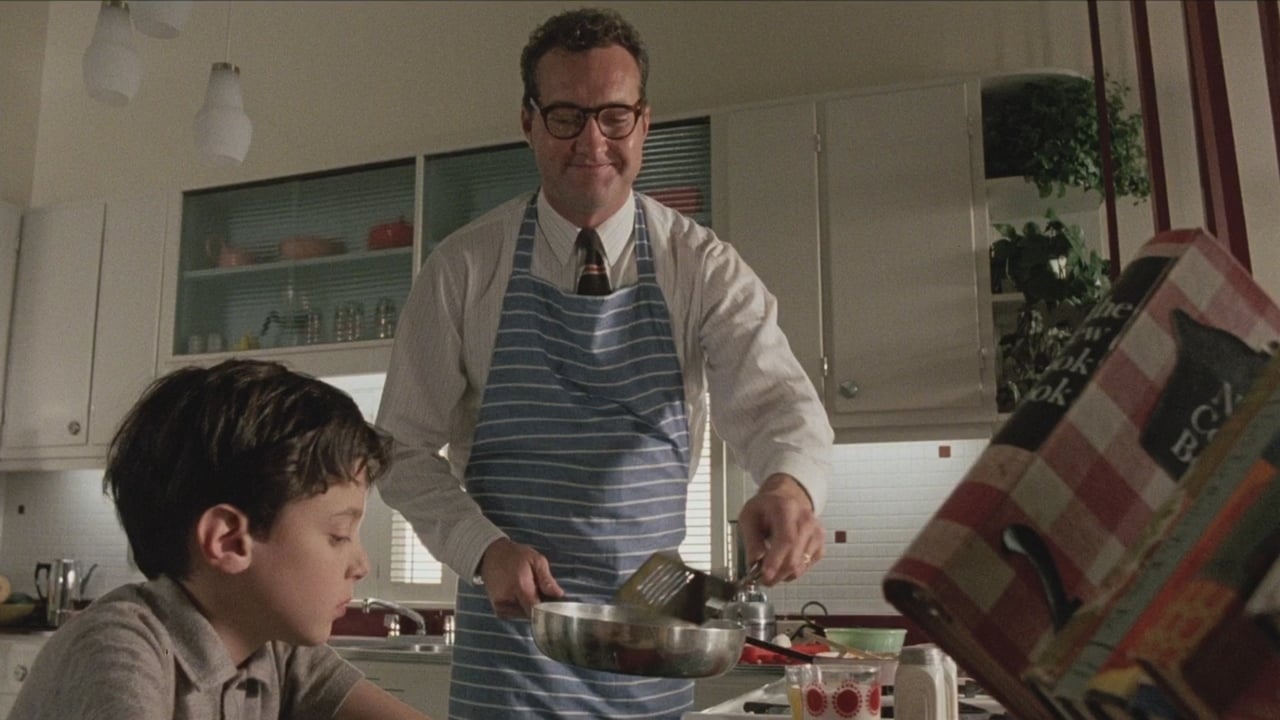
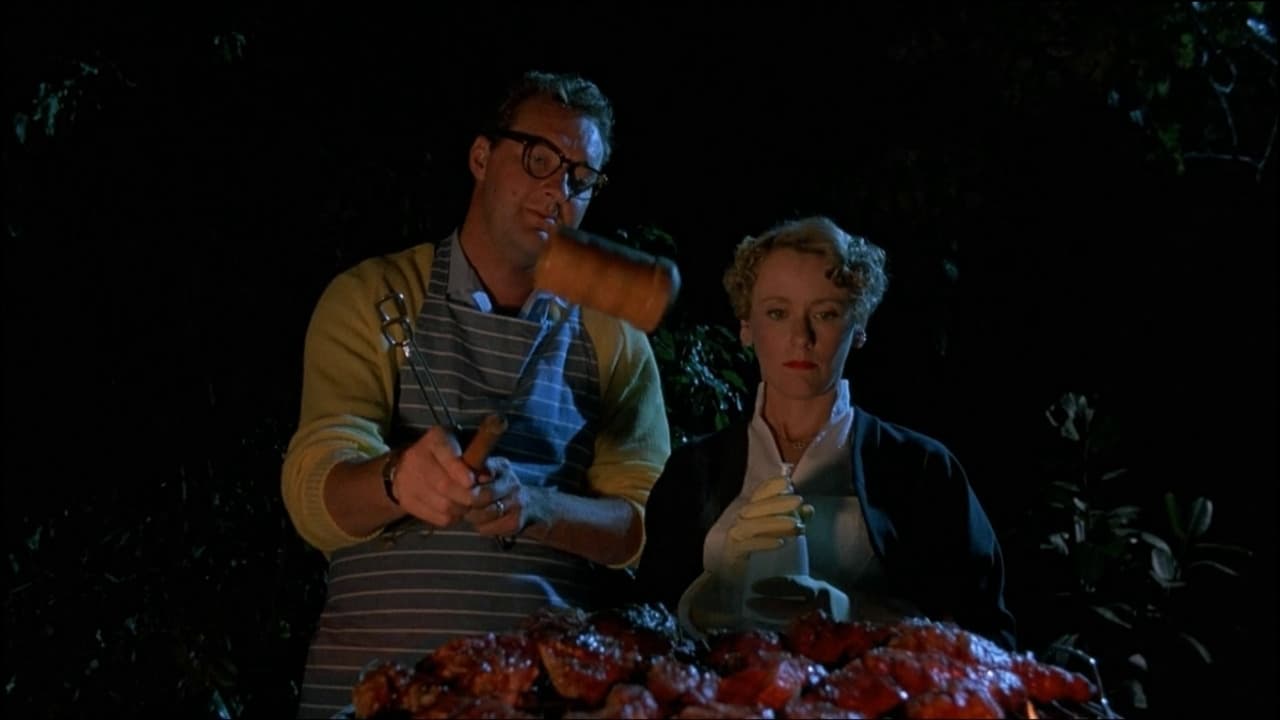
It's fascinating that Bob Balaban chose such unsettling material for his first time in the director's chair. Reportedly, writer Christopher Hawthorne based the script on a recurring nightmare, lending the film its potent, dreamlike (or rather, nightmare-like) logic. Working with a relatively modest budget (around $3 million), Balaban and his team achieved a remarkably distinct look, perfectly capturing the hyper-real aesthetic of 1950s advertising while infusing it with dread.
The film's unique tone – a blend of black comedy, psychological horror, and social satire – likely contributed to its initial struggle at the box office. It wasn't easily categorizable, perhaps confusing audiences expecting straightforward genre fare in the late 80s. However, like so many unique visions from that era, Parents found its audience on home video. That strange cover art beckoned from the rental shelves, and those who took a chance discovered a cult classic – a film whispered about among adventurous renters drawn to its peculiar charm and unsettling ambiguity. Was it all in Michael's head, a symbolic manifestation of Cold War anxieties and the pressure to conform, or was the horror literal? Balaban wisely leaves room for interpretation.
The Unforgettable Score
We absolutely must talk about the score. Hiring Angelo Badalamenti, already renowned for his evocative work with David Lynch on Blue Velvet (1986) and soon to define the sound of Twin Peaks (1990), was a masterstroke. His music isn't just background; it's practically another character. It’s a swirling, intoxicating blend of dreamy, period-appropriate jazz and discordant, unnerving strings that perfectly mirrors Michael's fractured perception of his seemingly idyllic home life. It elevates the mundane – a family dinner, Dad carving meat – into something deeply sinister, contributing immensely to the film's unique and lasting power. It’s one of those scores that perfectly encapsulates the film's unsettling soul.
Final Thoughts: A Dish Best Served Cold

Parents remains a potent, peculiar film – a true original from an era often dominated by more conventional blockbusters. It’s a darkly funny, genuinely creepy satire that uses the trappings of 1950s nostalgia not for comforting warmth, but to expose a festering anxiety beneath the carefully constructed surface of the American Dream. Its deliberate pacing and refusal to offer easy answers might not be for everyone, but its unique flavour, unsettling atmosphere, and standout performances make it unforgettable. If you stumbled upon this gem back in the day at Blockbuster or your local mom-and-pop video store, you likely remember the strange feeling it left you with.
Rating: 8/10
This score reflects its masterful control of tone, its chillingly effective performances, and its distinct, enduring visual and auditory style. While its deliberate ambiguity and niche appeal might hold it back from universal acclaim, Parents stands as a bold, inventive, and deeply unnerving piece of late-80s cult filmmaking. It leaves you pondering not just "what were they eating?", but questioning the very nature of normalcy and the dark secrets often hidden behind the most polished suburban facades – a theme that perhaps resonates even more strongly today. It’s a dish that definitely stays with you.