Alright, fellow tapeheads, gather 'round the flickering glow of the imaginary CRT. Tonight, we're popping in a tape that always felt like a slightly strange, but undeniably cool, find down at the local Video Palace – 1989’s Moontrap. This isn't your slick, billion-dollar space opera; it’s something grittier, weirder, and carrying that distinct whiff of late-80s ambition meeting budgetary reality. And honestly? That’s a huge part of its charm.

Remember pulling this off the shelf, maybe drawn in by the vaguely Giger-esque alien tech on the cover, or perhaps the unexpected pairing of its leads? Seeing Walter Koenig (forever Chekov, but trying something different here) alongside the one and only Bruce Campbell (smack dab between Evil Dead II and Army of Darkness) felt like some bizarre, wonderful sci-fi alignment of the planets. You just knew it wouldn't be boring.
### Houston, We Have Killer Robots
The setup is classic space-age mystery: astronauts Jason Grant (Koenig) and Ray Tanner (Campbell) stumble upon an ancient alien artifact during a routine shuttle mission. Back on Earth (after a decidedly messy encounter), they discover it's a harbinger – a piece of advanced, hostile technology. This leads them, along with scientist Mera (Leigh Lombardi), on a mission to the Moon itself, where humanity supposedly left its first footprints, only to find… well, something else got there first. And it left behind some seriously nasty surprises.

What follows is a surprisingly atmospheric, sometimes slow-burn exploration of a derelict alien spacecraft, punctuated by bursts of startlingly effective robot carnage. Director Robert Dyke, primarily known for his superb visual effects work (including collaborating with Sam Raimi on Evil Dead II – a connection that likely helped snag Campbell), really stretches his modest budget here. Forget sleek CGI vistas; this is model work, miniatures, and forced perspective doing the heavy lifting, giving the lunar surface and alien interiors a tangible, lived-in, almost decaying quality. It feels real in a way that polished pixels sometimes struggle to match.
### Practical Mayhem on a Budget
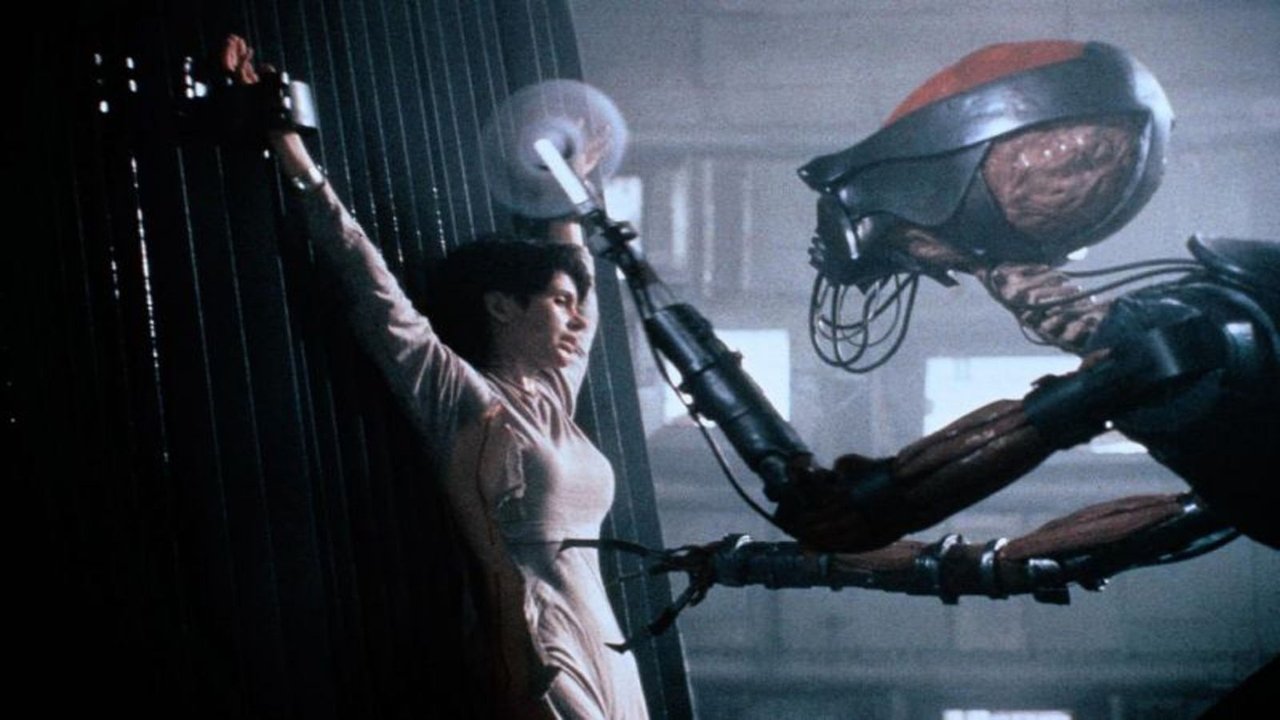
Let’s talk about those robots – the Kaalium. These biomechanical monstrosities, all sharp angles, exposed wiring, and a nasty habit of incorporating human body parts, are pure nightmare fuel crafted from latex, metal, and ingenuity. When they attack, it’s not a ballet of digital sparks; it’s clunky, messy, and visceral. Remember how those laser blasts seemed to really scorch the walls? Or the way limbs got torn off with a satisfyingly gruesome squelch? That's the magic of practical effects! You can almost feel the heat from the pyrotechnics through the screen.
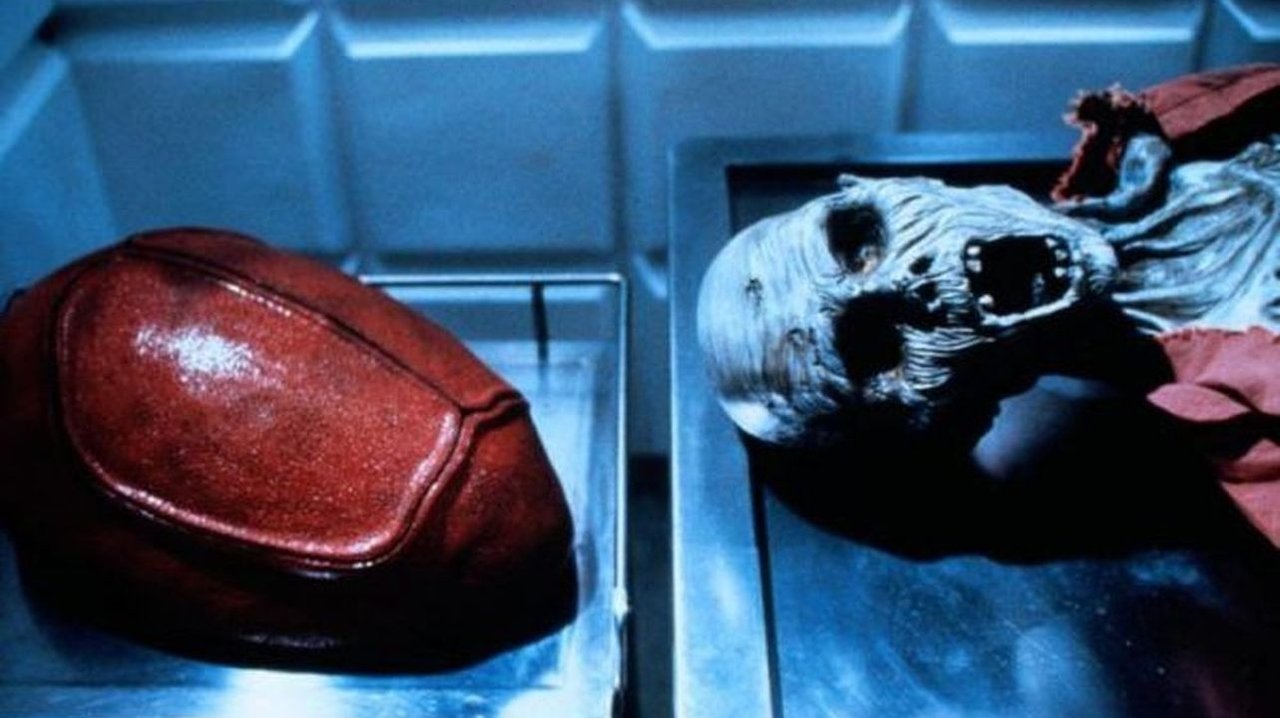
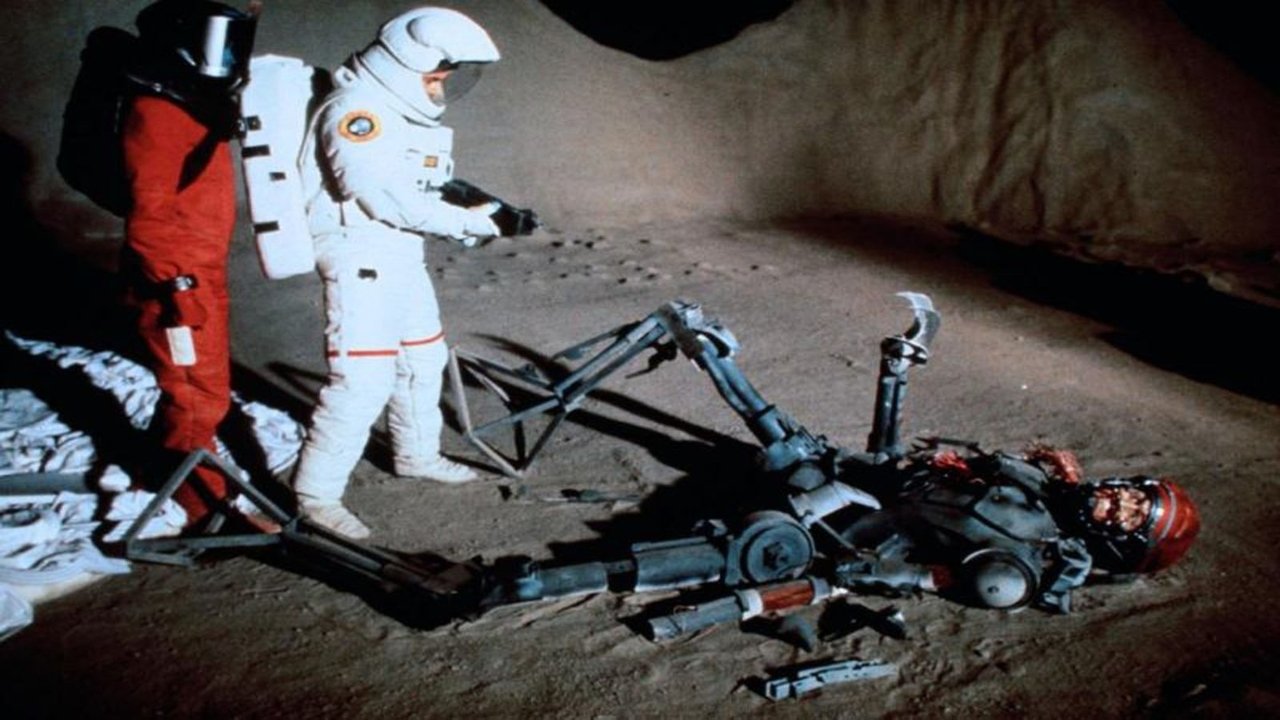
There’s a certain raw energy to the action sequences, born from necessity. They couldn't afford endless takes or digital corrections. Stunt performers were likely putting themselves in harm's way (within reason, hopefully!), lending a weight and consequence that often feels missing today. It’s rumored the film was shot for around $3 million, primarily in Michigan – a testament to making every dollar count. Seeing Koenig, then in his late 40s, convincingly scrambling through lunar tunnels and Campbell delivering his signature blend of square-jawed heroism and barely concealed panic makes it all the more engaging. They sell the threat, even when the sets occasionally betray their soundstage origins.
### An Odd Couple in Orbit
The dynamic between Koenig and Campbell is central to the film’s appeal. Koenig plays Grant as the seasoned, slightly weary professional, a stark contrast to Campbell’s more impulsive, wisecracking Tanner. It’s not exactly Kirk and Spock, but their interactions provide grounding amidst the alien weirdness. Leigh Lombardi holds her own as Mera, thankfully more capable scientist than damsel in distress, navigating the unfolding horror alongside the astronauts.
The film isn't perfect, naturally. The pacing sometimes lags between the action beats, and some dialogue definitely screams "late 80s sci-fi script." It didn't exactly set the box office on fire upon release, becoming more of a cult favourite through cable TV and those glorious VHS rentals. Critics were likely mixed, perhaps finding it derivative of bigger-budget fare like Alien, but audiences hungry for tangible sci-fi horror found something to appreciate. Its earnestness, coupled with the surprising level of practical gore and creature design, carved out its own little niche. You might even spot echoes of its gritty, mechanical aesthetic in later games or films. A vastly delayed and lower-budget sequel, Moontrap: Target Earth, eventually surfaced in 2017, but the original remains the main event.
Overall Rating: 7/10
Justification: Moontrap earns a solid 7 for its ambitious scope on a low budget, fantastic practical creature effects that still impress, the sheer novelty of its Koenig/Campbell pairing, and its overall status as a quintessential late-80s sci-fi/horror rental gem. It’s got atmosphere, some genuine scares, and that irreplaceable hands-on filmmaking feel. The pacing might drag occasionally, and it wears its influences on its spacesuit sleeve, but the practical execution and B-movie heart shine through.
Final Thought: In an age of seamless digital perfection, there’s something deeply satisfying about watching Moontrap’s clanking robots and splattery gore. It’s a reminder of a time when imagination and practical craft, even on a shoestring, could take you to the moon and back… just be ready for a rough landing. Definitely worth digging out of the archive bin.