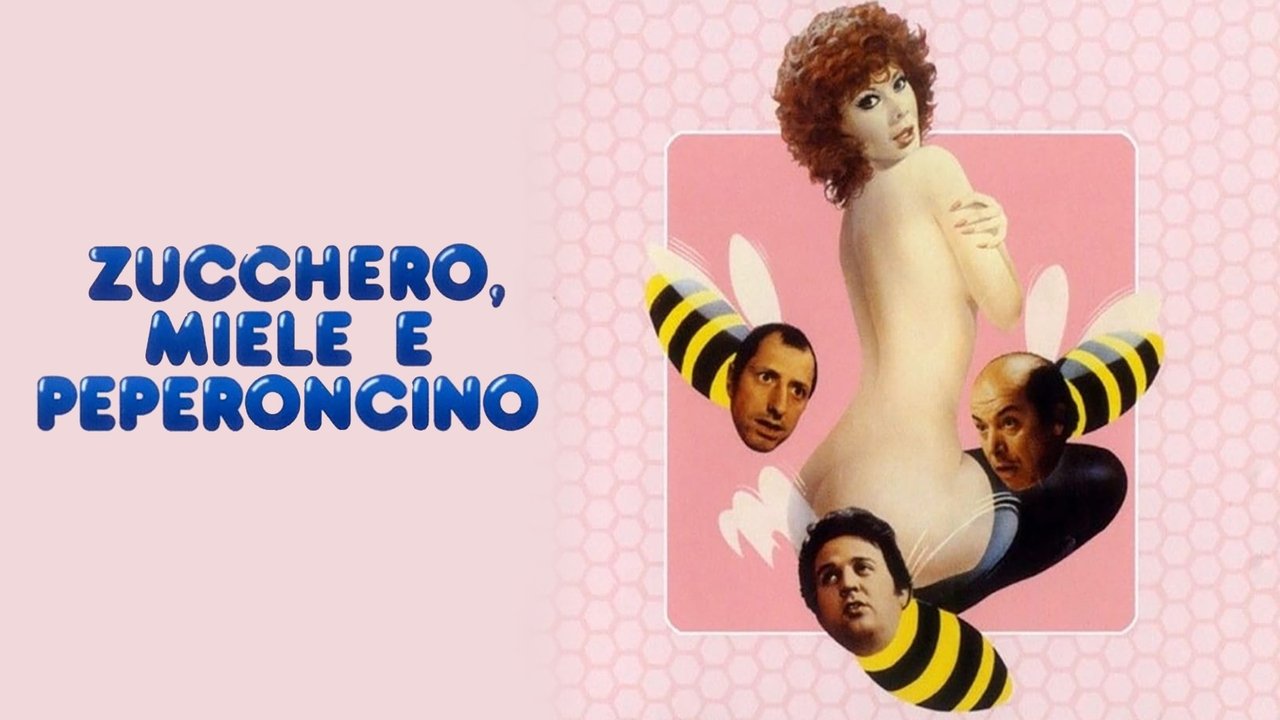
Okay, rewind your minds with me. Picture this: It’s Friday night, you’re scanning the towering shelves of the local video store, maybe under the slightly flickering fluorescent lights. You bypass the familiar Hollywood blockbusters and land on something… different. A colourful box, maybe slightly worn, featuring faces you kind of recognize but can’t quite place, promising laughs from overseas. That, my friends, was often the gateway to discovering gems like 1980’s Sugar, Honey and Pepper (Zucchero, miele e peperoncino), a prime slice of Italian anthology comedy that feels like mainlining pure, uncut Eighties Euro-farce.
Three Scoops of Italian Antics
Forget a single narrative; this film throws three distinct comedic scenarios at you, loosely connected by theme and featuring some absolute titans of Italian popular cinema. Directed by the legendary Steno (mastermind behind countless Totò comedies and the Flatfoot series) and Sergio Martino (more famous for stylish Giallo thrillers like Torso, but clearly flexing his comedic muscles here), it’s a showcase for its stars. Think of it as Italy’s answer to those sketch-based comedy movies, but with more gesticulation and, naturally, the luminous Edwige Fenech.
Pozzetto's Predicament
First up, we get Renato Pozzetto, the king of bewildered, deadpan absurdity. He plays Valerio, an unassuming guy who gets mistaken for a notorious killer-for-hire. The segment plunges him into a whirlwind of misunderstandings, narrow escapes, and increasingly frantic situations. Pozzetto’s genius lies in his underplaying; the chaos erupts around him while he maintains a sort of baffled innocence that is pure comedic gold. It’s classic mistaken identity farce, cranked up with that particular Italian energy. Remember how physical comedy felt back then? No CGI assists, just pure timing and Pozzetto’s brilliantly expressive face reacting to the escalating madness.
Villaggio's Woes
Then, the film shifts gears to Paolo Villaggio, instantly recognizable to Italian audiences as the creator of the perpetually downtrodden accountant Fantozzi. Here, he’s Plinio, a hapless cruise ship waiter who accidentally gets swapped with a wealthy Arab Sheikh. Villaggio excels at this kind of character – the little guy caught in circumstances wildly beyond his control, enduring indignities with a mix of pathetic resignation and sputtering rage. This segment leans heavily into social satire and slapstick, playing on class differences and cultural clashes. It’s worth noting that Luciano Vincenzoni, one of the writers here, also penned scripts for Sergio Leone epics like The Good, the Bad and the Ugly. Quite the range, eh? From gritty Westerns to Villaggio slipping on banana peels (okay, maybe not literally, but you get the vibe).
Fenech Brings the Heat (and Honey)
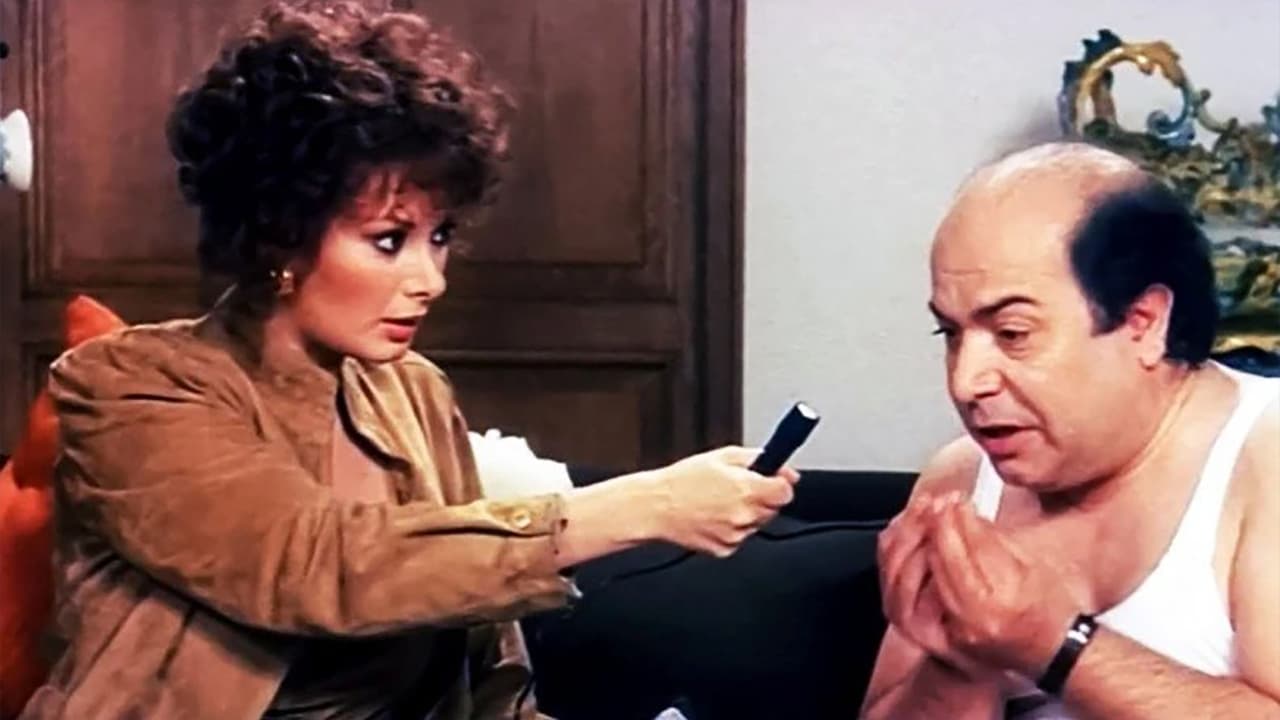
The final segment, and arguably the one most remembered by international viewers who caught this on tape, features the undeniable star power of Edwige Fenech alongside another comedy stalwart, Lino Banfi. Fenech plays Amalia, a beautiful journalist determined to get an exclusive interview with a notorious gangster hiding out. Banfi is the gangster’s inept bodyguard, Giuseppe. This chapter dips firmly into the Commedia sexy all'italiana territory that Fenech dominated – light, frothy, playing on attraction and farcical situations often involving skimpy outfits and double entendres. Fenech, who was transitioning from Giallo queen to mainstream comedy darling around this time, has an effortless charm and comedic timing that elevates the material. Seeing her spar verbally (and sometimes physically) with the blustering Banfi is a highlight. You can almost feel Sergio Martino, perhaps more comfortable with visual flair, having fun directing this segment.
That VHS Flavor
Watching Sugar, Honey and Pepper today is like unearthing a time capsule. The fashion is gloriously loud, the pacing relentless, and the humour… well, it’s very 1980 Italian. Some jokes land perfectly, tapping into universal comedic archetypes, while others might feel a bit dated or culturally specific. If you watched this on a dubbed VHS back in the day, you might remember the slightly "off" voice work that sometimes added an unintentional layer of surrealism. Yet, there’s an undeniable energy to it all. The film was a massive hit in Italy – one of the highest-grossing films of its season – proving the potent draw of its star-studded comedic lineup. The catchy, upbeat score by the legendary Armando Trovajoli (composer for Una giornata particolare and countless other Italian classics) perfectly complements the chaotic onscreen energy.
This isn't high art, folks. It's broad, sometimes silly, occasionally suggestive, and utterly unpretentious popular entertainment from a specific time and place. It aims to make you laugh, maybe raise an eyebrow, and certainly appreciate the sheer star power Italy had in its comedic arsenal back then.
Rating: 7/10
Justification: This score reflects the film's success as a vehicle for its beloved stars and its embodiment of a specific, energetic era of Italian comedy. It delivers consistent laughs within its three segments, showcasing the unique talents of Pozzetto, Villaggio, Fenech, and Banfi. While some elements haven't aged perfectly and the anthology format means quality can vary slightly between segments, the overall package is brimming with charm, nostalgia, and solid comedic craftsmanship from masters like Steno. It loses a few points for dated gags and the inherent unevenness of anthologies, but gains plenty for sheer star power and cultural snapshot value.
Final Thought: Sugar, Honey and Pepper is a fizzy, frantic cocktail of classic Italian comedy – maybe not the most sophisticated drink at the bar, but one that goes down easy and leaves you with a warm, slightly giddy buzz reminiscent of discovering a curious foreign gem on the bottom shelf of the video store. Pure, unadulterated VHS comfort food.