Okay, fellow travellers on the magnetic tape highway, let's rewind to a slightly different corner of the retro world today. While we often celebrate the blockbusters that dominated the shelves of Blockbuster Video, sometimes the real gems are found tucked away, perhaps glimpsed on a flickering CRT screen during childhood, leaving an indelible mark. Prepare for a journey not to a neon-drenched cityscape or distant galaxy, but to the cozy, slightly ramshackle, and utterly charming Russian countryside in Vladimir Popov's animated treasure, Three from Prostokvashino (Трое из Простоквашино) from 1978.
### A Different Kind of Escape
Forget high-octane chases for a moment. The adventure here begins with a simple, relatable childhood dilemma. A young, remarkably independent city boy nicknamed Uncle Fyodor (Maria Vinogradova providing his earnest voice) brings home a stray cat. The problem? This isn't just any cat; this is Matroskin, a striped feline philosopher with a penchant for pragmatism and dairy products, voiced with unforgettable wry charm by the legendary Oleg Tabakov. When Uncle Fyodor's parents (his mother voiced by Valentina Talyzina, known to many for her role in the classic Irony of Fate) refuse to let Matroskin stay ("Choose," they declare, "him or us!"), Fyodor makes a choice that likely echoed the secret wish of many a youngster: he chooses the cat. Together, along with the simple-hearted but loyal dog Sharik (Lev Durov), they leave the city behind and set up homestead in the vacant dacha (country house) in the village of Prostokvashino ("Buttermilkton," roughly translated).
### Characters That Feel Like Old Friends
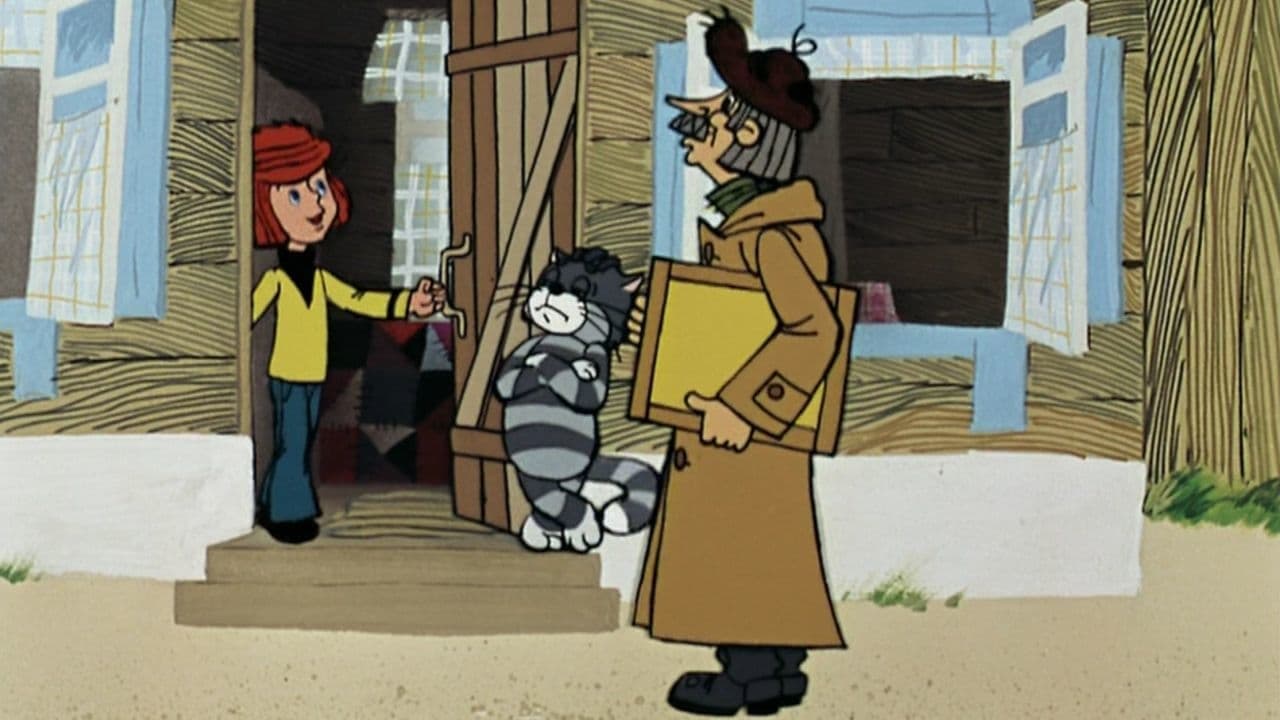
What makes Prostokvashino so eternally captivating isn't explosive action, but its heart, largely embodied by its unforgettable characters, sprung from the beloved children's book Uncle Fyodor, His Dog, and His Cat by Eduard Uspensky. Matroskin the cat is the undeniable star – calculating, resourceful, forever concerned with the economics of their little household ("If we sell something unnecessary," he muses, "we must first buy something unnecessary!"). His deadpan delivery, courtesy of Tabakov, makes him one of the most quoted characters in Russian animation. Sharik, the dog, is his perfect foil – enthusiastic, a bit naive, obsessed with his "photo-rifle" for hunting (he just takes pictures!), and utterly devoted to his friends. Their bickering about practicality versus fun forms the comedic backbone of the story.
And then there's Postman Pechkin (Boris Novikov), the embodiment of petty bureaucracy and nosiness, constantly suspicious of the unaccompanied minor and his talking animal companions. He's the gentle antagonist, more of a nuisance than a threat, delivering mail and snippets of local gossip with an air of self-importance. Watching him try to figure out the trio's unconventional living arrangement is a source of endless amusement. Even the slightly melancholic cow Murka, acquired by Matroskin for milk production, has a personality of her own.
### The Charm of Soyuzmultfilm
Directed by Vladimir Popov, a veteran of the famed Soyuzmultfilm studio (the Soviet equivalent of Disney or Warner Bros. animation during its peak), Prostokvashino boasts a distinct visual style. It’s less slick than much Western animation of the era, but possesses a warmth and handmade quality that’s incredibly endearing. The backgrounds evoke a cozy, slightly idealized Russian countryside, and the character designs are simple yet expressive, perfectly conveying personality through posture and minimal movement. There's a deliberate pacing, a willingness to let moments breathe, that feels refreshingly different from the frenetic energy often found elsewhere. It feels like a storybook come to life, rendered with gentle care. This wasn't a multi-million dollar production aiming for global domination; it was crafted animation intended to charm and resonate, and it succeeded profoundly within its cultural sphere.
### Enduring Legacy
For anyone who grew up in Russia or the former Soviet Union, Three from Prostokvashino isn't just a cartoon; it's a cultural touchstone. Its lines are quoted endlessly, its characters are instantly recognizable, and its gentle humor and themes of friendship, independence, and finding your own place in the world continue to resonate. It spawned two equally beloved sequels, Vacations in Prostokvashino (1980) and Winter in Prostokvashino (1984), further cementing the trio's place in animation history. While perhaps not a staple of Western VHS rental stores, its discovery offers a delightful window into another rich animation tradition. It taps into that universal childhood feeling of wanting a space of one's own, the joy of animal companionship, and the simple satisfaction of building a life, however unconventional.
Watching it today, there’s a powerful nostalgic pull, not just for a specific time, but for a feeling – a sense of innocent adventure and the comforting bonds of friendship. It’s a reminder that captivating stories don't always need laser blasts or complex plots; sometimes, a talking cat, a loyal dog, and a determined boy seeking a home are more than enough.
---
VHS Heaven Rating: 9/10
Justification: While lacking the technical polish or blockbuster scale often celebrated here, Three from Prostokvashino earns this high score for its immense heart, unforgettable characters voiced to perfection (especially Tabakov's Matroskin), enduring cultural impact, and the sheer warmth and charm it exudes. It's a masterclass in character-driven animated storytelling from Popov and Uspensky, creating a world that feels both unique and universally relatable. Its gentle humor and timeless themes make it a classic that transcends borders and decades, even if its primary home wasn't necessarily a PAL or NTSC VHS tape in every country.
Final Thought: Forget finding buried treasure; sometimes the real prize is finding a cozy dacha, a clever cat, a loyal dog, and maybe even figuring out how to get milk without official paperwork. Pure animated comfort food.